

Compare models

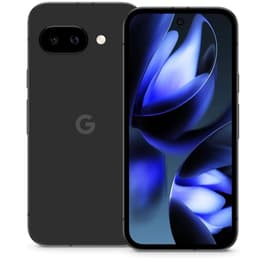
Google Pixel 9a • Unlocked vs iPhone 17 Pro • Unlocked

  • 1-year warranty
  • Free standard shipping
  • Free 30-day returns
Google Pixel 9a • Unlocked
Starting at

Refurbished price:$312.00

Versus $499.99 new

See options
iPhone 17 Pro • Unlocked
Starting at

Refurbished price:$970.00

Versus $1,099.00 new

See options

Differences at a glance

The Google Pixel 9a (2025) and the iPhone 17 Pro (2025) represent two distinct approaches to modern smartphone engineering. While the Google Pixel 9a focuses on delivering essential daily tools through the Android operating system, the iPhone 17 Pro targets users seeking advanced professional capabilities within Apple's iOS ecosystem. These two devices differ fundamentally in their hardware power, camera versatility, and long-term software environments.

Available Models

Color

Storage (GB)

Scores

Durability

Both devices offer strong long-term usability, though they approach software maintenance and physical durability through different construction choices.

    Software longevity: The Google Pixel 9a receives up to seven years of operating system updates, matching the update commitment of the iPhone 17 Pro, which ensures prolonged security and feature access for both models.
    Build materials: The iPhone 17 Pro utilizes a grade-optimized aluminum unibody and hardened glass protection on both the front and back, whereas the Google Pixel 9a combines an aluminum frame with a durable composite rear panel.
    Repair framework: Both manufacturers provide structured repair paths and components, supporting extended operational lifespans for users retaining their devices over multiple years.

Release Year

2025

2025

OS

Android

iOS

Foldable

No

No

Performance

System responsiveness and everyday multitasking capabilities vary significantly based on internal hardware allocations and memory configurations.

    App execution: The iPhone 17 Pro handles intensive 3D gaming and demanding professional video production workflows smoothly, while the Google Pixel 9a manages standard daily apps, web browsing, and moderate multitasking with consistent reliability.
    Memory and storage: The iPhone 17 Pro features higher RAM capacity and larger base storage tiers to support heavy background tasks, whereas the Google Pixel 9a provides streamlined storage options tailored to standard media storage and cloud archiving.
    Energy efficiency: The Google Pixel 9a incorporates a high-capacity battery designed to easily sustain a full day of mixed use, complemented by the energy-efficient processing architecture found in the iPhone 17 Pro that optimizes battery retention under heavy workloads.

Screen quality

Viewing experiences differ in refresh rate dynamics, panel sizing, and outdoor visibility metrics across both displays.

    Display technology: Both models feature vibrant OLED panels that deliver deep black levels and high contrast ratios, though the iPhone 17 Pro adds adaptive refresh rate scaling down to very low frequencies for an always-on display state.
    Brightness levels: The iPhone 17 Pro achieves exceptionally high peak outdoor brightness levels for direct sunlight legibility, while the Google Pixel 9a offers a bright, clear panel suitable for comfortable outdoor viewing.
    Dimensions and handling: The Google Pixel 9a features a 6.3-inch screen size with balanced bezels, aligning closely with the compact form factor and narrow borders of the iPhone 17 Pro.

Resolution

1080x2424

2622x1206

Screen type

P-OLED

Super Retina XDR

Audiovisual

Photography and audio recording suites cater to distinct levels of creative media production.

    Camera arrays: The iPhone 17 Pro equips a versatile triple-lens 48MP system including an extended optical zoom range, while the Google Pixel 9a relies on a dual-lens 48MP setup optimized for point-and-shoot clarity and automated computational adjustments.
    Video capabilities: The iPhone 17 Pro supports professional-grade video formats and multi-lens recording features, whereas the Google Pixel 9a focuses on stable everyday video capture and reliable speech enhancement.
    Audio output: Both devices integrate stereo speakers that deliver clear vocal reproduction and balanced media consumption sound quality for daily streaming.

Miscellaneous

Connectivity standards and physical handling characteristics shape daily usability outside of core processing tasks.

    Biometric security: The Google Pixel 9a offers both facial recognition and an under-display fingerprint sensor, while the iPhone 17 Pro relies exclusively on advanced facial mapping technology.
    Physical dimensions: The Google Pixel 9a weighs slightly less thanks to its composite back materials, whereas the iPhone 17 Pro carries a heavier, denser feel due to its heavy-duty metal enclosure.
    Connectivity: Both models support modern 5G networks, high-speed Wi-Fi protocols, and dual-SIM configurations using physical nano-SIM and digital eSIM profiles.

Weight

6 oz

206 oz

Screen size (inches)

6.3

6.3

Network

5G

5G

SIM card

Physical SIM + eSIM

eSIM

Carrier compatibility

Unlocked

Unlocked

What the community thinks

User feedback from community platforms highlights distinct preferences for each device. Owners of the Google Pixel 9a frequently praise its clean software interface, reliable daily battery endurance, and straightforward design. Conversely, iPhone 17 Pro users often emphasize the fluid display technology, robust video production toolset, and rapid system speeds during demanding tasks. Common discussions sometimes note that the Google Pixel 9a lacks advanced telephoto hardware, while some users find the iPhone 17 Pro heavier to hold during one-handed use.

Users prioritizing extended battery longevity, a clean operating system layout, and straightforward daily functionality will find the Google Pixel 9a well-suited to their needs. Meanwhile, users focusing on professional-grade video capture, maximum gaming performance, and deep integration with Apple services may lean toward the iPhone 17 Pro. Exploring a quality-assured refurbished option through Back Market can also provide an eco-friendly alternative for acquiring either device while supporting sustainable electronics consumption.
Our recent comparisons