
Galaxy S22+ 5G • Unlocked vs iPhone 12 • Unlocked

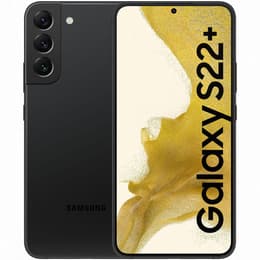
Galaxy S22+ 5G • Unlocked
Starting at

Refurbished price:$154.99

Versus $1,000.00 new

See options
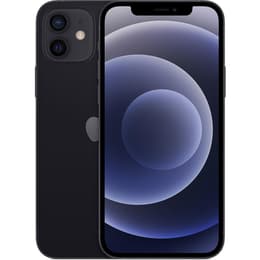
iPhone 12 • Unlocked
Starting at

Refurbished price:$172.96

Versus $629.00 new

See options

Ratings

The Samsung Galaxy S22 Plus 5G, released in February 2022, and the iPhone 12, launched in October 2020, represent distinct offerings from two major smartphone manufacturers. While both devices provide a premium smartphone experience, they operate on different ecosystems and cater to varying user preferences. The Galaxy S22 Plus runs on Android, offering a customizable interface, whereas the iPhone 12 utilizes Apple's iOS, known for its streamlined user experience. These differences extend to their hardware, design, and overall feature sets.

Scores

Durability

The longevity of a smartphone is influenced by its physical durability and the duration of software support it receives. Both the Galaxy S22 Plus and the iPhone 12 offer robust builds and are designed for extended use.

  • Release Timeline: The iPhone 12 was released in October 2020, making it an older model compared to the Galaxy S22 Plus 5G, which debuted in February 2022. This difference in release dates impacts their respective software support cycles.
  • Software Longevity: Apple typically provides major iOS updates for 5-6 years from a device's release. The iPhone 12, having shipped with iOS 14, has received updates through iOS 18 (in 2024) and is expected to be compatible with iOS 26 (in 2025), indicating a substantial period of software relevance. Samsung generally offers four major Android OS updates and five years of security updates for its flagship devices. The Galaxy S22 Plus, being newer, will receive software support for a longer period from its release date, but the iPhone 12's overall support window from its launch is extensive.
  • Build Materials and Water Resistance: The iPhone 12 features a Ceramic Shield front cover, a glass back, and an aluminum frame. The Galaxy S22 Plus incorporates Corning Gorilla Glass Victus+ on both its front and back, complemented by an Armor Aluminum frame. Both devices carry an IP68 rating for dust and water resistance, meaning they can withstand submersion in up to 6 meters of water for 30 minutes for the iPhone 12, and up to 1.5 meters for 30 minutes for the S22 Plus.

Release Year

2022

2020

Last OS Compatibility

Yes

Yes

OS

Android

iOS

Foldable

No

No

Performance

Performance in daily use, from launching applications to managing multiple tasks, is a key consideration for any smartphone. Both devices deliver capable performance, though with differences in their underlying hardware and optimization.

  • Processing Power: The iPhone 12 is equipped with a processor that handles demanding applications and multitasking efficiently, providing a smooth user experience. The Galaxy S22 Plus features a newer generation processor, which also ensures smooth operation for everyday tasks and resource-intensive applications. However, some users of the Galaxy S22 Plus have reported instances of the device heating up and experiencing performance throttling during extended periods of heavy gaming.
  • Multitasking and Storage: The iPhone 12 comes with 4GB of RAM, which is sufficient for typical multitasking. The Galaxy S22 Plus offers 8GB of RAM, allowing for more applications to remain active in the background without needing to reload. For internal storage, the iPhone 12 is available in 64GB, 128GB, and 256GB options, while the Galaxy S22 Plus offers 128GB and 256GB variants.
  • Battery Life: The Galaxy S22 Plus is equipped with a 4500 mAh battery, which generally provides a full day of use for moderate users. However, heavy usage, particularly with 5G connectivity, can lead to more frequent charging. The iPhone 12 has a smaller 2815 mAh battery, which typically lasts a full day for average use, but heavy users may find themselves needing to recharge before the day ends.

Memory (GB)

8 GB

4 GB

Screen quality

The display is a primary interface for smartphone interaction, and both devices offer high-quality viewing experiences with distinct characteristics.

  • Display Technology and Clarity: Both the iPhone 12 and the Galaxy S22 Plus feature OLED display technology, which delivers deep blacks and vibrant colors. The iPhone 12 utilizes a Super Retina XDR OLED display with a resolution of 2532 x 1170 pixels, resulting in a pixel density of 460 pixels per inch (ppi). The Galaxy S22 Plus features a Dynamic AMOLED 2X display with a resolution of 1080 x 2340 pixels, offering a pixel density of approximately 390 ppi.
  • Size and Brightness: The Galaxy S22 Plus offers a larger 6.6-inch display, providing more screen real estate for media consumption and productivity. The iPhone 12 has a 6.1-inch display. In terms of brightness, the Galaxy S22 Plus can reach a peak brightness of up to 1750 nits, making it highly visible in bright outdoor conditions. The iPhone 12 has a typical maximum brightness of 625 nits and a peak HDR brightness of 1200 nits.
  • Refresh Rate: A notable difference lies in the refresh rate. The Galaxy S22 Plus features an adaptive 120Hz refresh rate, which contributes to smoother scrolling and more fluid animations. The iPhone 12 maintains a standard 60Hz refresh rate.

Resolution

1080 x 2340

1170 x 2532

Screen type

Dynamic AMOLED 2X

Super Retina XDR OLED

Audiovisual

Both smartphones offer capable camera systems, designed to capture high-quality photos and videos in various conditions, though they approach imaging with different hardware configurations.

  • Rear Camera Systems: The iPhone 12 features a dual 12-megapixel camera system, comprising a main wide-angle lens with an f/1.6 aperture and an ultra-wide-angle lens with an f/2.4 aperture. The Galaxy S22 Plus boasts a triple camera setup, including a 50-megapixel main wide-angle lens with an f/1.8 aperture, a 12-megapixel ultra-wide-angle lens with an f/2.2 aperture, and a 10-megapixel telephoto lens offering 3x optical zoom with an f/2.4 aperture.
  • Photography Performance: The iPhone 12 is recognized for its improved low-light performance and Night mode capabilities across its cameras, capturing detail even in challenging lighting. The Galaxy S22 Plus also delivers strong low-light results, with users often praising its clarity and accurate color reproduction. The dedicated telephoto lens on the S22 Plus provides greater versatility for zoomed-in shots.
  • Video Recording: For video, the iPhone 12 supports HDR video recording with Dolby Vision at up to 4K resolution and 30 frames per second. The Galaxy S22 Plus offers higher resolution video recording, capable of capturing 8K footage at 24 frames per second, in addition to 4K at 30/60 frames per second with HDR10+ support.

Main camera

50 megapixels

12 megapixels

Front camera

10 megapixels

12 megapixels

Miscellaneous

Beyond core performance and display, several other features contribute to the overall user experience, from connectivity to physical design.

  • Connectivity: Both devices support 5G cellular networks, enabling faster download and upload speeds where available. The iPhone 12 includes Wi-Fi 6 (802.11ax) and Bluetooth 5.0. The Galaxy S22 Plus features newer connectivity standards, including Wi-Fi 6E and Bluetooth 5.2, offering potentially faster and more stable wireless connections.
  • Ports and Biometrics: The iPhone 12 uses Apple's proprietary Lightning port for charging and data transfer. The Galaxy S22 Plus utilizes a universal USB-C port. For biometric security, the iPhone 12 relies on Face ID for facial recognition. The Galaxy S22 Plus offers both an in-display fingerprint sensor and facial recognition for unlocking the device.
  • Physical Characteristics: The iPhone 12 measures 146.7 x 71.5 x 7.4 mm and weighs 162 grams. The Galaxy S22 Plus is a larger and slightly heavier device, with dimensions of 157.4 x 75.8 x 7.6 mm and a weight of 195-196 grams. The iPhone 12 also introduced MagSafe, a magnetic system for attaching accessories and wireless charging.

Weight

7 oz

7 oz

Screen size (inches)

6.6

6.1

Network

5G

5G

SIM card

Physical SIM + eSIM

Physical SIM + eSIM

Carrier compatibility

Unlocked

Unlocked

When evaluating the Galaxy S22 Plus 5G and the iPhone 12, user feedback highlights distinct strengths and areas for consideration for each device. The iPhone 12 is frequently praised for its consistent camera performance, vibrant OLED display, and the introduction of 5G connectivity and MagSafe. Some users, however, note its 60Hz display as a potential drawback compared to newer devices and mention that heavy usage can strain its battery life.

The Galaxy S22 Plus receives positive remarks for its expansive and bright display, versatile camera system with a telephoto lens, and the smooth experience of its Android interface. Common criticisms from users often revolve around its battery life, which some find to be average, particularly with consistent 5G use, and reports of the device heating up during intensive tasks like gaming.

Users prioritizing a compact device with a long software support window and a consistent, intuitive operating system may find the iPhone 12 well-suited to their needs. Those who prefer a larger, higher refresh rate display, a more versatile camera system with optical zoom, and the flexibility of the Android ecosystem might lean toward the Galaxy S22 Plus. Both devices offer robust performance for everyday tasks, and choosing between them often comes down to personal preference for operating system, display characteristics, and camera features. For those considering either model, exploring quality-assured refurbished options can be a sustainable choice.

See all articles

Our recent comparisons