

Galaxy A23 5G • Unlocked vs OnePlus 12 • Unlocked

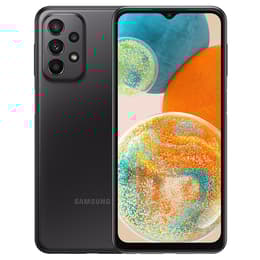
Galaxy A23 5G • Unlocked
Starting at

Refurbished price:$123.00

Versus $279.99 new

See options
OnePlus 12 • Unlocked
Starting at

Refurbished price:$748.99

Versus $1,200.00 new

See options

Ratings

The Samsung Galaxy A23 5G, released in late 2022 and early 2023 depending on the region, and the OnePlus 12, launched in late 2023 and globally in early 2024, are both Android smartphones. While both devices offer a modern smartphone experience, they cater to different user expectations, primarily differing in their performance capabilities, display technology, and camera systems. Both run on the Android operating system, offering a familiar software environment.

Scores

Durability

The practical lifespan and durability of these two devices show notable differences, largely due to their release timelines and build quality.

  • Release Timeline and Software Support: The Galaxy A23 5G was released in September 2022 in the US and January 2023 in India, making it an older device compared to the OnePlus 12, which saw its global launch in January 2024. This difference in release date means the OnePlus 12 is expected to receive software updates for a longer period, with OnePlus promising four years of Android updates and five years of security patches. The Galaxy A23 5G, while receiving updates, will have a shorter remaining support window.
  • Build Materials and IP Rating: The Galaxy A23 5G features a plastic body with a Gorilla Glass 5 front for screen protection. While some regional variants might have an IP53 rating for dust and splash resistance, other sources indicate no official IP rating, suggesting limited protection against water and dust ingress. In contrast, the OnePlus 12 boasts a more robust construction with an aluminum frame, a glass back, and a front protected by Gorilla Glass Victus 2. It carries an official IP65 rating, meaning it is protected against dust and can withstand jets of water, though it is not designed for submersion.
  • Repairability: The OnePlus 12 has been noted to have a moderate repairability score, with components like the battery and screen being accessible, though strong adhesives are used. Information on the repairability of the Galaxy A23 5G is less detailed, but its construction typically aligns with devices in its segment, which can sometimes present challenges for repairs.

Release Year

2022

2023

Last OS Compatibility

Yes

Yes

OS

Android

Android

Foldable

No

No

Performance

When evaluating performance, the two smartphones target different tiers, resulting in distinct user experiences for daily tasks and demanding applications.

  • Processing Power and Responsiveness: The Galaxy A23 5G is equipped with a processor that handles everyday applications and general multitasking smoothly. Users generally find it responsive for common tasks, with a noticeable improvement over its predecessors. The OnePlus 12, however, features a significantly more powerful current-generation processor, designed for high-end performance. This translates to exceptionally smooth operation, faster app loading times, and a superior experience for graphically intensive games and heavy multitasking.
  • Memory and Storage Configurations: The Galaxy A23 5G is available with 4GB, 6GB, or 8GB of RAM and offers 64GB or 128GB of internal storage, which can be expanded up to 1TB via a microSD card. The OnePlus 12 comes with higher RAM options, typically 12GB, 16GB, or even 24GB in some regions, paired with larger internal storage capacities of 256GB, 512GB, or 1TB, utilizing faster UFS 4.0 storage technology. These larger RAM and faster storage options on the OnePlus 12 contribute to its enhanced multitasking capabilities and overall system fluidity.
  • Battery Capacity and Charging: Both devices feature substantial battery capacities. The Galaxy A23 5G houses a 5000 mAh battery, which many users report can last up to two days with typical usage. It supports 25W wired fast charging. The OnePlus 12 comes with a slightly larger 5400 mAh battery and offers significantly faster charging options, including 100W wired charging and 50W wireless charging, allowing for quicker power replenishment.

Memory (GB)

6 GB

16 GB

Screen quality

The visual experience on these two smartphones differs considerably, primarily due to their display technologies and specifications.

  • Display Technology and Resolution: The Galaxy A23 5G features a 6.6-inch PLS LCD display with a Full HD+ resolution (1080x2408 pixels). This panel provides clear visuals for everyday content consumption. The OnePlus 12, on the other hand, sports a larger 6.82-inch LTPO AMOLED display with a higher Quad HD+ resolution (3168x1440 pixels). The AMOLED technology offers deeper blacks and more vibrant colors compared to LCD.
  • Refresh Rate and Brightness: The Galaxy A23 5G offers a 120Hz refresh rate, contributing to smoother scrolling and a more fluid visual experience. The OnePlus 12 also features a 120Hz refresh rate, but it is an adaptive LTPO panel, meaning it can dynamically adjust its refresh rate from 1Hz to 120Hz based on the content, which can contribute to power efficiency. In terms of brightness, the OnePlus 12's display is capable of reaching significantly higher peak brightness levels (up to 4500 nits), making it more visible in bright outdoor conditions compared to the Galaxy A23 5G.
  • Viewing Experience: The larger, higher-resolution AMOLED display of the OnePlus 12 provides a more immersive and detailed viewing experience, particularly for high-quality video content and gaming. The Galaxy A23 5G's LCD panel still offers a good experience for its segment, with its 120Hz refresh rate enhancing general navigation and casual media consumption.

Resolution

1080 x 2408

1440 x 3168

Screen type

PLS LCD

LTPO AMOLED

Audiovisual

The camera systems on the Galaxy A23 5G and the OnePlus 12 are designed for different levels of photographic capability and versatility.

  • Rear Camera Setup: The Galaxy A23 5G features a quad-camera system on the rear, including a 50-megapixel main sensor with optical image stabilization (OIS), a 5-megapixel ultrawide lens, and two 2-megapixel sensors for macro and depth. The OnePlus 12 offers a triple-camera setup co-developed with Hasselblad, comprising a 50-megapixel main sensor with OIS, a 48-megapixel ultrawide lens, and a 64-megapixel periscope telephoto lens with OIS, offering 3x optical zoom and up to 6x in-sensor zoom.
  • Photography Performance: The Galaxy A23 5G's main camera performs well in good lighting conditions, capturing decent detail and colors, though consistency can vary, especially in challenging lighting or with secondary lenses. The OnePlus 12, with its advanced sensors and Hasselblad tuning, generally delivers more consistent and higher-quality images across all lenses, particularly excelling in low-light scenarios and offering more natural color reproduction. Its telephoto lens provides greater flexibility for zoomed shots.
  • Video Recording and Front Camera: For video, the Galaxy A23 5G supports Full HD recording at 30 frames per second. The OnePlus 12 offers significantly more advanced video capabilities, including 8K recording at 24 frames per second and 4K at 30 or 60 frames per second, along with various slow-motion options. On the front, the Galaxy A23 5G has an 8-megapixel selfie camera, while the OnePlus 12 features a higher-resolution 32-megapixel front camera, providing more detailed self-portraits and clearer video calls.

Main camera

50 megapixels

50 megapixels

Front camera

8 megapixels

32 megapixels

Miscellaneous

Beyond the core features, several practical elements differentiate the user experience of these two smartphones.

  • Connectivity and Ports: Both devices support 5G connectivity. The Galaxy A23 5G includes Wi-Fi 5 (802.11ac) and Bluetooth 5.1, along with a USB-C 2.0 port and a 3.5mm headphone jack. The OnePlus 12 offers more advanced connectivity with Wi-Fi 7 and Bluetooth 5.4, and features a faster USB-C 3.2 Gen 1 port, but it omits the traditional headphone jack. Both phones also support NFC for contactless payments.
  • Biometric Security and Sensors: The Galaxy A23 5G incorporates a side-mounted fingerprint sensor for secure unlocking. The OnePlus 12 utilizes an in-display fingerprint sensor, offering a more integrated design. Both devices include standard sensors such as accelerometers, gyroscopes, compasses, and proximity sensors. The OnePlus 12 also features an infrared sensor, which can be used for controlling compatible electronics.
  • Design and Handling: The Galaxy A23 5G measures 165.4 x 76.9 x 8.4 mm and weighs 197 grams, offering a comfortable hold for its size. The OnePlus 12 is slightly more compact in width and height but thicker and heavier at 164.3 x 75.8 x 9.2 mm and 220 grams. Its premium glass and aluminum construction provides a different in-hand feel compared to the plastic build of the Galaxy A23 5G.

Weight

7 oz

8 oz

Screen size (inches)

6.8

6.82

Network

5G

5G

SIM card

Physical SIM

Physical SIM

Carrier compatibility

Unlocked

Unlocked

The Samsung Galaxy A23 5G and the OnePlus 12 cater to distinct segments of the smartphone market, each with its own set of strengths and user appeal. User feedback for the Galaxy A23 5G often highlights its strong battery life and vibrant display as key advantages, especially considering its positioning. Some users have noted occasional performance stutters and inconsistencies in camera output, along with its plastic build.

Conversely, the OnePlus 12 receives considerable praise for its powerful performance, exceptional display quality, and versatile camera system, often being lauded for its fast charging capabilities and extended battery life. Common discussions among users sometimes touch upon its IP65 rating, which, while good, is not as high as some other flagship devices, and occasional software quirks.

Users prioritizing a device for everyday communication, social media, and casual content consumption, with a focus on extended battery life and expandable storage, may find the Galaxy A23 5G well-suited to their needs. Its reliable performance for general use makes it a practical choice. On the other hand, users who demand top-tier performance for demanding applications, high-fidelity gaming, advanced photography and videography, and a premium viewing experience will likely lean towards the OnePlus 12. Its faster charging and more robust build also appeal to those seeking a more flagship-level experience.

For those considering either device, exploring quality-assured refurbished options can be an eco-friendly alternative, offering a sustainable choice without compromising on functionality.


See all articles

Our recent comparisons