Compare models
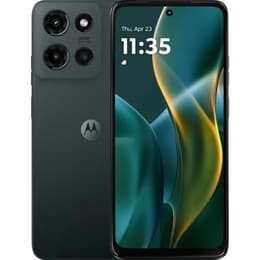
Galaxy A53 5G • Unlocked vs Motorola Moto G (2025) • Unlocked
- 1-year warranty
- Free standard shipping
- Free 30-day returns
Differences at a glance
The Samsung Galaxy A53 5G (2022) and the Motorola Moto G (2025) are mid-range Android smartphones built for everyday communication, media consumption, and reliable daily productivity. While both devices serve similar daily utility roles, they differ notably in their release timelines, display resolutions, and core software foundations. Choosing between these models depends on how you balance screen clarity against software update longevity.
Available Models
Color
Storage
Scores
Durability
When examining hardware longevity and software support, both devices handle routine multi-year usage differently based on their respective release schedules and manufacturer commitments.
- Release Timeline and Software Support: The Galaxy A53 5G arrived in 2022 with an extended multi-year update policy covering multiple operating system upgrades, whereas the Motorola Moto G launched in 2025 running newer software out of the box.
- Expected Practical Lifespan: Both models feature robust physical builds, though the Samsung device includes higher-tier water resistance certification compared to the water-repellent design of the Motorola model, influencing long-term durability across different environments.
- Repairability: Both smartphones offer standard component access through certified service channels, helping extend their operational windows through sustainable maintenance.
Release Year
2022
2025
OS
Android
Android
Foldable
No
No
Performance
Under everyday workloads, these devices handle web browsing, social media feeds, and utility applications with dependable system responsiveness.
- Processor Capabilities and Multitasking: Both phones manage standard multitasking and casual gaming smoothly, though users opening heavy applications simultaneously may notice slight variations depending on background RAM management.
- Storage Configurations: The Galaxy A53 5G offers up to 256GB of internal space, while the Motorola Moto G provides configurations starting at 64GB, with both models supporting expandable storage via microSD cards.
- Battery Behavior: Each device packs a 5000mAh battery, easily providing a full day of mixed use for typical consumers, paired with differing wired charging speeds.
Screen quality
Visual output differs noticeably between the two models in terms of panel technology and overall pixel density.
- Display Technology: The Galaxy A53 5G utilizes a Super AMOLED panel delivering deep contrast levels, while the Motorola Moto G employs an IPS LCD screen focused on bright, wide-angle viewing.
- Resolution and Clarity: Samsung's device features a higher Full HD+ resolution for sharper text rendering, whereas Motorola opts for an HD+ resolution paired with a fast 120Hz refresh rate for fluid scrolling.
- Outdoor Usability: Both displays reach sufficient peak brightness levels to remain legible under direct sunlight during outdoor commutes or travel.
Resolution
1080 x 2400
720x1604
Screen type
Super AMOLED
IPS LCD
Audiovisual
Photography and media recording capabilities cater to casual content sharing and video calls using distinct hardware setups.
- Camera Systems: The Galaxy A53 5G features a versatile multi-lens rear array including a high-resolution primary sensor with optical stabilization, contrasted by the Motorola Moto G's simplified dual-camera arrangement centered around a 50-megapixel main sensor.
- Video and Low-Light Performance: Samsung supports higher-resolution 4K video recording, while Motorola focuses on stable 1080p capture suitable for quick sharing.
- Audio and Media Consumption: Both smartphones incorporate stereo speaker configurations for calls and media, with the Motorola model retaining a traditional 3.5mm headphone jack for wired audio accessories.
Miscellaneous
Practical daily usability elements shape how each device integrates into pockets, travel bags, and modern network environments.
- Connectivity Standards: Both options deliver 5G network compatibility, Wi-Fi, Bluetooth, and NFC functionality for contactless mobile payments.
- Physical Dimensions and Weight: The Motorola Moto G offers a slightly taller profile with a textured eco-leather back option, while the Galaxy A53 5G maintains a slimmer plastic-backed profile.
- Authentication Sensors: Samsung utilizes an optical under-display fingerprint reader, whereas Motorola integrates a side-mounted fingerprint sensor into the power button.
Weight
6 oz
7 oz
Screen size (inches)
6.5
6.7
Network
5G
5G
SIM card
Physical SIM
Physical SIM + eSIM
Carrier compatibility
Unlocked
Unlocked
What the community thinks
Community discussions on platforms like Reddit highlight distinct user preferences for each smartphone. Owners of the Galaxy A53 5G frequently praise its sharp AMOLED display and comprehensive camera array, though some note occasional interface stutter during intensive tasks. Conversely, users of the Motorola Moto G appreciate its clean software interface and fluid refresh rate, while observing that the lower screen resolution and basic secondary camera are clear compromises for the hardware tier.
Users prioritizing media sharpness and a vibrant screen will find the Galaxy A53 5G well-suited to their needs, while users prioritizing newer baseline software and a smoother scrolling display may lean toward the Motorola Moto G. For shoppers seeking a sustainable choice, exploring a quality-assured refurbished option provides a reliable way to acquire these devices while reducing electronic waste. Ultimately, evaluating your preference for display technology versus software recency will guide your ideal selection between these two functional options.