
Compare models
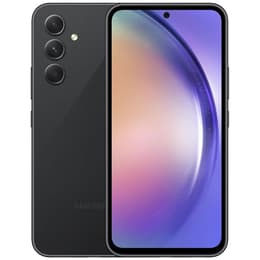
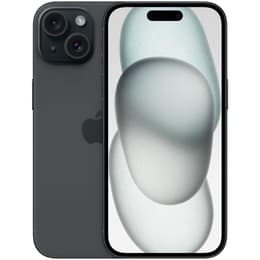
Galaxy A54 • Unlocked vs iPhone 15 • Locked T-Mobile
- 1-year warranty
- Free standard shipping
- Free 30-day returns
Differences at a glance
The Samsung Galaxy A54 (released in March 2023) and the Apple iPhone 15 (released in September 2023) represent distinct offerings within the smartphone market. While the Galaxy A54 operates on the Android ecosystem, the iPhone 15 runs on iOS. Key differences between these two devices include their display refresh rates, camera processing approaches, and the expected duration of software support from their respective manufacturers.
Available Models
Color
Storage (GB)
Scores
Durability
The longevity of a smartphone is influenced by its build quality, software support, and ease of repair. Both devices offer modern designs, but their approaches to long-term usability differ.
- Software Support: The iPhone 15 is anticipated to receive operating system updates for at least six years from its launch, providing a prolonged functional life. The Galaxy A54 is committed to four years of major Android updates and five years of security patches, offering substantial support within the Android ecosystem.
- Build Materials: The iPhone 15 features a Ceramic Shield front and a color-infused glass back, paired with an aluminum frame, contributing to its durability and water resistance (IP68 rating). The Galaxy A54 utilizes Gorilla Glass 5 on both its front and back, with a plastic frame, and carries an IP67 rating for dust and water resistance.
- Repairability: The Galaxy A54 is generally considered fairly repairable, with some sources giving it a score of 6.25/10 or 8.4/10, noting that battery and screen replacements are relatively straightforward. The iPhone 15 has seen improvements in its internal design for easier repairs, achieving a repairability score of 7/10 after initial updates, though component pairing can still complicate independent repairs.
Release Year
2023
2023
Last OS Compatibility
Yes
Yes
OS
Android
iOS
Foldable
No
No
Performance
Both the Galaxy A54 and iPhone 15 are designed to handle daily tasks efficiently, but they offer different levels of responsiveness for more demanding applications and multitasking.
- System Responsiveness: The iPhone 15 provides a highly fluid user experience, with applications launching quickly and smooth performance even during intensive mobile gaming or high-resolution video editing. The Galaxy A54 handles everyday usage well, though some users have noted occasional minor stutters during very heavy multitasking.
- Multitasking Capabilities: The iPhone 15 comes with 6GB of RAM, which is optimized for iOS's multitasking environment. The Galaxy A54 is available with either 6GB or 8GB of RAM, allowing it to manage multiple applications simultaneously within the Android system.
- Storage and Battery Behavior: Both devices offer 128GB and 256GB storage options, with the iPhone 15 also available in a 512GB configuration. The Galaxy A54 includes a larger 5000 mAh battery, often providing extended usage times, while the iPhone 15 features a 3349 mAh battery that delivers reliable all-day power for many users.
Screen quality
The visual experience on these two smartphones presents distinct characteristics, particularly concerning motion smoothness, outdoor visibility, and overall display technology.
- Display Technology and Refresh Rate: The Galaxy A54 features a 6.4-inch Super AMOLED display with a 120Hz refresh rate, which contributes to smoother scrolling and a more fluid feel when navigating menus and content. The iPhone 15 utilizes a 6.1-inch Super Retina XDR OLED display with a standard 60Hz refresh rate, offering deep blacks and vibrant colors.
- Brightness and Clarity: The iPhone 15's display can achieve very high brightness levels, reaching up to 2000 nits for peak outdoor visibility, making it easier to view content under direct sunlight. The Galaxy A54 also offers a bright display with a peak brightness of 1000 nits, providing good visibility in various lighting conditions.
- Screen Features: The iPhone 15 introduces the Dynamic Island, an interactive area at the top of the screen that adapts to show alerts and background activities. The Galaxy A54 provides an immersive viewing experience with its slightly larger screen size and vibrant Super AMOLED panel.
Resolution
1080 x 2340
1179 x 2556
Screen type
Super AMOLED
Super Retina XDR OLED
Audiovisual
Both devices offer capable camera systems designed to capture a variety of moments, with differences in their sensor configurations and image processing.
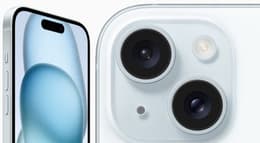
- Rear Camera Systems: The iPhone 15 features a dual-camera setup with a 48-megapixel main sensor that includes sensor-shift optical image stabilization (OIS) and a 12-megapixel ultrawide lens. It also offers a 2x telephoto option by cropping the main sensor. The Galaxy A54 comes with a triple-camera system, including a 50-megapixel main sensor with OIS, a 12-megapixel ultrawide lens, and a 5-megapixel macro camera for close-up shots.
- Photography Performance: The iPhone 15 is known for producing detailed and color-accurate photos in various conditions, with strong low-light performance. The Galaxy A54's primary camera also performs well, delivering bright and colorful images, though its low-light video quality may be less consistent.
- Video Recording and Front Camera: Both phones are capable of recording 4K video at 30 frames per second. For selfies, the iPhone 15 has a 12-megapixel front camera, while the Galaxy A54 features a higher-resolution 32-megapixel front camera.
Main camera
50 megapixels
48 megapixels
Front camera
32 megapixels
12 megapixels
Miscellaneous
Beyond core features, several practical elements contribute to the overall user experience, including connectivity, physical design, and security measures.
- Connectivity and Ports: Both the Galaxy A54 and iPhone 15 support 5G networks, Wi-Fi 6 (802.11ax), and Bluetooth 5.3, ensuring modern wireless connectivity. The iPhone 15 has transitioned to a USB-C port for charging and data transfer, though it operates at USB 2.0 speeds. The Galaxy A54 also uses a USB-C port.
- Physical Design and Handling: The iPhone 15 is notably lighter at 171 grams and more compact (147.6 x 71.6 x 7.8 mm), making it easier for one-handed use. The Galaxy A54 is slightly larger and heavier (158.2 x 76.7 x 8.2 mm, 202 grams), offering a more substantial feel.
- Security and Other Features: The iPhone 15 relies on Face ID for secure authentication and payments. The Galaxy A54 incorporates an optical fingerprint sensor located under the display for unlocking the device. The Galaxy A54 also offers expandable storage via a microSD card, a feature not present on the iPhone 15.
Weight
7 oz
171 oz
Screen size (inches)
6.4
6.1
Network
5G
5G
SIM card
Physical SIM + eSIM
eSIM
Carrier compatibility
Unlocked
T-Mobile
Connector
USB-C + Jack 3.5mm
USB-C (USB 2)
What the community thinks
User feedback for the Samsung Galaxy A54 often highlights its strong battery life and the smooth visual experience provided by its 120Hz display. Some users, however, have pointed out that the interface can occasionally feel less responsive during demanding tasks, suggesting that its processing capabilities might be a limiting factor for power users. The optical fingerprint sensor has also been noted as being slower than some alternatives.
For the iPhone 15, common praise includes its capable main camera, which delivers excellent photos, and its bright display that performs well even in direct sunlight. Users appreciate its comfortable in-hand feel and the transition to USB-C. Criticisms frequently revolve around the 60Hz refresh rate, which some find less fluid than higher refresh rate displays on other devices, and the USB 2.0 data transfer speeds of its USB-C port. Some reports of the device becoming warm under moderate use have also surfaced, though this is not a universal experience.
Users prioritizing a highly fluid display for everyday scrolling and extended battery life may find the Galaxy A54 well-suited to their needs, especially if expandable storage is a priority. Conversely, those who value a consistently responsive operating system, advanced facial recognition security, and a compact, lighter design might lean towards the iPhone 15. Both devices offer robust camera systems, though their photographic styles differ. When considering either of these devices, exploring quality-assured refurbished options can provide an eco-friendly alternative.