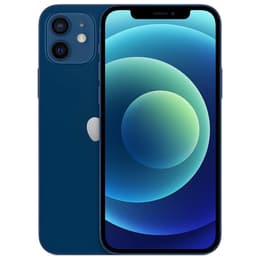
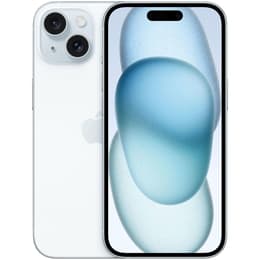
iPhone 12 mini • Unlocked vs iPhone 15 • Locked T-Mobile

iPhone 12 mini • Unlocked
Starting at

Refurbished price:$149.00

Versus $459.00 new

See options
iPhone 15 • Locked T-Mobile
Starting at

Refurbished price:$379.00

Versus $699.00 new

See options

Ratings

The iPhone 12 Mini, released in November 2020, and the iPhone 15, launched in September 2023, represent different approaches within Apple's smartphone lineup. While both devices operate on the iOS ecosystem, they cater to distinct user preferences primarily through their size, camera capabilities, and connectivity options. The iPhone 12 Mini offers a compact experience, whereas the iPhone 15 provides a larger display and more advanced features.

Scores

Durability

The longevity and support for these devices vary due to their respective release timelines and design philosophies.

  • Release and Software Support: The iPhone 12 Mini, introduced in late 2020, can expect major iOS updates for approximately 5-7 years from its release, with security updates potentially extending beyond that period. The iPhone 15, being a 2023 release, is anticipated to receive major iOS updates for a minimum of 5 years from its supply date, likely extending to 5-7 years for major updates and longer for security patches, offering a longer window of software relevance.
  • Physical Durability: Both models feature a Ceramic Shield front cover, designed to offer enhanced drop performance. The iPhone 15 also incorporates a color-infused glass back. Both devices carry an IP68 rating for water and dust resistance, indicating they can withstand submersion in up to 6 meters of water for up to 30 minutes.
  • Repairability: The iPhone 12 Mini received a repairability score of 6 out of 10, with its modular design simplifying some common repairs like battery and display replacement. The iPhone 15 has an improved repairability score of 7 out of 10, reflecting Apple's efforts to make the device more accessible for repairs, including easier replacement of the back glass.

Release Year

2020

2023

Last OS Compatibility

Yes

Yes

OS

iOS

iOS

Foldable

No

No

Performance

Performance differences between the iPhone 12 Mini and iPhone 15 stem from their generational advancements in internal components.

  • Processing Power: The iPhone 12 Mini is equipped with a capable processor that handles demanding applications and multitasking smoothly, providing a responsive user experience for everyday tasks and gaming without noticeable lag. The iPhone 15 features a newer, more advanced processor, which translates to even faster app loading, smoother transitions, and more efficient handling of power-intensive tasks like advanced photo editing or graphically demanding games.
  • Multitasking and Responsiveness: The iPhone 12 Mini comes with 4GB of RAM, which is sufficient for typical smartphone usage and switching between several applications. The iPhone 15 includes 6GB of RAM, offering greater capacity for keeping more applications open in the background and providing a more fluid experience when rapidly switching between them.
  • Long-term Performance: Due to its newer and more powerful internal architecture, the iPhone 15 offers more headroom for future software updates and increasingly complex applications, potentially maintaining its high level of performance for a longer duration compared to the iPhone 12 Mini.

Memory (GB)

4 GB

6 GB

Screen quality

The visual experience on both devices is delivered through high-quality displays, though with notable differences in size, brightness, and interactive elements.

  • Display Technology and Size: The iPhone 12 Mini features a 5.4-inch Super Retina XDR OLED display, offering deep blacks and vibrant colors in a compact form factor. The iPhone 15 sports a larger 6.1-inch Super Retina XDR OLED display, providing more screen real estate for content consumption and productivity.
  • Brightness and Clarity: Both displays offer excellent clarity with high pixel densities. The iPhone 12 Mini has a typical maximum brightness of 625 nits. The iPhone 15 significantly increases this to 1000 nits typical maximum brightness and can reach up to 2000 nits for peak outdoor brightness, making it more visible in bright sunlight.
  • Interactive Features: Both phones feature a 60Hz refresh rate, providing a smooth visual experience for most daily interactions. The iPhone 15 introduces the Dynamic Island, an adaptive area around the front camera cutout that displays alerts, activities, and notifications, enhancing user interaction.

Resolution

1080 x 2340

1179 x 2556

Screen type

Super Retina XDR OLED

Super Retina XDR OLED

Audiovisual

Camera systems on both iPhones are designed for high-quality photography and videography, with the iPhone 15 introducing significant advancements.

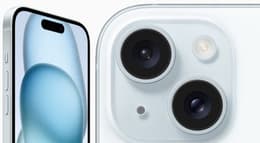
  • Main Camera System: The iPhone 12 Mini features a dual 12MP camera system with a Wide (f/1.6) and Ultra Wide (f/2.4) lens, capable of capturing detailed photos with Night mode, Deep Fusion, and Smart HDR 3. The iPhone 15 upgrades to an advanced dual-camera system with a 48MP Main camera (f/1.6, sensor-shift optical image stabilization) and a 12MP Ultra Wide (f/2.4). The 48MP sensor allows for super-high-resolution photos and enables a 2x telephoto option by cropping the sensor.
  • Computational Photography and Features: The iPhone 15 benefits from the Photonic Engine and Smart HDR 5, which enhance image quality, especially in challenging lighting conditions, and offer next-generation portrait features with improved focus and depth control. The iPhone 12 Mini provides 2x optical zoom out, while the iPhone 15 offers a 2x optical zoom in and 2x optical zoom out, resulting in a 4x optical zoom range.
  • Video Recording and Front Camera: Both phones support 4K video recording up to 60 frames per second. The iPhone 15 further enhances video capabilities with Cinematic mode and Action mode, and its TrueDepth front camera gains autofocus for sharper selfies and video calls.

Main camera

12 megapixels

48 megapixels

Front camera

12 megapixels

12 megapixels

Miscellaneous

Beyond core features, several practical elements differentiate the user experience between these two iPhone models.

  • Connectivity and Ports: Both devices support 5G connectivity for faster cellular data speeds. The iPhone 12 Mini uses Apple's proprietary Lightning port for charging and data transfer. The iPhone 15 transitions to a USB-C port, offering broader compatibility with other electronic devices and potentially faster data transfer speeds with compatible accessories.
  • Biometric Security and Design: Both models utilize Face ID for secure authentication. The iPhone 12 Mini is notably smaller and lighter, weighing 135 grams with dimensions of 131.5 x 64.2 x 7.4 mm, making it ideal for one-handed use and easy pocketability. The iPhone 15 is larger and heavier at 171 grams, with dimensions of 147.6 x 71.6 x 7.8 mm, providing a more expansive viewing experience.
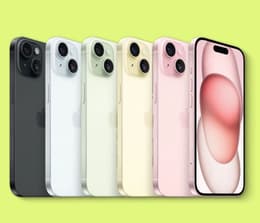
  • Build Materials: The iPhone 12 Mini features an aluminum frame. The iPhone 15 also uses an aluminum design, complemented by a color-infused glass back.

Weight

7 oz

171 oz

Screen size (inches)

5.4

6.1

Network

5G

5G

SIM card

Physical SIM + eSIM

eSIM

Carrier compatibility

Unlocked

T-Mobile

Connector

Lightning

USB-C (USB 2)

User feedback for the iPhone 12 Mini often highlights its compact size as a major advantage, making it comfortable for one-handed use and easy to carry. Many users appreciate having flagship-level performance in such a small form factor. However, a frequent criticism is its battery life, which some heavy users find insufficient for a full day without needing a recharge.

The iPhone 15 generally receives praise for its significant camera upgrades, the introduction of the Dynamic Island for interactive notifications, and the shift to USB-C connectivity, which many find convenient. Its battery life is also noted as an improvement over previous standard models. Some users, however, have reported experiencing faster-than-expected battery drain under heavy usage. The 60Hz refresh rate, while standard, is sometimes mentioned in comparison to devices with higher refresh rates.

Users prioritizing a highly compact device that is easy to handle with one hand and fits into smaller pockets may find the iPhone 12 Mini well-suited to their needs, especially if their daily usage does not heavily tax the battery. Conversely, individuals seeking a larger display, substantially enhanced camera capabilities for photography and videography, modern USB-C connectivity, and generally improved battery endurance for varied daily tasks will likely find the iPhone 15 to be a more fitting choice. Both models offer a quality-assured refurbished option, providing an eco-friendly alternative for consumers.
See all articles

Our recent comparisons