
Galaxy S10 • Unlocked vs iPhone 12 Pro • Unlocked

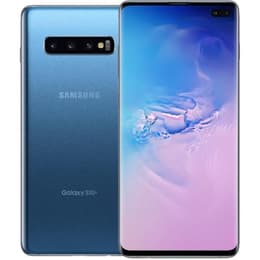
Galaxy S10 • Unlocked
Starting at

Refurbished price:$148.00

Versus $669.00 new

See options
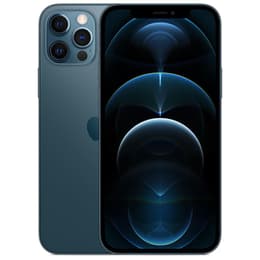
iPhone 12 Pro • Unlocked
Starting at

Refurbished price:$229.00

Versus $799.00 new

See options

Ratings

The Samsung Galaxy S10, released in March 2019, and the Apple iPhone 12 Pro, launched in October 2020, represent flagship smartphones from their respective manufacturers. While both devices offer premium experiences, they cater to different ecosystems and introduce distinct features. The Galaxy S10 runs on Android, providing a customizable interface, whereas the iPhone 12 Pro operates on iOS, known for its streamlined user experience. Key differentiators include their camera systems, display technologies, and overall design philosophies.

Scores

Durability

When considering the long-term usability of these devices, their release timelines and software support are important factors.

  • Software Longevity: The Galaxy S10, launched in March 2019, received major Android updates up to Android 12, with official software support concluding around March 2023 for security patches. The iPhone 12 Pro, released in October 2020, benefits from Apple's typically longer software support, expected to receive major iOS updates for several more years from its release.
  • Physical Durability: The iPhone 12 Pro introduced a Ceramic Shield front cover, designed to offer enhanced drop performance, alongside a stainless steel frame. The Galaxy S10 features Gorilla Glass 6 on the front and Gorilla Glass 5 on the back, with an aluminum frame. Both devices carry an IP68 rating for water and dust resistance.
  • Repairability: iFixit gave the Galaxy S10 a repairability score of 3 out of 10, noting difficulties due to extensive adhesive and a soldered charging port. The iPhone 12 Pro received a score of 6 out of 10, with display and battery replacements being more straightforward, though the glass back can be challenging to repair.

Release Year

2019

2020

Last OS Compatibility

No

Yes

OS

Android

iOS

Foldable

No

No

Performance

Both the Galaxy S10 and iPhone 12 Pro were designed to deliver robust performance for their respective generations, handling a variety of tasks efficiently.

  • System Responsiveness: The iPhone 12 Pro, with its newer internal components, offers very smooth performance, excelling in demanding applications, complex multitasking, and graphically intensive games. The Galaxy S10 provides capable performance for everyday use, though it may show slight delays when loading modern, resource-intensive applications compared to the iPhone 12 Pro.
  • Storage and Multitasking: The Galaxy S10 typically comes with 8GB of RAM and offers the unique advantage of a microSD card slot for expanding storage. The iPhone 12 Pro features 6GB of RAM and relies on fixed internal storage capacities (128GB, 256GB, or 512GB), managing background tasks efficiently through integrated hardware-software optimization.
  • Battery Behavior: The Galaxy S10 is equipped with a 3400 mAh battery, generally providing a full day of use under typical conditions, though heavy users might find it requires a mid-day top-up. The iPhone 12 Pro has a 2815 mAh battery, which also delivers solid battery life for most users throughout a day. Both devices support fast charging and wireless charging.

Memory (GB)

8 GB

6 GB

Screen quality

The visual experience on both devices is a highlight, with each offering a high-quality display designed for clarity and vibrant colors.

  • Display Technology and Resolution: The Galaxy S10 features a 6.1-inch Dynamic AMOLED display with a QHD+ resolution of 3040x1440 pixels, resulting in a high pixel density of 550 ppi. The iPhone 12 Pro sports a 6.1-inch Super Retina XDR OLED display with a resolution of 2532x1170 pixels, offering 460 ppi. Both technologies provide deep blacks and vibrant color reproduction.
  • Brightness and Clarity: The iPhone 12 Pro's Super Retina XDR display is known for its color accuracy and high peak brightness, particularly in outdoor conditions. The Galaxy S10's Dynamic AMOLED screen also offers excellent brightness and sharpness.
  • Design and Refresh Rate: The Galaxy S10 uses a curved display that provides an immersive edge-to-edge feel, while the iPhone 12 Pro features a flat display. Both devices feature a standard 60Hz refresh rate.

Resolution

1440 x 3040

1170 x 2532

Screen type

Dynamic AMOLED

Super Retina XDR OLED

Audiovisual

Both smartphones offer versatile camera systems capable of capturing high-quality photos and videos, though with different strengths and features.

  • Rear Camera Systems: The Galaxy S10 is equipped with a triple-lens rear camera setup: a 12MP main lens with variable aperture, a 12MP telephoto lens with 2x optical zoom, and a 16MP ultra-wide-angle lens. The iPhone 12 Pro also features a triple 12MP camera system, including wide, ultra-wide, and a 2x telephoto lens, along with a LiDAR sensor for improved depth sensing.
  • Photography Performance: The Galaxy S10 is known for producing vibrant images with good dynamic range, performing well in various lighting conditions. The iPhone 12 Pro's camera system is frequently commended for its consistency and robust performance, especially in low light, and its ability to capture detailed images.
  • Video Capabilities and Audio: The iPhone 12 Pro is recognized for its stable and high-quality video recording, supporting advanced color formats like Dolby Vision HDR. The Galaxy S10 provides reliable 4K recording at 60 frames per second. For audio, the Galaxy S10 retains a traditional 3.5mm headphone jack, a feature absent on the iPhone 12 Pro, which relies on wireless or adapter-based audio solutions.

Main camera

12 megapixels

12 megapixels

Front camera

10 megapixels

12 megapixels

Miscellaneous

Practical hardware features like connectivity and biometric security define the daily user experience for both the Galaxy S10 and the iPhone 12 Pro.

  • Connectivity Standards: The iPhone 12 Pro supports 5G networks, allowing for faster mobile data speeds in supported areas. The Galaxy S10 is limited to 4G LTE, which remains sufficient for standard browsing and streaming. Both devices support modern Wi-Fi standards and Bluetooth.
  • Port Types and Biometrics: The Galaxy S10 uses a USB-C port for charging and data transfer and features an ultrasonic fingerprint sensor embedded under the display for secure access. The iPhone 12 Pro utilizes a Lightning port and relies on Face ID, a facial recognition system, for unlocking and authentication.
  • Dimensions and Build Materials: The Galaxy S10 weighs approximately 157 grams and has dimensions of 149.9 x 70.4 x 7.8 mm. The iPhone 12 Pro weighs around 189 grams and measures 146.7 x 71.5 x 7.4 mm. The iPhone 12 Pro features a stainless steel frame, while the Galaxy S10 uses an aluminum frame.

Weight

6 oz

7 oz

Screen size (inches)

6.1

6.1

Network

LTE

5G

SIM card

Physical SIM

Physical SIM + eSIM

Carrier compatibility

Unlocked

Unlocked

User feedback for the Samsung Galaxy S10 often praises its vibrant, curved AMOLED display, the inclusion of a 3.5mm headphone jack, and expandable storage. However, some users have noted concerns regarding battery drain over time and the end of major software updates. The in-display fingerprint sensor, while innovative, sometimes presented compatibility issues with certain screen protectors.

Conversely, the iPhone 12 Pro is frequently commended for its robust build quality, the consistency and quality of its camera system, and its 5G connectivity. Common criticisms have included reports of excessive standby battery drain for some users and the absence of a high refresh rate display. Some users also found the device to be on the heavier side.

Users prioritizing a highly customizable Android experience with features like expandable storage and a headphone jack may find the Galaxy S10 well-suited to their needs. Those who value a longer software support timeline, a highly integrated ecosystem, and advanced video recording capabilities might lean toward the iPhone 12 Pro. Both devices offer a premium smartphone experience, and for those seeking a more sustainable choice, quality-assured refurbished options are available for both models.


See all articles

Our recent comparisons