
Galaxy S10 • Unlocked vs iPhone 12 Pro Max • Unlocked

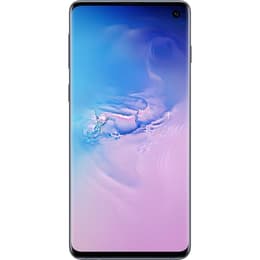
Galaxy S10 • Unlocked
Starting at

Refurbished price:$148.00

Versus $669.00 new

See options
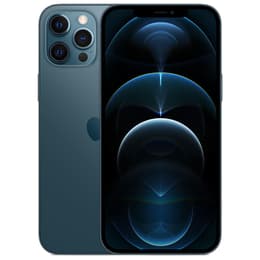
iPhone 12 Pro Max • Unlocked
Starting at

Refurbished price:$314.00

Versus $899.00 new

See options

Ratings

The Samsung Galaxy S10, released in March 2019, and the iPhone 12 Pro Max, launched in November 2020, represent flagship smartphones from their respective manufacturers. While the Galaxy S10 operates on Android, the iPhone 12 Pro Max runs on Apple's iOS, offering distinct user experiences. A primary difference lies in their release timelines, with the iPhone 12 Pro Max being a newer device, which naturally brings advancements in processing power and camera technology.

Scores

Durability

When considering the long-term usability of these devices, their release dates and software support cycles are key factors.

  • Release Timeline: The Galaxy S10 was introduced in March 2019, making it an older device compared to the iPhone 12 Pro Max, which arrived in November 2020. This difference in age impacts the remaining period of official software updates.
  • Software Longevity: The Galaxy S10 typically received three major Android OS updates, concluding its major OS support around Android 12, though security updates may continue for a period. The iPhone 12 Pro Max, launching with iOS 14, benefits from Apple's longer software support cycle, meaning it will continue to receive major iOS updates for several more years.
  • Physical Durability & Repairability: Both devices feature robust builds with glass fronts and backs, and are rated IP68 for water and dust resistance. The iPhone 12 Pro Max introduces Ceramic Shield on its front for enhanced drop performance. The Galaxy S10 received a lower repairability score of 3 out of 10 from iFixit, indicating challenges in repair, partly due to extensive use of adhesive and a soldered charging port.

Release Year

2019

2020

Last OS Compatibility

No

Yes

OS

Android

iOS

Foldable

No

No

Performance

The performance of a smartphone is crucial for daily tasks, from browsing to demanding applications and gaming.

  • Processing Power: The iPhone 12 Pro Max, being a newer generation device, offers a more advanced processor. This translates to smoother operation, faster app loading times, and more efficient handling of graphically intensive games and complex applications compared to the Galaxy S10.
  • Multitasking and Responsiveness: While the Galaxy S10 typically comes with 8GB or 12GB of RAM, and the iPhone 12 Pro Max with 6GB, the efficiency of the operating systems means both devices handle multitasking effectively. However, the iPhone 12 Pro Max generally provides a more fluid and responsive experience across the system due to its optimized hardware and software integration.
  • Storage and Battery: The Galaxy S10 offers flexible storage options, including a microSD card slot for expansion, alongside internal storage up to 1TB. The iPhone 12 Pro Max provides internal storage options up to 512GB without expansion capabilities. In terms of battery, the iPhone 12 Pro Max generally delivers longer usage times, with many users reporting it can last through a full day of heavy use and often into a second day for moderate usage. The Galaxy S10's battery, while capable of lasting a full day for moderate users, may require more frequent charging for heavy use.

Memory (GB)

8 GB

6 GB

Screen quality

The visual experience is a significant aspect of smartphone usage, and both devices offer high-quality displays.

  • Display Technology and Clarity: The Galaxy S10 features a 6.1-inch Dynamic AMOLED display with a resolution of 3040 x 1440 pixels, resulting in a pixel density of approximately 550 pixels per inch (ppi). The iPhone 12 Pro Max boasts a larger 6.7-inch Super Retina XDR OLED display with a resolution of 2778 x 1284 pixels, offering about 458 ppi. Both displays provide vibrant colors, deep blacks, and excellent clarity for viewing content.
  • Brightness and Outdoor Visibility: Both phones offer high peak brightness levels, making them suitable for outdoor use and ensuring content remains visible even in bright conditions. The iPhone 12 Pro Max has a higher peak brightness for HDR content, enhancing the viewing experience for compatible media.
  • Refresh Rate and Features: Both the Galaxy S10 and the iPhone 12 Pro Max feature a standard 60Hz refresh rate. The Galaxy S10's display is curved, offering an 'Infinity-O' design, while the iPhone 12 Pro Max has a flat display with a notch for its front camera and sensors. The iPhone 12 Pro Max also includes True Tone technology, which adjusts the display's white balance to match ambient light.

Resolution

1440 x 3040

1284 x 2778

Screen type

Dynamic AMOLED

Super Retina XDR OLED

Audiovisual

For many users, the camera system is a deciding factor, and both phones offer capable photographic tools.

  • Rear Camera Systems: The Galaxy S10 features a versatile triple-camera setup on the rear, including a 12-megapixel wide lens, a 12-megapixel telephoto lens, and a 16-megapixel ultrawide lens. The iPhone 12 Pro Max also has a triple 12-megapixel camera system, comprising wide, ultrawide, and telephoto lenses, augmented by a LiDAR scanner for improved depth sensing and autofocus in low light.
  • Photography Performance: In everyday lighting, both phones capture detailed and colorful images. The iPhone 12 Pro Max, with its larger main camera sensor and advanced computational photography, generally excels in low-light conditions, producing images with less noise and better detail. The Galaxy S10 also performs well in low light for its generation, often prioritizing balanced exposure.
  • Video Recording and Front Camera: Both devices are capable of recording 4K video at 60 frames per second. The iPhone 12 Pro Max further enhances video capabilities with Dolby Vision HDR recording. For selfies, the Galaxy S10 has a 10-megapixel front camera, while the iPhone 12 Pro Max features a 12-megapixel front camera, both capable of capturing detailed self-portraits and supporting video calls.

Main camera

12 megapixels

12 megapixels

Front camera

10 megapixels

12 megapixels

Miscellaneous

Beyond core features, several practical elements contribute to the overall user experience of a smartphone.

  • Connectivity: The iPhone 12 Pro Max supports 5G connectivity, offering faster cellular data speeds in areas where 5G networks are available. The Galaxy S10 is limited to 4G LTE. Both devices support Wi-Fi 6 and Bluetooth 5.0 for efficient wireless communication.
  • Ports and Biometrics: The Galaxy S10 includes a USB-C port for charging and data transfer, along with a traditional 3.5mm headphone jack. It features an ultrasonic in-display fingerprint sensor for secure unlocking. The iPhone 12 Pro Max uses Apple's proprietary Lightning port and relies on Face ID for biometric authentication.
  • Design and Handling: The iPhone 12 Pro Max is a larger and heavier device, weighing 228 grams with dimensions of 160.8 x 78.1 x 7.4 mm. The Galaxy S10 is more compact and lighter at 157 grams, with dimensions of 149.9 x 70.4 x 7.8 mm, making it potentially easier for one-handed use. The iPhone 12 Pro Max features a flat-edge stainless steel design, while the Galaxy S10 has a curved glass design.

Weight

6 oz

7 oz

Screen size (inches)

6.1

6.7

Network

LTE

5G

SIM card

Physical SIM

Physical SIM + eSIM

Carrier compatibility

Unlocked

Unlocked

User feedback often highlights the iPhone 12 Pro Max's exceptional battery life and its advanced camera system, particularly for low-light photography and video recording with Dolby Vision. Its robust performance and long-term software support are also frequently praised. Some users note its larger size and weight as a consideration for one-handed use. The Galaxy S10 is often commended for its vibrant display, the inclusion of a headphone jack, and expandable storage. However, its battery life, while adequate for many, is not as consistently praised as that of the iPhone 12 Pro Max, and its software support cycle has concluded.

Users prioritizing extended software longevity, cutting-edge camera capabilities, and the fastest cellular connectivity may find the iPhone 12 Pro Max well-suited to their needs. Its larger display also appeals to those who consume a lot of media or require more screen real estate for productivity. Conversely, individuals who value a more compact design, the flexibility of expandable storage, and the convenience of a traditional headphone jack might lean towards the Galaxy S10. Both devices, when considering a quality-assured refurbished option, offer a sustainable choice for consumers looking for high-performance smartphones without purchasing new.


See all articles

Our recent comparisons