
Galaxy S10E • Unlocked vs iPhone 12 • Unlocked

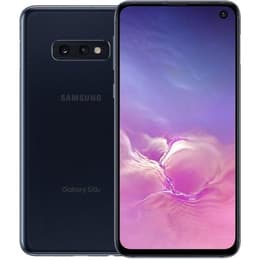
Galaxy S10E • Unlocked
Starting at

Refurbished price:$117.00

Versus $459.00 new

See options
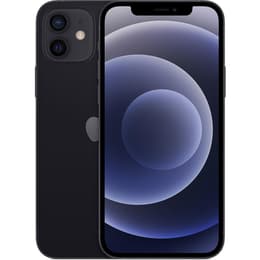
iPhone 12 • Unlocked
Starting at

Refurbished price:$172.96

Versus $629.00 new

See options

Ratings

The Samsung Galaxy S10e, released in March 2019, and the Apple iPhone 12, launched in October 2020, represent distinct approaches to smartphone design and functionality from their respective manufacturers. While the Galaxy S10e offers a compact Android experience with a traditional headphone jack, the iPhone 12 introduces a newer iOS ecosystem with 5G connectivity and a refreshed design. These devices cater to users with differing preferences for operating systems and form factors.

Scores

Durability

When considering the long-term usability of these devices, their release timelines and software support cycles are key factors.

  • Software Longevity: The Galaxy S10e, released in March 2019, received its final major Android operating system update with Android 12 (One UI 4.1) in 2022, and security updates concluded in 2023. This means it no longer receives critical software or security patches, potentially leaving it vulnerable to future software and privacy risks. In contrast, the iPhone 12, launched in October 2020, shipped with iOS 14 and has continued to receive updates, including iOS 17, with expectations for several more years of support.
  • Physical Durability: Both devices carry an IP68 rating for dust and water resistance, indicating they can withstand submersion in water under specific conditions. The iPhone 12 features a Ceramic Shield front cover, designed to offer enhanced drop performance. The Galaxy S10e uses Gorilla Glass 5 for its front and back.
  • Repairability: The iPhone 12 received a repairability score of 6 out of 10 from iFixit, similar to its predecessor. However, it was noted that certain repairs, particularly for cameras and screens, might face challenges with third-party parts due to software configuration requirements. Information regarding the specific repairability score for the Galaxy S10e is less widely available, but older Samsung devices generally offered more straightforward component replacement.

Release Year

2019

2020

Last OS Compatibility

No

Yes

OS

Android

iOS

Foldable

No

No

Performance

The performance of a smartphone is crucial for daily tasks, from app usage to multitasking and gaming.

  • Processing Power: The Galaxy S10e is powered by a processor that, at its release, delivered blazing fast performance for its time, handling demanding applications smoothly. The iPhone 12 features a newer generation processor, which was noted for delivering some of the best performance statistics among smartphones at its launch, ensuring a fluid and responsive user experience across various applications and tasks.
  • Multitasking and Storage: The Galaxy S10e typically comes with 6GB or 8GB of RAM, providing ample capacity for running multiple applications simultaneously. It offers 128GB or 256GB of internal storage, with the added flexibility of expandable storage via a microSD card. The iPhone 12 is equipped with 4GB of RAM and is available in 64GB, 128GB, or 256GB storage configurations, without expandable storage.
  • Battery Behavior: The Galaxy S10e, with its 3100 mAh battery, generally offers moderate battery life, with some users reporting around 4 to 7 hours of screen-on time, suggesting that heavy users might need to charge it before the end of a full day. The iPhone 12, with a 2815 mAh battery, provides average battery life, typically lasting between 7 and 10 hours for heavy usage, though 5G connectivity can impact its longevity.

Memory (GB)

6 GB

4 GB

Screen quality

The display is a primary interface for smartphone interaction, and both devices offer distinct visual experiences.

  • Display Technology and Size: The Galaxy S10e features a 5.8-inch Dynamic AMOLED flat display with a resolution of 2280 by 1080 pixels, resulting in a pixel density of 438 pixels per inch (ppi). The iPhone 12 comes with a 6.1-inch Super Retina XDR OLED display, offering a resolution of 2532 by 1170 pixels at 460 ppi.
  • Brightness and Color: The Galaxy S10e's display can reach a maximum brightness of 603 nits in manual mode, providing good visibility in various lighting conditions. The iPhone 12's OLED panel offers a typical maximum brightness of 625 nits, with a peak brightness of 1200 nits for HDR content, along with support for HDR, True Tone, and wide color (P3) for accurate color reproduction.
  • Refresh Rate and Viewing Experience: Both smartphones feature a standard 60Hz refresh rate, which provides a smooth experience for everyday scrolling and content consumption. The Galaxy S10e's flat screen design is preferred by some users for its tactile feel and reduced accidental touches. The iPhone 12's OLED display delivers deep blacks and vibrant colors, enhancing the overall viewing experience for media.

Resolution

1080 x 2280

1170 x 2532

Screen type

Dynamic AMOLED

Super Retina XDR OLED

Audiovisual

Camera capabilities are a significant consideration for many users, and both devices offer versatile systems for capturing photos and videos.

  • Rear Camera System: The Galaxy S10e is equipped with a dual-camera setup on the rear, featuring a 12-megapixel wide-angle lens with optical image stabilization (OIS) and a variable aperture (f/1.5-f/2.4), alongside a 16-megapixel ultrawide-angle lens (f/2.2). The iPhone 12 also has a dual-camera system, consisting of a 12-megapixel wide-angle lens (f/1.6) with OIS and a 12-megapixel ultrawide-angle lens (f/2.4).
  • Photography Performance: In well-lit conditions, the Galaxy S10e's cameras produce detailed images with good dynamic range and saturated colors. However, its low-light performance is not as strong as some contemporary rivals. The iPhone 12 benefits from features like Night mode on all cameras, Deep Fusion, and Smart HDR 3, which contribute to improved performance in challenging lighting conditions and better detail retention.
  • Video Recording and Front Camera: The Galaxy S10e can record video up to 4K resolution at 60 frames per second (fps) and supports HDR10+ video recording. Its front-facing camera is 10-megapixels. The iPhone 12 supports video recording in Dolby Vision HDR at up to 4K 30fps, and its 12-megapixel front camera also benefits from Night mode and HDR video recording capabilities.

Main camera

12 megapixels

12 megapixels

Front camera

10 megapixels

12 megapixels

Miscellaneous

Beyond core features, several practical elements contribute to the overall user experience of a smartphone.

  • Connectivity and Ports: The Galaxy S10e supports 4G LTE, Wi-Fi 6 (802.11ax), and Bluetooth 5.0. It includes a USB-C port for charging and data transfer, and notably, a 3.5mm headphone jack. The iPhone 12 offers 5G connectivity, Wi-Fi 6, and Bluetooth 5.0. It uses a Lightning port for charging and accessories.
  • Biometrics and Special Features: The Galaxy S10e features a side-mounted fingerprint sensor for secure unlocking. It also includes Wireless PowerShare, allowing it to wirelessly charge other compatible devices. The iPhone 12 utilizes Face ID for biometric authentication. A notable feature is MagSafe, a magnetic system that enables magnetic wireless charging and attachment of various accessories.
  • Design and Handling: The Galaxy S10e is known for its compact dimensions, measuring 142.2 x 69.9 x 7.9 mm and weighing 150 grams, making it easy to handle with one hand. The iPhone 12 has a slightly larger footprint at 146.7 x 71.5 x 7.4 mm and weighs 164 grams, featuring a flat-edged design. Both devices utilize glass backs and aluminum frames.

Weight

5 oz

7 oz

Screen size (inches)

5.8

6.1

Network

LTE

5G

SIM card

Physical SIM

Physical SIM + eSIM

Carrier compatibility

Unlocked

Unlocked

Connector

USB-C + Jack 3.5mm

Lightning

The Samsung Galaxy S10e and iPhone 12 offer distinct experiences tailored to different user preferences. Users often praise the Galaxy S10e for its compact size, the inclusion of a 3.5mm headphone jack, and its flat display, which many find comfortable for one-handed use. However, common criticisms include its mediocre battery life for heavy users and the fact that its software support has concluded, meaning no further major Android updates or security patches.

The iPhone 12 is frequently lauded for its robust performance, capable camera system, and the introduction of 5G connectivity and MagSafe technology. On the other hand, its battery life is often described as average, particularly when utilizing 5G, and some users have noted challenges with third-party repairs for certain components due to software authentication.

Users prioritizing a smaller form factor, the flexibility of Android, and traditional features like a headphone jack may find the Galaxy S10e well-suited to their needs. Conversely, those who value a newer iOS experience, extended software support, advanced processing power, and features like 5G and MagSafe might lean towards the iPhone 12. Both devices, especially as quality-assured refurbished options, provide an eco-friendly alternative for consumers seeking reliable technology.


See all articles

Our recent comparisons