
Compare models
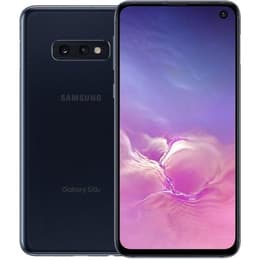
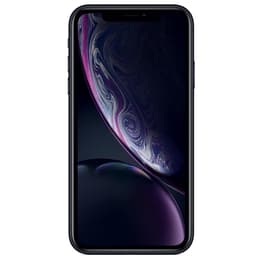
Galaxy S10E • Unlocked vs iPhone XR • Unlocked
- 1-year warranty
- Free standard shipping
- Free 30-day returns
Differences at a glance
The Samsung Galaxy S10e (2019) and the Apple iPhone XR (2018) are both compact smartphones that offered flagship-level experiences in their respective ecosystems at the time of their release. While the Galaxy S10e runs on Android with Samsung's One UI, the iPhone XR operates on Apple's iOS platform. Key differentiators include their display technologies, camera setups, and biometric security methods.
Available Models
Color
Storage (GB)
Scores
Durability
When considering the practical lifespan of these devices, their release timelines and software support policies are important factors.
- Release and Software Support: The iPhone XR, released in October 2018, received major iOS updates through iOS 18 in Fall 2024, with security updates expected to continue into 2026-2027. The Galaxy S10e, launched in March 2019, originally ran Android 9.0 and received major OS upgrades up to Android 12. However, it stopped receiving regular security updates as of April/June 2023.
- Physical Durability: Both devices offer a degree of water and dust resistance, with the Galaxy S10e rated IP68 and the iPhone XR rated IP67. The Galaxy S10e features Gorilla Glass 5 for screen protection, while the iPhone XR uses dual-ion exchange-strengthened glass.
- Expected Lifespan: Users prioritizing the latest software features and security patches will find the iPhone XR offers a longer period of active support. For those considering an eco-friendly, quality-assured refurbished option, understanding these support timelines helps manage expectations for future compatibility.
Release Year
2019
2018
Last OS Compatibility
No
Yes
OS
Android
iOS
Foldable
No
No
Performance
Both the Galaxy S10e and iPhone XR deliver capable performance for everyday tasks, though their underlying architectures differ.
- System Responsiveness: The iPhone XR provides a consistently smooth and fluid user experience, handling app launches, multitasking, and general navigation with ease. The Galaxy S10e also offers strong performance, allowing for smooth operation across various applications and efficient multitasking.
- Storage and Multitasking: The Galaxy S10e typically comes with 6GB or 8GB of RAM, supporting robust multitasking, and offers 128GB or 256GB storage options, expandable via microSD. The iPhone XR features 3GB of RAM and storage options of 64GB, 128GB, or 256GB, without expandable storage.
- Battery Behavior: The iPhone XR is known for its generally good battery life, often lasting a full day with moderate to heavy use. The Galaxy S10e, with its 3100mAh battery, has received mixed reviews; some users report it lasting a full day, while others note quicker drainage with intensive use.
Screen quality
The visual experience on these two smartphones is distinct, primarily due to their differing display technologies.
- Display Technology and Clarity: The Galaxy S10e features a 5.8-inch Dynamic AMOLED display, offering deep blacks, vibrant colors, and HDR10+ certification. It has a Full HD+ resolution of 2280 x 1080 pixels, resulting in a pixel density of 438 PPI. The iPhone XR sports a 6.1-inch Liquid Retina HD display, which is an IPS LCD panel. It has a resolution of 1792 x 828 pixels, with a pixel density of 326 PPI.
- Brightness and Outdoor Visibility: The Galaxy S10e's display can reach up to 1200 nits peak brightness, providing excellent legibility even in bright outdoor conditions. The iPhone XR offers a maximum brightness of 625 nits, which is generally sufficient for outdoor use.
- Viewing Experience: While the iPhone XR's LCD was criticized by some for its lower resolution compared to other phones at its release, many users found it perfectly adequate for daily viewing, noting its accurate color reproduction and True Tone technology. The Galaxy S10e's AMOLED panel provides superior contrast and color saturation, which can enhance media consumption.
Resolution
1080 x 2280
828 x 1792
Screen type
Dynamic AMOLED
Liquid Retina IPS LCD
Audiovisual
Both devices offer capable camera systems, though they approach photography with different hardware configurations.
- Rear Camera Systems: The Galaxy S10e features a dual-camera setup on the rear: a 12MP wide-angle lens with a variable aperture (f/1.5-f/2.4) and optical image stabilization (OIS), alongside a 16MP ultra-wide-angle lens (f/2.2). The iPhone XR utilizes a single 12MP wide-angle camera with an f/1.8 aperture and OIS.
- Photography Performance: The Galaxy S10e delivers punchy and detailed photos in good lighting, with the ultra-wide lens offering a broader perspective. Its low-light performance is decent, though it can exhibit aggressive noise reduction in very dark scenes. The iPhone XR's single lens is praised for its consistent image quality, good dynamic range thanks to Smart HDR, and effective Portrait Mode for people, which is achieved through software. It performs well in low-light conditions for a single-lens system.
- Video Recording and Audio: Both phones support 4K video recording, with the Galaxy S10e offering a Super Steady mode for smoother footage. The iPhone XR also records stabilized video, and its audio recording for videos and calls is generally clear.
Main camera
12 megapixels
12 megapixels
Front camera
10 megapixels
7 megapixels
Miscellaneous
Beyond core features, several practical elements contribute to the overall user experience of these smartphones.
- Connectivity and Ports: The Galaxy S10e supports Wi-Fi 6 (802.11ax) and Bluetooth 5.0, and notably includes a 3.5mm headphone jack, along with a USB-C port for charging and data transfer. The iPhone XR supports Wi-Fi 5 (802.11ac) and Bluetooth 5.0, relying on Apple's proprietary Lightning port for charging and accessories, and lacks a headphone jack.
- Biometric Security: The iPhone XR exclusively uses Face ID for secure facial recognition. The Galaxy S10e features a side-mounted fingerprint sensor integrated into the power button, offering a quick and convenient unlock method, in addition to face unlock.
- Design and Handling: The Galaxy S10e is a more compact device, weighing 150g with dimensions of 142.2 x 69.9 x 7.9 mm, making it easy for one-handed use. The iPhone XR is slightly larger and heavier at 194g and 150.9 x 75.7 x 8.3 mm. Both devices feature premium build materials.
Weight
5 oz
7 oz
Screen size (inches)
5.8
6.1
Network
LTE
LTE
SIM card
Physical SIM
Physical SIM + eSIM
Carrier compatibility
Unlocked
Unlocked
What the community thinks
The Samsung Galaxy S10e and iPhone XR, while from different ecosystems, both offer compelling features for users seeking a capable smartphone. User sentiment for the iPhone XR often highlights its reliable performance, good battery life, and consistent camera quality, with many appreciating its overall value and longevity of software support. Some criticisms have pointed to its LCD display's resolution compared to OLED alternatives, though many users find this a non-issue in daily use.
For the Galaxy S10e, users frequently praise its compact form factor, vibrant AMOLED display, and the versatility of its dual-camera system, particularly the ultra-wide lens. Common concerns for the S10e often revolve around its battery life, which can be inconsistent for heavy users, and its earlier end-of-life for software updates compared to the iPhone XR.
Users prioritizing a longer software update cycle and a highly optimized, consistent user experience may find the iPhone XR more aligned with their needs. Those who value a more compact design, a vibrant AMOLED screen, expandable storage, and the flexibility of an ultra-wide camera might lean towards the Galaxy S10e. Both devices, especially as quality-assured refurbished options, represent a sustainable choice for consumers looking for capable technology without purchasing new.