
Galaxy S10+ • Unlocked vs iPhone 13 Pro Max • Unlocked

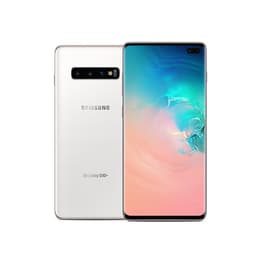
Galaxy S10+ • Unlocked
Starting at

Refurbished price:$165.00

Versus $719.00 new

See options
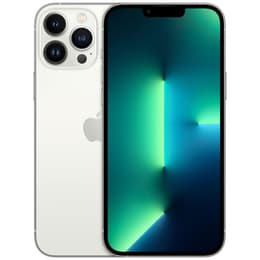
iPhone 13 Pro Max • Unlocked
Starting at

Refurbished price:$362.27

Versus $999.00 new

See options

Ratings

The Samsung Galaxy S10 Plus, released in March 2019, and the Apple iPhone 13 Pro Max, launched in September 2021, represent different generations and operating systems within the smartphone landscape. While both devices offer premium experiences, the iPhone 13 Pro Max benefits from more recent advancements in processing power, camera technology, and display features. The Galaxy S10 Plus runs on Android, offering more customization, whereas the iPhone 13 Pro Max operates on iOS, known for its integrated ecosystem.

Scores

Durability

These two devices have distinct timelines and expected software support.

  • Software Longevity: The Samsung Galaxy S10 Plus, released in early 2019, has completed its major operating system updates, having received up to Android 12. This means it will no longer receive new Android versions, though security updates may continue for a period. The iPhone 13 Pro Max, launched in late 2021, is still actively receiving the latest iOS updates and is expected to continue doing so for several more years, offering a longer period of software longevity.
  • Physical Build: Both devices feature glass front and back panels, with the iPhone 13 Pro Max incorporating Apple's Ceramic Shield front cover for enhanced drop performance. The Galaxy S10 Plus uses Gorilla Glass 6 on the front and Gorilla Glass 5 on the back. Both are rated for water and dust resistance, though the iPhone 13 Pro Max has a slightly higher IP68 rating for deeper submersion.
  • Repairability: While both devices can be repaired, the availability of parts and service for the older Galaxy S10 Plus might be more varied compared to the more recent iPhone 13 Pro Max.

Release Year

2019

2021

Last OS Compatibility

No

Yes

OS

Android

iOS

Foldable

No

No

Performance

The performance capabilities of the Galaxy S10 Plus and the iPhone 13 Pro Max reflect their respective release dates and underlying architectures.

  • Everyday Responsiveness: The iPhone 13 Pro Max, with its more recent internal components, delivers a noticeably faster and more fluid experience across demanding applications and multitasking scenarios. The Galaxy S10 Plus, while still capable for everyday tasks, may show its age when running the most intensive games or complex productivity apps.
  • Multitasking and Gaming: Users engaging in heavy multitasking or playing graphics-intensive games will find the iPhone 13 Pro Max provides a more consistent and higher-performing experience due to its advanced processor and GPU. The Galaxy S10 Plus can manage these tasks but may exhibit occasional slowdowns with the most demanding content.
  • Storage Options: Both devices offer a range of storage capacities. The Galaxy S10 Plus was available with 128GB, 512GB, and 1TB storage options, while the iPhone 13 Pro Max offers 128GB, 256GB, 512GB, and 1TB options.

Memory (GB)

8 GB

6 GB

Screen quality

Both devices feature high-quality displays, but the iPhone 13 Pro Max introduces a key advancement in refresh rate.

  • Display Technology: Both utilize OLED technology, providing excellent contrast and true blacks. The Samsung Galaxy S10 Plus features a 6.4-inch Dynamic AMOLED display with a Quad HD+ resolution. The iPhone 13 Pro Max boasts a larger 6.7-inch Super Retina XDR OLED display, also offering excellent color accuracy and contrast, but with higher peak brightness, which can improve visibility in bright outdoor conditions.
  • Refresh Rate: A significant difference is the iPhone 13 Pro Max's ProMotion display, which dynamically adjusts its refresh rate up to 120Hz. This results in noticeably smoother scrolling and more fluid animations compared to the Galaxy S10 Plus's standard 60Hz refresh rate.
  • Screen Size and Clarity: The iPhone 13 Pro Max offers a slightly larger screen, providing a more expansive viewing area. Both displays deliver sharp and clear visuals, suitable for media consumption and detailed work, with the Galaxy S10 Plus having a resolution of 1440 x 3040 pixels and the iPhone 13 Pro Max having 2778 x 1284 pixels.

Resolution

1440 x 3040

1284 x 2778

Screen type

Dynamic AMOLED

Super Retina XDR OLED

Audiovisual

The camera systems and audio experiences differ between these two smartphones, reflecting advancements over time.

  • Photography Performance: The iPhone 13 Pro Max features a more advanced triple-camera system (12MP wide, 12MP ultrawide, 12MP telephoto) that generally delivers superior image quality, particularly in challenging low-light environments, with better detail retention and reduced noise. The Galaxy S10 Plus also has a versatile triple-camera setup (12MP wide, 12MP telephoto, 16MP ultrawide), which was highly regarded at its release, but it does not match the newer device's low-light performance or advanced computational photography features.
  • Video Recording: The iPhone 13 Pro Max stands out with features like Cinematic Mode for shallow depth-of-field video and ProRes video recording, offering more creative control and professional-grade video capabilities. Both devices can record 4K video at 60 frames per second.
  • Audio Experience: Both phones provide stereo speakers for an immersive audio experience. The Galaxy S10 Plus includes a 3.5mm headphone jack, a feature absent on the iPhone 13 Pro Max, which relies on its Lightning port or wireless audio solutions.

Main camera

12 megapixels

12 megapixels

Front camera

10 megapixels

12 megapixels

Miscellaneous

Beyond core features, several practical elements distinguish the Galaxy S10 Plus and the iPhone 13 Pro Max.

  • Connectivity: The iPhone 13 Pro Max supports 5G cellular networks, offering faster data speeds in compatible areas, while the Galaxy S10 Plus is limited to 4G LTE. Both support Wi-Fi 6 and Bluetooth 5.0.
  • Biometric Security: The Galaxy S10 Plus uses an ultrasonic in-display fingerprint sensor for secure unlocking. The iPhone 13 Pro Max relies on Face ID, its facial recognition system, for authentication.
  • Physical Design and Handling: The iPhone 13 Pro Max is a larger and heavier device, weighing 240 grams with dimensions of 160.8 x 78.1 x 7.65 mm. The Galaxy S10 Plus is comparatively lighter at 175 grams and slightly more compact at 157.6 x 74.1 x 7.8 mm. The iPhone uses a Lightning port, while the Galaxy S10 Plus uses a USB-C port.

Weight

6 oz

8000 oz

Screen size (inches)

6.4

6.7

Network

LTE

5G

SIM card

Physical SIM

Physical SIM + eSIM

Carrier compatibility

Unlocked

Unlocked

User feedback often highlights the iPhone 13 Pro Max's exceptional battery life, robust performance, and advanced camera system as key strengths. Users frequently praise its smooth iOS experience and the quality of its display. Some common criticisms revolve around its substantial size and weight, which can make it less comfortable for smaller hands. The Galaxy S10 Plus is often lauded for its vibrant display, the inclusion of a headphone jack, and its overall balanced feature set at the time of its release. Users sometimes note its battery life can be inconsistent with heavy use and that its software support has concluded.

Users prioritizing a device with the latest performance, an extended software update timeline, and advanced camera capabilities, especially for video, will find the iPhone 13 Pro Max well-suited to their needs. Its ProMotion display also offers a smoother visual experience. Conversely, users who prefer the Android ecosystem, value the presence of a traditional headphone jack, and appreciate a slightly lighter device might lean towards the Galaxy S10 Plus. Both devices offer a premium smartphone experience, and for those considering a quality-assured refurbished option, both models represent a sustainable choice for different user profiles.


See all articles

Our recent comparisons