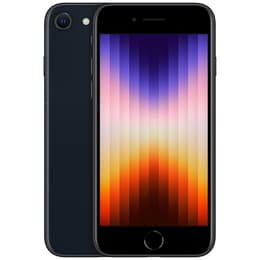

Galaxy S20 FE 5G • Unlocked vs iPhone SE (2022) • Locked T-Mobile

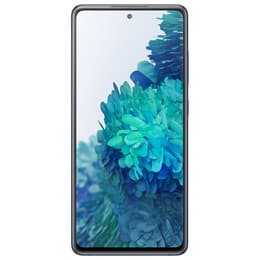
Galaxy S20 FE 5G • Unlocked
Starting at

Refurbished price:$135.00

Versus $903.28 new

See options
iPhone SE (2022) • Locked T-Mobile
Starting at

Refurbished price:$124.00

Versus $429.00 new

See options

Ratings

The Samsung Galaxy S20 FE 5G, released in late 2020, and the Apple iPhone SE (2022), launched in early 2022, are two distinct smartphones offering different user experiences. While the Galaxy S20 FE 5G runs on the Android operating system, providing a customizable interface, the iPhone SE (2022) operates on Apple's iOS, known for its streamlined ecosystem. Key differentiators include their display technologies, camera systems, and overall design philosophies.

Scores

Durability

The expected practical lifespan of a smartphone is influenced by its release timeline, software support, and physical durability features.

  • Release Timeline: The Samsung Galaxy S20 FE 5G was released in October 2020, making it an older device compared to the iPhone SE (2022), which launched in March 2022. This difference in release dates impacts their respective software support cycles.
  • Software Longevity: The Galaxy S20 FE 5G initially ran Android 10 and received major OS updates up to Android 13. Its software updates are now on a quarterly schedule, with major OS support having concluded around 2025. The iPhone SE (2022), launching with iOS 15.4, is expected to receive iOS updates for approximately 5 to 7 years from its release, potentially extending its software support until 2028-2030.
  • Durability Features: Both devices offer a degree of water and dust resistance. The Galaxy S20 FE 5G features an IP68 rating, allowing submersion up to 1.5 meters for 30 minutes. The iPhone SE (2022) has an IP67 rating, protecting against submersion up to 1 meter for 30 minutes. The Galaxy S20 FE 5G uses Corning Gorilla Glass 3 for screen protection, while the iPhone SE (2022) incorporates a stronger glass on both its front and back, similar to the iPhone 13 series.

Release Year

2020

2022

Last OS Compatibility

No

Yes

OS

Android

iOS

Foldable

No

No

Performance

Performance in both devices is designed to handle everyday tasks efficiently, though they approach processing power differently.

  • System Responsiveness: The iPhone SE (2022) is equipped with a current-generation processor, which allows it to handle demanding applications and multitasking with notable smoothness. The Galaxy S20 FE 5G features a powerful processor from its release era, providing a responsive experience for most applications and general usage.
  • Multitasking and App Handling: Users of the iPhone SE (2022) can expect seamless transitions between multiple open applications and efficient handling of graphically intensive games. The Galaxy S20 FE 5G, with its ample RAM options, also manages multitasking effectively, allowing users to switch between apps without significant slowdowns.
  • Storage Options: The Galaxy S20 FE 5G offers internal storage options of 128GB and 256GB, with the added flexibility of expandable storage via a microSDXC card. The iPhone SE (2022) comes with internal storage options of 64GB, 128GB, and 256GB, but does not support expandable storage.

Memory (GB)

6 GB

4 GB

Screen quality

The visual experience on these two smartphones differs significantly due to their display technologies and design.

  • Display Technology and Clarity: The Galaxy S20 FE 5G features a 6.5-inch Super AMOLED display, which delivers deep blacks and vibrant colors, contributing to an immersive viewing experience. The iPhone SE (2022) has a smaller 4.7-inch Retina HD LCD display, offering accurate color reproduction and good clarity for its size.
  • Refresh Rate and Smoothness: The Galaxy S20 FE 5G boasts a 120Hz refresh rate, which results in smoother scrolling and a more fluid visual experience, particularly noticeable during gaming or fast-paced content. The iPhone SE (2022) maintains a standard 60Hz refresh rate.
  • Brightness and Outdoor Visibility: Both displays offer sufficient brightness for indoor use. For outdoor visibility, the Super AMOLED panel on the Galaxy S20 FE 5G generally performs well, though some users have noted that its brightness can be challenging in direct sunlight. The iPhone SE (2022)'s display provides good brightness for various lighting conditions.

Resolution

1080 x 2400

750 x 1334

Screen type

Super AMOLED

Retina IPS LCD

Audiovisual

Both devices offer capable camera systems, but they are designed with different photographic approaches and features.

  • Rear Camera System: The Galaxy S20 FE 5G features a versatile triple-camera setup on the rear, including a 12-megapixel wide lens, an 8-megapixel telephoto lens with 3x optical zoom, and a 12-megapixel ultrawide lens. This configuration allows for a range of photographic styles, from expansive landscapes to zoomed-in shots. The iPhone SE (2022) has a single 12-megapixel wide rear camera, relying on its advanced processing capabilities to enhance image quality.
  • Photography Performance: The Galaxy S20 FE 5G is noted for producing images with rich colors and good detail in various lighting conditions, with its 3x optical zoom being a practical feature. Its Night Mode also works across multiple lenses. The iPhone SE (2022) delivers consistent image quality with accurate color and tone reproduction, particularly in good lighting. However, it lacks a dedicated Night Mode feature.
  • Video Recording: Both smartphones are capable of recording 4K video at 60 frames per second. The Galaxy S20 FE 5G also offers features like Pro Video mode and Super Slow-mo.
  • Front Camera: The Galaxy S20 FE 5G has a 32-megapixel front camera, providing high-resolution selfies. The iPhone SE (2022) features a 7-megapixel front camera.

Main camera

12 megapixels

12 megapixels

Front camera

32 megapixels

7 megapixels

Miscellaneous

Beyond core features, several practical elements contribute to the overall user experience and daily usability of these devices.

  • Connectivity: Both the Galaxy S20 FE 5G and the iPhone SE (2022) support 5G connectivity, Wi-Fi 6, and Bluetooth 5.0, enabling fast data speeds and reliable wireless connections. The iPhone SE (2022) supports sub-6GHz 5G.
  • Ports and Biometrics: The Galaxy S20 FE 5G uses a USB Type-C port for charging and data transfer and features an in-display optical fingerprint sensor for secure unlocking. The iPhone SE (2022) utilizes Apple's proprietary Lightning connector and retains the physical Home button with integrated Touch ID for biometric authentication. Neither device includes a 3.5mm headphone jack.
  • Design and Handling: The Galaxy S20 FE 5G has a larger 6.5-inch screen and a plastic back with an aluminum frame, weighing 190 grams. The iPhone SE (2022) is more compact with its 4.7-inch display, featuring a glass front and back with an aluminum frame, and weighs 144 grams.

Weight

6 oz

3 oz

Screen size (inches)

6.5

4.7

Network

5G

5G

SIM card

Physical SIM

Physical SIM + eSIM

Carrier compatibility

Unlocked

T-Mobile

User sentiment for the Samsung Galaxy S20 FE 5G often highlights its strong performance, versatile camera system with optical zoom, and vibrant 120Hz AMOLED display as significant advantages. Many users appreciate its overall value proposition, combining flagship-level features with a more accessible design. Criticisms sometimes point to the plastic back feeling less premium than glass, and some users have noted that the screen brightness can be challenging in direct sunlight.

The iPhone SE (2022) is frequently praised for its powerful internal processor, which ensures smooth operation and extended software support. Its compact size and the inclusion of Touch ID are also popular features for users who prefer a smaller device or a physical home button. Common concerns revolve around its dated design with large bezels, the smaller LCD display compared to modern smartphones, and its battery life, which, while improved over its predecessor, may require more frequent charging for heavy users.

Users prioritizing a larger, more modern display with a high refresh rate, a versatile multi-lens camera system, and expandable storage may find the Galaxy S20 FE 5G well-suited to their needs. Conversely, those who value a compact form factor, a powerful and long-supported operating system, and the familiarity of Touch ID will likely lean towards the iPhone SE (2022). Both devices offer robust performance for everyday tasks and connectivity. For those considering either model, exploring quality-assured refurbished options can provide an eco-friendly alternative to extend the life cycle of these capable smartphones.

See all articles

Our recent comparisons