Compare models
Galaxy S21 5G • Unlocked vs Galaxy S24 Ultra • Unlocked
- 1-year warranty
- Free standard shipping
- Free 30-day returns
Differences at a glance
The Samsung Galaxy S21 5G, released in January 2021, and the Samsung Galaxy S24 Ultra, launched in January 2024, represent different generations within Samsung's flagship smartphone lineup. While both devices offer a premium Android experience, the S24 Ultra introduces significant advancements in processing power, camera technology, and display features, reflecting three years of technological evolution.
Available Models
Color
Storage (GB)
Scores
Durability
When considering the longevity of these devices, several factors come into play, including software support and physical resilience.
- Software Support: The Galaxy S21 5G was released with Android 11 and typically receives four major Android OS updates and five years of security updates. In contrast, the Galaxy S24 Ultra launched with Android 14 and is promised seven years of major OS updates and security patches, extending its software lifespan considerably.
- Physical Durability: The Galaxy S21 5G features Corning Gorilla Glass Victus for screen protection and an IP68 rating for dust and water resistance. The Galaxy S24 Ultra enhances this with Corning Gorilla Armor for its display, offering improved scratch resistance, and a titanium frame, alongside its IP68 dust and water resistance rating.
- Repairability: The Galaxy S21 5G has a repairability score of 7.5 out of 10, with an easily removable back plate and replaceable parts, though the battery can be difficult to remove due to strong adhesive. The Galaxy S24 Ultra achieves a higher repairability score of 9 out of 10, noted for its ease of battery replacement with pull tabs and accessible internal components, despite some complexities in screen removal.
Release Year
2021
2024
Last OS Compatibility
Yes
Yes
OS
Android
Android
Foldable
No
No
Performance
The performance capabilities of these two devices reflect the generational gap, impacting how smoothly they handle demanding applications and multitasking.
- Processing Power: The Galaxy S21 5G provides capable performance for everyday tasks and moderate gaming. The Galaxy S24 Ultra, being a newer device, offers a significantly more powerful processor, resulting in faster app loading, smoother multitasking, and enhanced performance for graphically intensive games and advanced AI features.
- Memory and Storage: The Galaxy S21 5G typically comes with 8GB of RAM and storage options of 128GB or 256GB. The Galaxy S24 Ultra generally features 12GB of RAM, with storage configurations starting from 256GB and going up to 1TB, providing more headroom for demanding applications and extensive data storage.
- Battery Performance: The Galaxy S21 5G is equipped with a 4000 mAh battery, generally providing a full day of moderate use. The Galaxy S24 Ultra houses a larger 5000 mAh battery, and combined with a more efficient processor, users often report extended battery life, with some experiencing up to 16 hours and 45 minutes of usage in tests, surpassing many contemporaries.
Screen quality
The visual experience on both devices is delivered through high-quality displays, though with notable differences in technology and brightness.
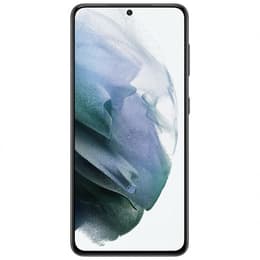
- Display Technology and Size: Both phones feature Dynamic AMOLED 2X displays, known for vibrant colors and deep blacks. The Galaxy S21 5G has a 6.2-inch FHD+ display (1080 x 2400 pixels). The Galaxy S24 Ultra offers a larger 6.8-inch QHD+ display (3120 x 1440 pixels), providing a more expansive and sharper viewing area.
- Brightness and Clarity: The Galaxy S21 5G's display can reach a peak brightness of around 1300 nits. The Galaxy S24 Ultra significantly increases this to a peak brightness of 2600 nits, which, combined with an anti-reflective coating, greatly enhances outdoor visibility and overall clarity in bright conditions.
- Refresh Rate: Both models feature an adaptive refresh rate up to 120Hz for smooth scrolling and responsiveness. The S24 Ultra's display can dynamically adjust its refresh rate from 1Hz to 120Hz, optimizing power consumption based on content.
Resolution
1080 x 2400
1440 x 3120
Screen type
Dynamic AMOLED 2X
Dynamic LTPO AMOLED 2X
Audiovisual
The camera systems on these smartphones offer distinct capabilities, catering to different photography and videography needs.
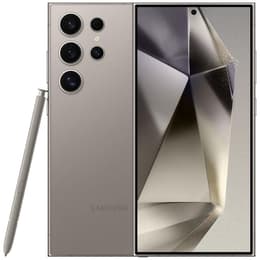
- Rear Camera System: The Galaxy S21 5G features a triple camera setup with a 12MP main, 12MP ultrawide, and a 64MP telephoto lens offering 3x hybrid optical zoom. The Galaxy S24 Ultra boasts a more advanced quad-camera system, including a 200MP main sensor, a 12MP ultrawide, a 10MP telephoto with 3x optical zoom, and a 50MP periscope telephoto with 5x optical zoom, which can achieve high-quality 10x zoom through cropping.
- Photography Performance: The S21 5G delivers good photos in various conditions, with improved focus and subject tracking. The S24 Ultra offers enhanced detail, improved low-light performance, and more natural-looking images, with its higher resolution sensors and advanced image processing.
- Video Recording: Both devices are capable of 8K video recording. The S24 Ultra further enhances video capabilities with features like 4K video at up to 120fps in Pro Video mode and improved stabilization, including gyro data encoding for smoother footage.
Main camera
12 megapixels
200 megapixels
Front camera
10 megapixels
12 megapixels
Miscellaneous
Beyond core features, several practical elements differentiate these two Galaxy devices.
- Connectivity: The Galaxy S21 5G supports 5G, Wi-Fi 6, and Bluetooth 5.0. The Galaxy S24 Ultra upgrades connectivity with support for 5G, Wi-Fi 7, and Bluetooth 5.3, offering faster wireless speeds and improved efficiency.
- Ports and Sensors: Both phones utilize a USB-C port for charging and data transfer. The S24 Ultra features USB Type-C 3.2, allowing for faster data transfer rates compared to the S21 5G. Both include an in-display fingerprint sensor for biometric security.
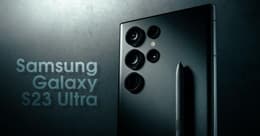
- Design and Build: The Galaxy S21 5G has dimensions of 151.7 x 71.2 x 7.9 mm and weighs 169 grams, featuring a plastic back. The Galaxy S24 Ultra is larger and heavier at 162.3 x 79.0 x 8.6 mm and 232 grams, incorporating a titanium frame for enhanced durability and a more substantial feel. The S24 Ultra also uniquely integrates an S Pen stylus, offering additional functionality for note-taking and navigation.
Weight
7 oz
8 oz
Screen size (inches)
6.2
6.8
Network
5G
5G
SIM card
Physical SIM + eSIM
Physical SIM + eSIM
Carrier compatibility
Unlocked
Unlocked
What the community thinks
The Samsung Galaxy S21 5G remains a capable smartphone, often praised by users for its compact size, vibrant display, and reliable camera performance for everyday use. Common feedback highlights its solid overall experience, especially for those who prefer a smaller form factor. However, some users have noted that its battery life, while adequate for moderate use, may require more frequent charging for heavy users as the device ages. The S21 5G is well-suited for individuals seeking a dependable Android device for general use, communication, and casual photography, particularly if they value a more manageable size.
The Samsung Galaxy S24 Ultra, on the other hand, is frequently lauded for its exceptional battery life, with many users reporting it comfortably lasts through a full day of intensive use. Its advanced camera system, particularly the improved telephoto capabilities and AI enhancements, receives significant praise for delivering high-quality and versatile imaging. The brighter, anti-reflective display is also a common highlight, improving usability in various lighting conditions. While some discussions touch upon the learning curve for new AI features or the device's larger size, the consensus points to a highly refined and powerful device. Users prioritizing extended battery life, cutting-edge camera technology, and a large, immersive display with stylus functionality will find the S24 Ultra aligns well with their needs.
For those evaluating their options, considering a quality-assured refurbished option for either model can be an eco-friendly alternative, providing access to these devices while supporting sustainable consumption.