
Samsung
Compare models
Differences at a glance
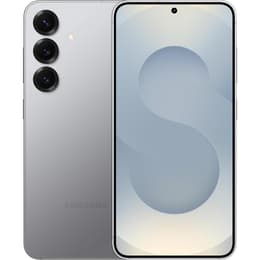
The Samsung Galaxy S22 Ultra 5G, released in February 2022, and the Samsung Galaxy S25, launched in February 2025, represent different tiers and generations within Samsung's smartphone lineup. While the S22 Ultra was a top-tier flagship from its release year, featuring an integrated stylus and an advanced camera system, the S25 is a more recent standard model that prioritizes a compact form factor and extended software support. Both devices operate on the Android platform, with the S25 benefiting from a newer version and a longer update commitment from Samsung.
Color
Storage
When considering the longevity of these devices, their respective release timelines and software support policies are key factors. The Galaxy S22 Ultra 5G, released in February 2022, was initially promised four generations of Android OS upgrades and five years of security updates. As of March 2026, the S22 series continues to receive quarterly security updates, indicating ongoing support for critical security patches. [19, 20, 24]
In contrast, the Galaxy S25, launched in February 2025, benefits from Samsung's more recent commitment to extended software support, promising seven years of both OS and security updates. [4, 6, 18] This means the S25 will receive major Android version updates and security patches for a significantly longer period than the S22 Ultra. Both devices feature an IP68 rating for dust and water resistance, and the S22 Ultra uses Gorilla Glass Victus+ for display and back panel protection, while the S25 incorporates Gorilla Glass Victus 2 for its display, offering robust physical durability. [9, 10, 11, 23]
Release Year
Last OS Compatibility
OS
Foldable
The performance capabilities of the Galaxy S22 Ultra 5G and the Galaxy S25 reflect the generational advancements in mobile processing technology. The S22 Ultra is powered by a processor from early 2022, offering strong performance for its time, capable of handling demanding applications and multitasking. It was available with 8GB or 12GB of RAM and storage options up to 1TB. [11]
The Galaxy S25, released three years later, features a newer, more efficient processor. This newer chipset provides notable performance improvements, resulting in smoother daily operation, enhanced gaming experiences, and better thermal management, leading to less heat buildup during intensive tasks. [1, 5, 6, 18] The S25 comes standard with 12GB of RAM, ensuring robust multitasking capabilities, and offers storage options up to 512GB. [1, 6, 18] The S22 Ultra is equipped with a 5000 mAh battery, generally providing a full day of varied use, though heavy tasks like 4K video recording can lead to quicker drain and noticeable warmth. [7, 24, 27, 33, 34] The S25, despite a smaller 4000 mAh battery, has been noted by users to offer good battery life, often lasting more than a day under significant use, attributed to its more efficient processor and software optimizations. [8, 10, 13, 18, 23]
Both the Galaxy S22 Ultra 5G and the Galaxy S25 feature high-quality displays, but with differences in size, resolution, and brightness that cater to varying user preferences. The S22 Ultra boasts a larger 6.8-inch Dynamic AMOLED 2X display with a Quad HD+ resolution (3088 x 1440 pixels), providing a very sharp and expansive viewing experience. It offers an adaptive 120Hz refresh rate for smooth scrolling and a peak brightness of 1750 nits, making it suitable for outdoor visibility. [7, 9, 11, 32]
The Galaxy S25 features a more compact 6.2-inch Dynamic AMOLED 2X display with a Full HD+ resolution (2340 x 1080 pixels). Despite the lower resolution compared to the S22 Ultra, the S25's display still delivers sharp visuals and vibrant colors, with a 120Hz adaptive refresh rate for fluid interactions. A significant upgrade for the S25 is its peak brightness, reaching up to 2600 nits, which enhances visibility in bright sunlight. [1, 5, 8, 18]
Resolution
Screen type
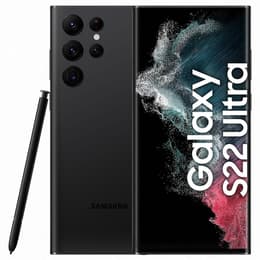
The camera systems of the Galaxy S22 Ultra 5G and the Galaxy S25 reflect different design philosophies, with the S22 Ultra emphasizing versatility and advanced zoom, and the S25 focusing on a strong main sensor with newer processing. The S22 Ultra features a quad-camera setup on the rear, including a 108 MP wide main sensor, a 12 MP ultrawide, a 10 MP telephoto with 3x optical zoom, and another 10 MP telephoto with an impressive 10x optical zoom. [7, 9, 11] This configuration was highly praised for its ability to capture detailed images across various focal lengths, particularly its long-range zoom capabilities. [24, 27, 34] The front camera is a 40 MP sensor. [7, 9] Video recording goes up to 8K at 24fps. [7, 9]
The Galaxy S25 comes with a triple-camera system, featuring a 50 MP wide-angle main camera, a 12 MP ultrawide camera, and a 10 MP telephoto camera with 3x optical zoom. [1, 26] While its main sensor benefits from newer image processing and computational photography, user reviews suggest that its ultrawide and telephoto lenses, while capable, may not offer the same level of versatility or extreme zoom performance as the S22 Ultra's more specialized setup. [18] The front camera is a 12 MP sensor. [1, 26] The S25 also supports video recording up to 8K UHD at 30fps. [10] Both devices offer stereo speakers for media consumption. [11, 22]
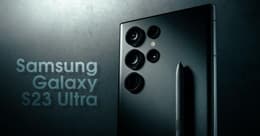
Beyond core specifications, several practical elements differentiate the Galaxy S22 Ultra 5G and the Galaxy S25, influencing their daily usability and appeal to different users. A standout feature of the S22 Ultra is its integrated S Pen stylus, offering precise input for note-taking, drawing, and navigation, a hallmark of the Ultra series. [11, 24] The S25, being a standard model, does not include an S Pen. Both devices incorporate an ultrasonic in-screen fingerprint sensor for secure authentication. [10, 16]
In terms of connectivity, the S22 Ultra supports Wi-Fi 6E and Bluetooth 5.2, while the newer S25 likely features more advanced standards like Wi-Fi 7 and Bluetooth 5.4, offering potentially faster and more stable wireless connections. Both utilize a USB-C port for charging and data transfer. [9, 10, 16] The S22 Ultra is a larger and heavier device, measuring 163.3 x 77.9 x 8.9 mm and weighing 228g, with a glass front and back and an aluminum frame. [9, 11] The S25 is significantly more compact and lighter, at 146.9 x 70.5 x 7.2 mm and 162g, also featuring a glass rear and an aluminum frame. [10] The S25 also integrates Samsung's Galaxy AI features, enhancing various aspects of user interaction and productivity. [4, 6, 13, 26]
Weight
Screen size (inches)
Network
SIM card
Carrier compatibility
The Samsung Galaxy S22 Ultra 5G and the Galaxy S25 cater to distinct user needs, reflecting their positions as a past-generation premium flagship and a current-generation standard model, respectively. Users frequently praise the S22 Ultra for its expansive, high-resolution display, its versatile camera system with impressive optical zoom capabilities, and the integrated S Pen, which offers a unique productivity experience. [24, 27, 32, 34] Common criticisms for the S22 Ultra often revolve around its large size and weight, which can make one-handed use challenging, and its battery life, while generally good, may not extend beyond a full day for heavy users. [24, 33, 34]
The Galaxy S25, on the other hand, receives commendation for its compact and lightweight design, making it comfortable to hold and carry. Users appreciate its bright display, the significant performance boost from its newer processor, and the extended software support commitment from Samsung. [18, 22, 23, 26] Some users note that while the main camera is strong, the ultrawide and telephoto lenses may not be as advanced as those found in higher-tier or older Ultra models. [18] The absence of an S Pen is also a differentiator for those accustomed to the stylus functionality. [26]
Users prioritizing a large, feature-rich device with advanced camera zoom and an integrated stylus will find the Galaxy S22 Ultra 5G well-suited to their needs. Those who prefer a more compact, lighter phone with the latest processor, a brighter screen, and a longer software update lifespan, along with the benefits of Galaxy AI, may lean toward the Galaxy S25. Both devices offer a quality Android experience, and for those considering a quality-assured refurbished option, both models are available, providing an eco-friendly alternative to new purchases.