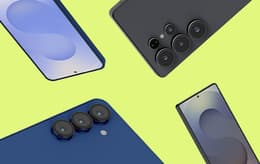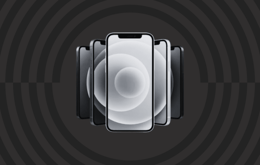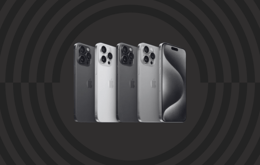
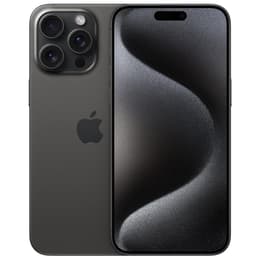

Galaxy S25 • Unlocked vs iPhone 15 Pro Max • Unlocked

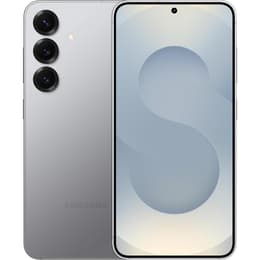
Galaxy S25 • Unlocked
Starting at

Refurbished price:$423.00

Versus $799.00 new

See options
iPhone 15 Pro Max • Unlocked
Starting at

Refurbished price:$562.00

Versus $1,199.00 new

See options

Ratings

The Samsung Galaxy S25, released in February 2025, and the Apple iPhone 15 Pro Max, launched in September 2023, represent flagship smartphones from their respective manufacturers. While both devices offer high-end mobile experiences, they differ in their operating systems and some core hardware philosophies. The Galaxy S25 runs on Android 15 with Samsung's One UI, offering extensive customization, while the iPhone 15 Pro Max operates on iOS, known for its integrated ecosystem and streamlined user experience.

Scores

Durability

Evaluating the long-term usability of these devices involves considering their release timelines, software support, and physical resilience.

  • Release Timeline: The iPhone 15 Pro Max, released in September 2023, has been available for a longer period than the Galaxy S25, which launched in February 2025. This difference means the iPhone 15 Pro Max has already received several software updates, while the Galaxy S25 is newer to the market.
  • Software Longevity: Samsung has committed to providing seven years of OS and security updates for the Galaxy S25 series, extending support until 2032. Apple typically offers five to six years of major iOS updates for its devices, meaning the iPhone 15 Pro Max can expect continued support for several more years.
  • Physical Durability: Both devices feature IP68 ratings for dust and water resistance, indicating protection against immersion. The iPhone 15 Pro Max incorporates Ceramic Shield glass on the front and a titanium frame, while the Galaxy S25 uses Gorilla Glass Victus 2 for its front and back, paired with an aluminum frame.

Release Year

2025

2023

Last OS Compatibility

Yes

Yes

OS

Android

iOS

Foldable

No

No

Performance

Both smartphones are equipped with advanced processors designed for demanding tasks, though their architectural approaches differ.

  • Processing Power: The Galaxy S25 is powered by the Snapdragon 8 Elite processor, which is designed to handle intensive applications and multitasking efficiently. The iPhone 15 Pro Max features Apple's A17 Pro chip, known for its strong performance in gaming and complex computations.
  • Multitasking and Responsiveness: The Galaxy S25 comes with 12 GB of RAM, providing ample capacity for running multiple applications simultaneously and switching between them smoothly. The iPhone 15 Pro Max includes 8 GB of RAM, which, combined with iOS optimization, also delivers a fluid and responsive user experience.
  • Battery Behavior: The Galaxy S25 has a 4000 mAh battery, which users report generally lasts through a full day of moderate use, though heavy users might require more frequent charging. The iPhone 15 Pro Max features a 4422 mAh battery, offering extended usage for many users, with some reports of faster-than-expected depletion under certain conditions.

Memory (GB)

12 GB

8 GB

Screen quality

The visual experience on both devices is characterized by high-quality displays, each with distinct characteristics.

  • Display Technology and Clarity: The Galaxy S25 features a 6.2-inch Dynamic LTPO AMOLED 2X display with a resolution of 2340 x 1080 pixels, resulting in a pixel density of approximately 416 ppi. The iPhone 15 Pro Max offers a larger 6.7-inch Super Retina XDR OLED display with a resolution of 2796 x 1290 pixels, providing a pixel density of about 460 ppi. Both displays offer vibrant colors and deep blacks.
  • Brightness and Refresh Rate: Both phones support a 120 Hz adaptive refresh rate, contributing to smooth scrolling and fluid animations. The Galaxy S25 boasts a peak brightness of 2600 nits, while the iPhone 15 Pro Max reaches 2000 nits peak outdoor brightness, ensuring good visibility in various lighting conditions.
  • Viewing Experience: The larger screen of the iPhone 15 Pro Max may offer a more expansive viewing experience for media consumption and productivity. The Galaxy S25, with its slightly smaller display, provides a more compact form factor for one-handed use.

Resolution

1080x2340

1290 x 2796

Screen type

Dynamic LTPO AMOLED 2X

LTPO Super Retina XDR OLED

Audiovisual

Both smartphones are equipped with versatile camera systems designed to capture high-quality photos and videos in various scenarios.

  • Rear Camera Systems: The Galaxy S25 features a triple rear camera setup, including a 50 MP main wide-angle lens, a 12 MP ultra-wide lens, and a 10 MP telephoto lens with 3x optical zoom. The iPhone 15 Pro Max also has a triple rear camera system, comprising a 48 MP main lens, a 12 MP ultra-wide lens, and a 12 MP telephoto lens with 5x optical zoom.
  • Photography Performance: Users generally report that the Galaxy S25 produces vibrant images with good detail, while the iPhone 15 Pro Max tends to offer more natural color tones. In low-light conditions, the iPhone 15 Pro Max often delivers strong performance, though the Galaxy S25 also performs well.
  • Video Recording and Audio: The Galaxy S25 supports video recording up to 8K resolution at 24/30fps, along with 4K at 30/60fps. The iPhone 15 Pro Max records video at up to 4K resolution at 24/25/30/60fps, with additional features like ProRes and Cinematic mode, and is often praised for its video quality. Both devices offer stereo speakers for media consumption.

Miscellaneous

Beyond core features, several practical elements contribute to the overall user experience of these devices.

  • Connectivity and Ports: Both the Galaxy S25 and iPhone 15 Pro Max support 5G connectivity for fast mobile data. The Galaxy S25 supports Wi-Fi 7 and Bluetooth 5.4, while the iPhone 15 Pro Max supports Wi-Fi 6E and Bluetooth 5.3. The iPhone 15 Pro Max features a USB-C 3.0 port, offering faster data transfer speeds compared to previous iPhone models.
  • Biometrics and Sensors: The Galaxy S25 utilizes an ultrasonic in-screen fingerprint sensor for secure unlocking. The iPhone 15 Pro Max relies on Face ID for biometric authentication. Both devices include a range of sensors for various functionalities.
  • Design and Handling: The Galaxy S25 measures 146.9 x 70.5 x 7.2 mm and weighs 162 g, making it a relatively compact and lightweight device. The iPhone 15 Pro Max is larger and heavier at 159.9 x 76.7 x 8.25 mm and 221 g, partly due to its larger screen and titanium frame.

Weight

6 oz

221 oz

Screen size (inches)

6.2

6.7

Network

5G

5G

SIM card

Physical SIM + eSIM

eSIM

Carrier compatibility

Unlocked

Unlocked

Connector

USB-C

USB-C (USB 3)

The Samsung Galaxy S25 and iPhone 15 Pro Max each offer a compelling set of features, catering to different user preferences. User feedback for the Galaxy S25 often highlights its strong performance, advanced AI integration, and vibrant camera output. Some initial criticisms included reports of overheating and software glitches, though many of these were addressed through updates. The 4000 mAh battery and 25W charging speed were noted by some users as areas where the device could see improvement for heavy usage.

For the iPhone 15 Pro Max, common praise centers on its powerful processor, advanced camera capabilities, and the seamless integration within the Apple ecosystem. However, some users reported initial overheating concerns, temporary discoloration of the titanium frame, and occasional software crashes. The battery life, while generally good, was sometimes noted for faster-than-expected depletion by some users.

Users prioritizing a compact, lightweight Android device with extensive customization options and long-term software support may find the Galaxy S25 well-suited to their needs. Those who value a larger display, a highly optimized ecosystem, and strong video recording capabilities might lean towards the iPhone 15 Pro Max. Both devices represent robust choices in the premium smartphone segment. For those considering either model, exploring quality-assured refurbished options can be an eco-friendly alternative to purchasing new.


See all articles

Our recent comparisons