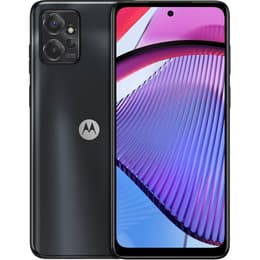
iPhone 14 • Locked Verizon vs Motorola Moto G Power 5G • Unlocked

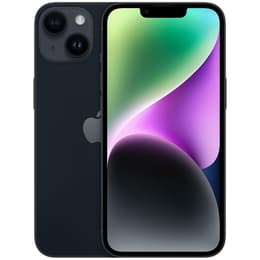
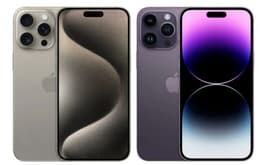
iPhone 14 • Locked Verizon
Starting at

Refurbished price:$300.94

Versus $599.00 new

See options
Motorola Moto G Power 5G • Unlocked
See options

Ratings

The iPhone 14, released in September 2022, and the Motorola Moto G Power 5G (2024), launched in March 2024, represent distinct approaches to smartphone design and functionality. While the iPhone 14 operates on Apple's iOS ecosystem, the Moto G Power 5G runs on Android, offering users different software experiences. Key differentiators include their display technologies, camera capabilities, and expected software support timelines.

Scores

Durability

The expected lifespan of a smartphone is influenced by its release date, software support, and physical durability.

  • Release Timeline & OS Support: The iPhone 14, released in September 2022, typically receives iOS updates for approximately 5-6 years from its launch, offering a longer period of guaranteed software support. The Motorola Moto G Power 5G (2024), released in March 2024, ships with Android 14 and Motorola generally promises one major Android OS update and three years of security updates. [21, 32]
  • Repairability: The iPhone 14 initially received a higher repairability score due to its internal redesign making components like the back glass more accessible. However, this score was later downgraded due to Apple's part-pairing requirements, which can complicate repairs with non-genuine parts or unauthorized service. [13, 17, 20, 25, 27] Information regarding the repairability score for the Moto G Power 5G (2024) is less prominent, but its construction with a plastic frame and back may offer some resilience to minor impacts. [24]
  • Practical Lifespan: Users can expect the iPhone 14 to remain fully functional and secure for a longer duration due to extended software updates. The Moto G Power 5G (2024) offers a solid experience for its intended lifespan, though its software support window is shorter.

Release Year

2022

2023

OS

iOS

Android

Foldable

No

No

Performance

Performance in both devices is tailored to their respective ecosystems, impacting how smoothly apps run and how efficiently tasks are handled.

  • Processor Capabilities: The iPhone 14 features a powerful processor that handles demanding applications, multitasking, and graphic-intensive games with consistent responsiveness. [12] The Moto G Power 5G (2024) is equipped with a processor capable of managing everyday tasks smoothly, including social media, video calls, and moderate gaming. [1, 21]
  • Storage & Responsiveness: The iPhone 14 is available with storage options up to 512GB, providing ample space for apps and media. [6] The Moto G Power 5G (2024) comes with 128GB of internal storage, which can be expanded up to 1TB via a microSD card, offering flexibility for users who need more space. [1, 24] Both devices offer smooth navigation through their respective operating systems, though the iPhone 14 generally provides a more fluid experience for heavy usage.
  • Battery Behavior: The iPhone 14 typically offers all-day battery life for most users, often requiring overnight charging. [12] Some users of the iPhone 14 Pro models have reported faster battery degradation than expected. [36] The Moto G Power 5G (2024) is known for its extensive battery life, often lasting up to two days with normal use, thanks to its large capacity. [21, 32, 33] It also supports 30W wired fast charging and 15W wireless charging. [3, 21, 23]

Memory (GB)

6 GB

6 GB

Screen quality

The visual experience on these devices differs significantly due to their display technologies and specifications.

  • Display Technology & Resolution: The iPhone 14 features a 6.1-inch Super Retina XDR OLED display, offering deep blacks, vibrant colors, and a resolution of 2532 x 1170 pixels at approximately 460 pixels per inch. [2, 4, 7, 10] The Moto G Power 5G (2024) has a larger 6.7-inch IPS LCD display with a resolution of 2400 x 1080 pixels, providing clear visuals. [1, 8, 23, 24]
  • Brightness & Refresh Rate: The iPhone 14 boasts a typical brightness of 800 nits and a peak brightness of 1200 nits for HDR content, ensuring good visibility even in bright conditions. [2, 4, 7] It has a standard 60Hz refresh rate. [2] The Moto G Power 5G (2024) offers an adaptive refresh rate of up to 120Hz for smoother scrolling and animations, with a peak brightness of 500 nits. [1, 22]
  • Viewing Experience: The iPhone 14's OLED panel provides superior contrast and color accuracy, ideal for media consumption and detailed work. The Moto G Power 5G (2024)'s larger screen and higher refresh rate offer a more fluid viewing experience, particularly for gaming and general navigation, though its brightness may be less optimal in direct sunlight. [1]

Resolution

1170 x 2532

1080 x 2400

Audiovisual

Both devices offer capable camera systems, but with different strengths and features for capturing photos and videos.

  • Rear Camera System: The iPhone 14 features a dual-camera system with a 12MP main sensor (f/1.5 aperture) and a 12MP ultra-wide sensor (f/2.4 aperture), including sensor-shift optical image stabilization on the main lens. [4, 7] The Moto G Power 5G (2024) has a 50MP main camera with optical image stabilization (OIS) and an 8MP ultra-wide camera that also functions as a macro lens. [1, 21, 23, 28, 31]
  • Photography Performance: The iPhone 14 excels in low-light photography and offers advanced computational photography features like Photonic Engine and Smart HDR 4, resulting in detailed and well-exposed images across various conditions. [4, 7] The Moto G Power 5G (2024)'s main camera performs well in good lighting, but its low-light performance and the quality of its ultra-wide shots may show limitations. [1, 24, 32]
  • Video Recording & Front Camera: The iPhone 14 supports 4K video recording at up to 60fps, with features like Cinematic mode and Action mode for enhanced video capabilities. [4, 7] Its 12MP front camera includes autofocus. [2] The Moto G Power 5G (2024) records video at 1080p and features a 16MP front camera. [1, 23, 31] Both devices include stereo speakers, with the Moto G Power 5G (2024) also offering Dolby Atmos support and a 3.5mm headphone jack. [22, 23, 37]

Miscellaneous

Beyond core features, several practical elements contribute to the overall user experience and daily convenience.

  • Connectivity & Ports: Both devices support 5G connectivity. [6, 22] The iPhone 14 uses a Lightning port for charging and data transfer. [2] The Moto G Power 5G (2024) features a USB-C port and retains a 3.5mm headphone jack, offering more versatile audio connectivity. [1, 23, 37]
  • Biometric Security & Sensors: The iPhone 14 relies on Face ID for secure authentication. The Moto G Power 5G (2024) incorporates a side-mounted fingerprint sensor for biometric security. [1, 23, 34] Both devices include standard sensors like accelerometers and gyroscopes. [9, 31]
  • Design & Handling: The iPhone 14 features a Ceramic Shield front and a glass back with an aluminum design, offering a premium feel and IP68 water and dust resistance. [4, 7] It weighs 172 grams. [4, 7] The Moto G Power 5G (2024) has a vegan leather back and a plastic frame, providing a distinct tactile experience, and weighs 201 grams. [3, 24] It has a water-repellent design but lacks an official IP rating. [29, 32]

Weight

6 oz

7 oz

Screen size (inches)

6.1

6.5

Network

5G

5G

SIM card

eSIM

Physical SIM

Carrier compatibility

Verizon

Unlocked

Connector

Lightning

USB-C

The iPhone 14 and Motorola Moto G Power 5G (2024) cater to different user priorities, each offering a distinct set of advantages.

Users often praise the iPhone 14 for its consistent performance, high-quality camera system, and the long-term software support provided by Apple. Its compact size and premium build materials are also frequently highlighted. Criticisms sometimes point to its standard 60Hz display refresh rate and the proprietary Lightning port. [2, 4, 7, 12]

The Motorola Moto G Power 5G (2024) is frequently lauded for its exceptional battery life, often lasting multiple days on a single charge, and its large, smooth 120Hz display. The inclusion of a 3.5mm headphone jack and expandable storage are also popular features among users. Some common concerns include its camera performance in challenging lighting conditions and a shorter software update commitment compared to some competitors. [1, 21, 23, 24, 32]

Users prioritizing a compact device with a top-tier camera, robust performance for demanding applications, and extended software longevity may find the iPhone 14 well-suited to their needs. Conversely, individuals who value multi-day battery life, a larger display with a higher refresh rate, and the flexibility of expandable storage and a headphone jack might lean towards the Motorola Moto G Power 5G (2024). Both devices offer reliable smartphone experiences, with the choice depending on which features align best with individual usage patterns. For those considering a more sustainable choice, quality-assured refurbished options are available for both models, providing an eco-friendly alternative.

See all articles

Our recent comparisons