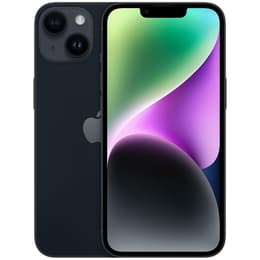
Galaxy S21 5G • Unlocked vs iPhone 14 • Locked Verizon

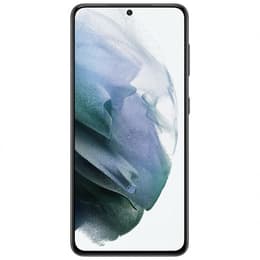
Galaxy S21 5G • Unlocked
Starting at

Refurbished price:$132.99

Versus $1,000.00 new

See options
iPhone 14 • Locked Verizon
Starting at

Refurbished price:$299.00

Versus $599.00 new

See options

Ratings

The Samsung Galaxy S21 5G, released in January 2021, and the iPhone 14, launched in September 2022, represent distinct approaches to the modern smartphone experience. While both are high-end devices from their respective manufacturers, they cater to different user preferences through their operating systems and hardware philosophies. The Galaxy S21 5G operates on the Android platform, offering a customizable interface, whereas the iPhone 14 runs on Apple's iOS, known for its integrated ecosystem. A key difference lies in their display technology and camera configurations, which influence daily interaction and photographic capabilities.

Scores

Durability

When considering the longevity of these devices, both the Galaxy S21 5G and the iPhone 14 offer robust build quality and extended software support, though their timelines differ.

  • Release Timeline: The Galaxy S21 5G was released in January 2021, making it an older model compared to the iPhone 14, which launched in September 2022. This age difference directly impacts their remaining software support cycles.
  • OS Support Duration: Samsung typically provides four major Android OS updates and five years of security updates for its flagship devices from their release date, meaning the Galaxy S21 5G has received updates up to Android 14 and is expected to receive security updates until around January 2026. The iPhone 14, on the other hand, is anticipated to receive iOS updates for approximately five to seven years from its launch, extending its software longevity potentially until 2028 or even 2034 for major updates.
  • Physical Durability: Both smartphones feature an IP68 rating for dust and water resistance, indicating they can withstand submersion in up to 6 meters of water for 30 minutes. The Galaxy S21 5G utilizes Gorilla Glass Victus for screen protection, while the iPhone 14 incorporates Apple's Ceramic Shield on its front cover, which is designed for enhanced drop performance.

Release Year

2021

2022

Last OS Compatibility

Yes

Yes

OS

Android

iOS

Foldable

No

No

Performance

The performance of a smartphone is crucial for daily tasks, and both devices deliver a responsive experience, albeit with different underlying architectures.

  • System Responsiveness: The Galaxy S21 5G, equipped with a high-end processor from its release year, handles demanding applications and multitasking smoothly. The iPhone 14, featuring a highly efficient processor, also provides fluid navigation and quick app loading times. Users generally report a consistently smooth experience on both platforms.
  • Multitasking and Storage: The Galaxy S21 5G typically comes with 8GB of RAM and offers storage options of 128GB or 256GB. The iPhone 14 includes 6GB of RAM and is available with 128GB, 256GB, or 512GB of internal storage. For users who frequently switch between many applications or store large files, the higher RAM in the S21 5G might offer a slight edge in keeping more apps active in memory, while the iPhone 14 offers a larger maximum storage capacity.
  • Battery Behavior: The Galaxy S21 5G houses a 4000 mAh battery, designed to provide a full day of typical use. The iPhone 14 has a 3279 mAh battery, which, combined with its efficient operating system and processor, also aims to deliver extended usage on a single charge. Actual battery life can vary significantly based on individual usage patterns and network conditions.

Memory (GB)

8 GB

6 GB

Screen quality

The visual experience is a primary interaction point, and both phones offer vibrant displays with distinct characteristics.

  • Display Technology and Clarity: The Galaxy S21 5G features a 6.2-inch Dynamic AMOLED 2X display with a resolution of 2400 x 1080 pixels, providing sharp images and deep blacks. The iPhone 14 comes with a 6.1-inch Super Retina XDR OLED display, offering a resolution of 2532 x 1170 pixels and excellent color accuracy. Both technologies deliver a high-quality viewing experience for media consumption and daily use.
  • Refresh Rate: A significant difference lies in the refresh rate. The Galaxy S21 5G boasts an adaptive 120Hz refresh rate, which allows for smoother scrolling and more fluid animations, adjusting between 48Hz and 120Hz based on content to optimize battery life. The iPhone 14 maintains a standard 60Hz refresh rate. While some users may not notice the difference immediately, the higher refresh rate on the S21 5G can provide a perceptibly smoother interaction, especially during fast-paced content or scrolling.
  • Brightness: Both devices offer ample brightness for various lighting conditions. The Galaxy S21 5G can reach a peak brightness of 1300 nits. The iPhone 14 offers a peak brightness of 1200 nits for HDR content and 800 nits typical maximum brightness.

Resolution

1080 x 2400

1170 x 2532

Screen type

Dynamic AMOLED 2X

Super Retina XDR OLED

Audiovisual

Photography and videography capabilities are often a deciding factor, and both smartphones provide advanced camera systems tailored to different user needs.

  • Rear Camera System: The Galaxy S21 5G features a versatile triple-camera setup, including a 12MP main wide-angle lens, a 12MP ultra-wide lens, and a 64MP telephoto lens with 3x hybrid optical zoom. This configuration allows for a wide range of photographic styles, from expansive landscapes to detailed zoomed-in shots. The iPhone 14 sports a dual-camera system with a 12MP main wide-angle lens and a 12MP ultra-wide lens. While it lacks a dedicated telephoto lens, its main sensor is designed for improved light gathering.
  • Low-Light and Image Processing: The iPhone 14 benefits from Apple's Photonic Engine, which enhances mid-to-low light performance across all cameras, resulting in improved detail and color in challenging conditions. User reviews for the Galaxy S21 5G indicate generally excellent performance, with good detail and color balance, though some users have noted that image processing can sometimes be aggressive.
  • Video Recording: The Galaxy S21 5G is capable of recording video up to 8K resolution, offering high detail for those who need it. The iPhone 14 records video up to 4K resolution and includes features like Cinematic mode and Action mode for enhanced video capabilities and stabilization. Both phones offer strong video performance, with the iPhone often praised for its consistent video quality and stabilization.

Main camera

12 megapixels

12 megapixels

Front camera

10 megapixels

12 megapixels

Miscellaneous

Beyond the core features, several practical elements contribute to the overall user experience and differentiate these two devices.

  • Connectivity and Ports: Both smartphones support 5G connectivity and Wi-Fi 6 for fast wireless speeds. The Galaxy S21 5G uses a USB-C port for charging and data transfer, a widely adopted standard. The iPhone 14 continues to use Apple's proprietary Lightning port. For US models, the iPhone 14 is eSIM-only, meaning it does not have a physical SIM card tray.
  • Biometric Security: The Galaxy S21 5G features an ultrasonic in-display fingerprint sensor for secure unlocking and authentication. The iPhone 14 relies on Face ID, Apple's facial recognition system, for biometric security.
  • Design and Materials: The Galaxy S21 5G has a design that incorporates a plastic back, contributing to its lighter feel, and an aluminum frame. The iPhone 14 features an aerospace-grade aluminum design with a glass back. Both devices are designed to be comfortable to hold, with the iPhone 14 being slightly more compact.

Weight

7 oz

6 oz

Screen size (inches)

6.2

6.1

Network

5G

5G

SIM card

Physical SIM + eSIM

eSIM

Carrier compatibility

Unlocked

Verizon

The choice between the Galaxy S21 5G and the iPhone 14 ultimately depends on individual priorities and ecosystem preference. Users often praise the Galaxy S21 5G for its vibrant 120Hz adaptive display, offering a noticeably smoother visual experience, and its versatile triple-camera system, particularly the dedicated telephoto lens for zoom capabilities. Some criticisms have occasionally surfaced regarding its camera's image processing, which can sometimes lead to an artificial look, and its battery life, which can be impacted by the high refresh rate for heavy users.

The iPhone 14 is frequently lauded for its consistent camera performance, especially in video recording and low-light conditions thanks to its Photonic Engine, and its robust software support longevity. Common feedback also highlights the seamless integration within the Apple ecosystem. A frequent point of discussion for some users is the standard 60Hz refresh rate, which, while optimized by Apple for smoothness, may not feel as fluid as a 120Hz display to those accustomed to higher refresh rates.

Users prioritizing a highly customizable Android experience, a high refresh rate display, and a dedicated telephoto camera may find the Galaxy S21 5G well-suited to their needs. Conversely, users who value the iOS ecosystem, consistent camera performance with strong video capabilities, and a longer period of software updates will likely lean towards the iPhone 14. Both devices are quality-assured refurbished options, offering an eco-friendly alternative for consumers seeking reliable technology.


See all articles

Our recent comparisons