Compare models
Galaxy S23 Ultra • Unlocked vs iPhone 15 • Locked AT&T
- 1-year warranty
- Free standard shipping
- Free 30-day returns
Differences at a glance
The Samsung Galaxy S23 Ultra, released in February 2023, and the iPhone 15, launched in September 2023, represent distinct approaches to high-end smartphone design and functionality. While the Galaxy S23 Ultra operates on Android with Samsung's One UI, offering a feature-rich experience with an integrated stylus, the iPhone 15 runs on Apple's iOS, providing a streamlined ecosystem. Key differentiators include their operating systems, display technologies, and camera systems, catering to varied user preferences.
Available Models
Color
Storage (GB)
Scores
Durability
When considering the long-term usability of these devices, their release timelines and software support policies are important factors.
- Release and Software Support: The Galaxy S23 Ultra, released in February 2023, is expected to receive four major Android OS upgrades and five years of security patches, extending its official support until around 2028. The iPhone 15, launched in September 2023, is guaranteed a minimum of five years of software updates, including security patches and likely iOS version upgrades.
- Repairability: The Galaxy S23 Ultra has been noted for improved repairability compared to its predecessors, with some assessments giving it a high score of 9/10, particularly highlighting the ease of battery removal. However, other assessments provided a score of 4/10. The iPhone 15 initially received a repairability score of 4/10, which was later promoted to 7/10 due to software changes like the Repair Assistant, allowing for easier part calibration.
- Practical Lifespan: Both devices are built with durable materials, featuring advanced glass protection and water resistance ratings (IP68). Users can expect several years of reliable performance from either device, with the iPhone 15 potentially offering a slightly longer period of guaranteed software updates for its core functionality.
Release Year
2023
2023
Last OS Compatibility
Yes
Yes
OS
Android
iOS
Foldable
No
No
Performance
The performance of a smartphone is crucial for daily tasks, from app usage to demanding multimedia. Both the Galaxy S23 Ultra and the iPhone 15 offer robust capabilities, though they achieve this through different hardware and software optimizations.
- Processing Power: The Galaxy S23 Ultra is equipped with a current-generation processor designed for high efficiency and performance, capable of handling intensive applications and multitasking smoothly. The iPhone 15 features a powerful chip that ensures fluid navigation, quick app launches, and responsive gaming experiences.
- Multitasking and Responsiveness: Users of the Galaxy S23 Ultra can expect seamless transitions between multiple applications and efficient handling of demanding workloads, supported by its generous memory configurations. The iPhone 15 also provides a highly responsive user experience, with its operating system optimized for smooth performance even with multiple apps running.
- Battery Behavior: The Galaxy S23 Ultra typically offers extended battery life, with many users reporting up to two days of use with moderate to heavy activity, often achieving 6-8 hours of screen-on time. The iPhone 15 generally provides a full day of use for most users, with some reports indicating around 11 hours of web browsing or 5-8 hours of screen-on time under heavy usage.
Screen quality
The visual experience is a primary interaction point for smartphones, and both devices offer high-quality displays with distinct characteristics.
- Display Technology and Clarity: The Galaxy S23 Ultra features a large 6.8-inch Dynamic AMOLED 2X display, offering sharp visuals with a resolution of 3088 x 1440 pixels, resulting in a high pixel density. The iPhone 15 comes with a 6.1-inch Super Retina XDR OLED display, providing vibrant colors and deep blacks with a resolution of 2556 x 1179 pixels.
- Brightness and Outdoor Visibility: Both phones offer excellent brightness levels for outdoor use. The Galaxy S23 Ultra can reach a peak brightness of 1750 nits, with some reports suggesting up to 2200 nits in specific conditions. The iPhone 15 boasts a peak outdoor brightness of up to 2000 nits, ensuring good visibility even in direct sunlight.
- Refresh Rate and Smoothness: The Galaxy S23 Ultra features an adaptive refresh rate that can scale from 1Hz to 120Hz, contributing to smoother scrolling and more fluid animations. The iPhone 15 maintains a standard 60Hz refresh rate, which provides a consistent visual experience, though it does not offer the same level of fluidity as higher refresh rate displays.
Resolution
1440 x 3088
1179 x 2556
Screen type
Dynamic AMOLED 2X
Super Retina XDR OLED
Audiovisual
For many users, the camera system is a deciding factor, and both the Galaxy S23 Ultra and the iPhone 15 offer advanced photographic capabilities.
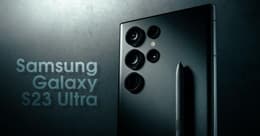
- Main Camera System: The Galaxy S23 Ultra is equipped with a versatile quad-camera setup, highlighted by a 200-megapixel main sensor, alongside a 12-megapixel ultrawide lens, a 10-megapixel telephoto lens with 3x optical zoom, and another 10-megapixel telephoto lens with 10x optical zoom. The iPhone 15 features a dual-camera system, including a 48-megapixel main camera that offers 2x telephoto capabilities through sensor cropping, and a 12-megapixel ultrawide camera.
- Photography Performance: The Galaxy S23 Ultra excels in capturing detailed images, particularly with its high-resolution main sensor and advanced zoom capabilities, making it suitable for a wide range of photographic scenarios, including distant subjects. The iPhone 15 delivers consistent and high-quality images in various lighting conditions, with improvements in low-light performance and enhanced computational photography features.
- Video Recording and Audio: Both devices are capable of recording high-quality video, offering features like advanced stabilization and various recording modes. The Galaxy S23 Ultra provides extensive control over video settings, while the iPhone 15 offers cinematic video capabilities and robust audio capture for calls and recordings.
Main camera
200 megapixels
48 megapixels
Front camera
12 megapixels
12 megapixels
Miscellaneous
Beyond core features, several practical elements contribute to the overall user experience and differentiate these two smartphones.
- Connectivity and Ports: Both devices support 5G connectivity, modern Wi-Fi standards, and Bluetooth for wireless connections. A notable difference is the port type: the Galaxy S23 Ultra uses a USB-C port, which is also present on the iPhone 15, marking a shift from Apple's proprietary Lightning connector.
- Sensors and Biometrics: The Galaxy S23 Ultra incorporates an ultrasonic in-display fingerprint sensor for secure unlocking. The iPhone 15 relies on Face ID for facial recognition and secure authentication. Both include a range of sensors for various functionalities, such as accelerometers, gyroscopes, and ambient light sensors.
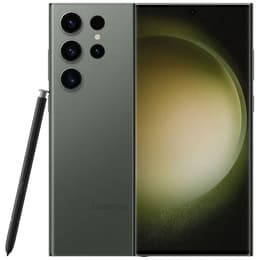
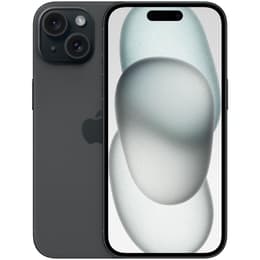
- Design and Handling: The Galaxy S23 Ultra is a larger device, featuring a more angular design and an integrated S Pen stylus, which offers additional productivity features. The iPhone 15 has a more compact form factor with rounded edges and a color-infused glass back, making it lighter and potentially easier for one-handed use.
Weight
8 oz
171 oz
Screen size (inches)
6.8
6.1
Network
5G
5G
SIM card
Physical SIM + eSIM
eSIM
Carrier compatibility
Unlocked
AT&T
What the community thinks
The Samsung Galaxy S23 Ultra and the iPhone 15 cater to different user priorities, each excelling in specific areas. Users often praise the Galaxy S23 Ultra for its exceptional battery life, versatile camera system with extensive zoom capabilities, and the integrated S Pen for productivity and creative tasks. Some common criticisms or concerns for the S23 Ultra have included its large size, which might not suit all users, and initial reports of software throttling in certain applications, though this can often be adjusted.
The iPhone 15 is frequently lauded for its seamless iOS ecosystem, consistent camera performance, and the introduction of the Dynamic Island on the base model. The switch to USB-C has also been a welcome change for many. However, some users have expressed disappointment with the 60Hz display refresh rate, especially when compared to many Android counterparts, and there were initial reports of overheating, which Apple later addressed.
Users prioritizing a large display, advanced camera zoom, and stylus functionality for note-taking or drawing may find the Galaxy S23 Ultra well-suited to their needs. Conversely, individuals who value a compact design, a streamlined operating system, and consistent performance within the Apple ecosystem may lean toward the iPhone 15. Both devices offer robust performance and durability, making them reliable choices for daily use. For those considering these devices, exploring quality-assured refurbished options can be an eco-friendly alternative to extend their lifecycle.