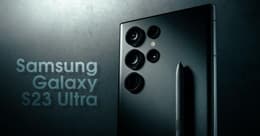
Compare models
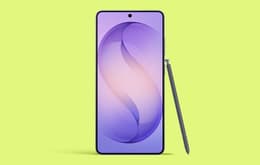
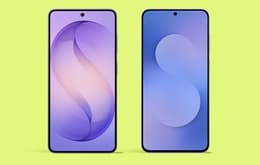
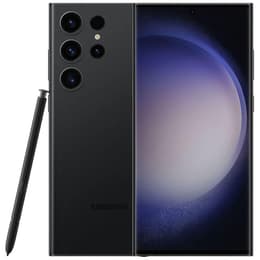
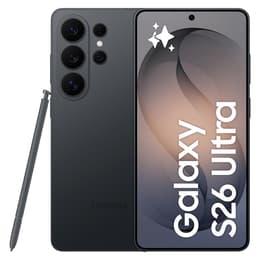
Galaxy S23 Ultra • Unlocked vs Galaxy S26 Ultra • Unlocked
- 1-year warranty
- Free standard shipping
- Free 30-day returns
Differences at a glance
The Samsung Galaxy S23 Ultra (2023) and the Samsung Galaxy S26 Ultra (2026) represent established tiers of Samsung's large-format flagship smartphone lineup. While both devices share a focus on productivity with integrated stylus support and versatile multi-lens cameras, the newer model introduces refined internal processing, a lighter footprint, and extended software support. Both run on the Android operating system with Samsung's custom interface, providing familiar navigation while differing in generation timelines and hardware capabilities.
Available Models
Color
Storage (GB)
Scores
Durability
When evaluating software longevity and physical durability, the Galaxy S23 Ultra and Galaxy S26 Ultra reflect their respective release years and support windows.
- Software Support Window: The Galaxy S26 Ultra benefits from an extended policy providing up to seven major operating system upgrades, whereas the Galaxy S23 Ultra operates on a shorter multi-year update schedule typical of its launch era. Users seeking long-term system updates will find the newer model maintains software currency further into the future.
- Build Materials and Repairability: Both models utilize robust aluminum frames and scratch-resistant glass construction designed to handle daily wear. Repair infrastructure is well-established for both units through official and third-party channels, though choosing a quality-assured refurbished option provides a sustainable way to extend device lifecycles while maintaining dependable day-to-day durability.
- Expected Practical Lifespan: Thanks to robust internal flash storage and resilient battery management systems, both devices maintain functional reliability over multi-year periods, though hardware aging varies depending on individual usage intensity.
Release Year
2023
2026
Last OS Compatibility
Yes
Yes
OS
Android
Android
Foldable
No
No
Performance
Daily operation, multitasking responsiveness, and resource management differ noticeably due to advancements in underlying silicon efficiency between generations.
- Multitasking and App Loading: The Galaxy S26 Ultra handles demanding applications, heavy background tasks, and intensive gaming with enhanced thermal efficiency and faster execution speeds. The Galaxy S23 Ultra remains capable for standard productivity and media consumption, though heavy multi-app workflows run with slightly higher processing overhead.
- Memory and Storage Options: Both smartphones are offered with generous internal storage configurations starting at baseline capacities suitable for large media libraries, paired with high-bandwidth RAM architectures that facilitate smooth app switching.
- Battery Behavior: Each device packs a robust power cell designed to last through a full day of standard use, though newer hardware optimizations in the Galaxy S26 Ultra yield better standby efficiency during prolonged periods of inactivity.
Screen quality
Display technology on both Ultra models delivers expansive viewing space, high resolution, and vivid color reproduction suitable for media creation and consumption.
- Display Panel and Clarity: Both devices feature large, high-resolution organic light-emitting diode screens with deep black levels and sharp pixel density. Text remains crisp and graphics appear vibrant under varied lighting conditions.
- Outdoor Visibility and Refresh Rate: Both screens support adaptive refresh rates scaling up to high frequencies for fluid scrolling and responsive stylus input. The Galaxy S26 Ultra achieves higher peak brightness levels, improving legibility under direct sunlight.
- Physical Dimensions: The Galaxy S26 Ultra features a slightly larger screen footprint within a marginally narrower body profile, providing an immersive viewing area without compromising hand-holding comfort.
Resolution
1440 x 3088
1440 x 3120
Screen type
Dynamic AMOLED 2X
Dynamic LTPO AMOLED 2X
Audiovisual
Camera hardware across both generations offers versatile multi-lens configurations capable of capturing detailed imagery across diverse lighting conditions.
- Main Sensor Performance: Both smartphones utilize high-resolution primary sensors capable of resolving fine details in daylight and maintaining clarity in low-light environments through advanced image stacking.
- Zoom and Auxiliary Lenses: The Galaxy S23 Ultra features dedicated dual telephoto lenses offering high magnification ranges for distant subjects, while the Galaxy S26 Ultra refines optical zoom clarity and stabilization features across its secondary lenses.
- Video and Audio: Both units record high-resolution video up to cinematic framerates with integrated stabilization, supplemented by clear microphone arrays that isolate voice audio effectively during calls and video recording.
Main camera
200 megapixels
200.0
Front camera
12 megapixels
12.0
Miscellaneous
Practical daily utility features, connectivity standards, and ergonomic design elements shape how each device fits into routine handling.
- Ergonomics and Weight: The Galaxy S26 Ultra features a slightly lighter body and refined corner curvatures that improve handling comfort during prolonged one-handed use compared to the squarer, heavier chassis of the Galaxy S23 Ultra.
- Connectivity and Ports: Both models support widespread 5G network bands, fast Wi-Fi standards, and Bluetooth connectivity, utilizing reversible USB Type-C ports for charging and data transfer.
- Security and Authentication: Secure biometric authentication is handled via fast in-display fingerprint sensors and facial recognition capabilities on both devices.
Weight
8 oz
214 oz
Screen size (inches)
6.8
6.9
Network
5G
5G
SIM card
Physical SIM + eSIM
Physical SIM + eSIM
Carrier compatibility
Unlocked
Unlocked
What the community thinks
Choosing between the Galaxy S23 Ultra and the Galaxy S26 Ultra depends primarily on user priorities regarding software longevity, ergonomic refinements, and processing headroom. Users prioritizing maximum software update longevity and peak outdoor screen brightness will find the Galaxy S26 Ultra well-suited to their requirements. Conversely, users seeking a robust, feature-complete flagship experience with powerful zoom capabilities and reliable daily performance will find the Galaxy S23 Ultra remains a capable daily driver.
For consumers looking to make an eco-friendly choice, opting for a quality-assured refurbished model provides a sustainable path to accessing either of these powerful productivity devices without compromising on functional reliability. Ultimately, both smartphones deliver premium performance, versatile camera systems, and integrated productivity tools tailored to demanding mobile users.