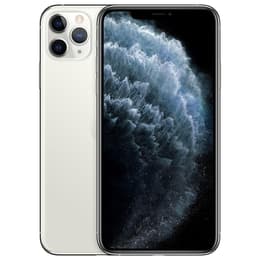
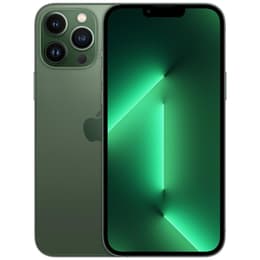

iPhone 11 Pro Max • Unlocked vs iPhone 13 Pro • Unlocked

iPhone 11 Pro Max • Unlocked
Starting at

Refurbished price:$214.00

Versus $849.00 new

See options
iPhone 13 Pro • Unlocked
Starting at

Refurbished price:$299.99

Versus $899.00 new

See options

Ratings

The iPhone 11 Pro Max, released in September 2019, and the iPhone 13 Pro, launched in September 2021, represent two distinct generations of Apple's professional-grade smartphones. While both offer a premium iOS experience, the iPhone 13 Pro introduces advancements in display technology, camera capabilities, and processing power. Both devices operate on Apple's intuitive iOS platform, ensuring a consistent user experience across generations.

Scores

Durability

When considering the longevity of these devices, several factors come into play, including their release dates and ongoing software support.

  • Release Timeline: The iPhone 11 Pro Max was released in September 2019, making it an older model compared to the iPhone 13 Pro, which debuted in September 2021. This two-year difference in release directly impacts their expected software support lifespan.
  • Software Longevity: The iPhone 11 Pro Max shipped with iOS 13 and is compatible with iOS 26.4 as of March 2026. The iPhone 13 Pro, released with iOS 15, is compatible with iOS 18 and iOS 26, indicating it will receive software updates for a longer period. This extended support means the iPhone 13 Pro will benefit from new features, security patches, and performance optimizations for more years.
  • Repairability and Durability: The iPhone 11 Pro Max received a repairability score of 6 out of 10 from iFixit, noting that critical display and battery repairs are prioritized. The iPhone 13 Pro, however, scored 5 out of 10, with iFixit highlighting concerns regarding Face ID functionality after screen replacements outside of authorized channels. Both devices feature robust build materials, with the iPhone 13 Pro incorporating a Ceramic Shield front cover for enhanced drop resistance, while both utilize stainless steel frames and glass backs. The iPhone 11 Pro Max is rated IP68 for water resistance up to 4 meters for 30 minutes, whereas the iPhone 13 Pro improves upon this with an IP68 rating for up to 6 meters for 30 minutes.

Release Year

2019

2021

Last OS Compatibility

Yes

Yes

OS

iOS

iOS

Foldable

No

No

Performance

The performance of these two iPhones is largely dictated by their internal processing power and memory configurations.

  • Processing Power: The iPhone 11 Pro Max is equipped with an older generation processor, which capably handles everyday applications and multitasking. The iPhone 13 Pro features a newer, more advanced processor, providing a noticeable boost in speed and efficiency. This translates to faster app loading times, smoother transitions between applications, and more fluid performance in graphically intensive games and demanding tasks on the iPhone 13 Pro.
  • Multitasking and Responsiveness: The iPhone 11 Pro Max comes with 4GB of RAM, which is sufficient for typical daily usage. The iPhone 13 Pro, with 6GB of RAM, offers more headroom for keeping multiple applications open in the background and handling complex workflows without slowdowns.
  • Storage Options: The iPhone 11 Pro Max was available with storage capacities of 64GB, 256GB, and 512GB. The iPhone 13 Pro offers a wider range of options, starting at 128GB and extending to 256GB, 512GB, and a substantial 1TB, catering to users with extensive storage needs.
  • Battery Performance: The iPhone 11 Pro Max was recognized for its robust battery life at the time of its release, featuring a larger physical battery. The iPhone 13 Pro, despite having a physically smaller battery, often achieves comparable or even better real-world battery performance due to its more power-efficient processor and the adaptive refresh rate of its display, which optimizes power consumption.

Memory (GB)

4 GB

6 GB

Screen quality

Both devices feature high-quality OLED displays, but the iPhone 13 Pro introduces a key enhancement for a smoother visual experience.

  • Display Technology and Clarity: Both the iPhone 11 Pro Max and iPhone 13 Pro utilize Super Retina XDR OLED displays, known for their deep blacks, vibrant colors, and excellent contrast ratios. The iPhone 11 Pro Max has a 6.5-inch display with a resolution of 2688x1242 pixels at 458 pixels per inch (ppi). The iPhone 13 Pro features a slightly smaller 6.1-inch display with a resolution of 2532x1170 pixels at 460 ppi, offering similar sharpness.
  • Brightness: Both models offer a typical maximum brightness of 800 nits and can reach up to 1200 nits for HDR content, ensuring good visibility in various lighting conditions.
  • Refresh Rate: A significant differentiator is the refresh rate. The iPhone 11 Pro Max has a standard 60Hz refresh rate. The iPhone 13 Pro, however, features ProMotion technology, which provides an adaptive refresh rate that can go up to 120Hz. This results in noticeably smoother scrolling, more fluid animations, and a more responsive feel during interactions, particularly beneficial for gaming and fast-paced content.
  • Screen Size: Users who prefer a larger screen for media consumption or productivity might lean towards the 6.5-inch display of the iPhone 11 Pro Max. The iPhone 13 Pro offers a more compact 6.1-inch display, which some users may find easier for one-handed use.

Resolution

1242 x 2688

1170 x 2532

Screen type

Super Retina XDR OLED

Super Retina XDR OLED

Audiovisual

Both iPhones feature advanced triple-camera systems, but the iPhone 13 Pro brings notable enhancements in image processing and new functionalities.

  • Camera System: Both devices are equipped with a versatile triple 12MP camera system, comprising Wide, Ultra-Wide, and Telephoto lenses.
  • Low-Light Performance: The iPhone 11 Pro Max introduced Night mode, which significantly improved low-light photography for its generation. The iPhone 13 Pro takes low-light performance further with larger sensors and wider apertures on its main and ultra-wide cameras, allowing it to capture more light and produce clearer, more detailed images in challenging conditions.
  • Optical Zoom and Photography Features: The iPhone 11 Pro Max offers 2x optical zoom. The iPhone 13 Pro extends this to 3x optical zoom, providing greater reach for distant subjects. Additionally, the iPhone 13 Pro introduces macro photography, allowing for detailed close-up shots, and Photographic Styles for personalized image looks.
  • Video Capabilities: Both models are capable of recording 4K video at up to 60 frames per second. The iPhone 13 Pro enhances video recording with features like Cinematic mode, which adds a shallow depth of field and automatic focus transitions, and ProRes video recording for professional-grade video workflows. The iPhone 13 Pro also supports macro video recording.
  • Front Camera: Both devices feature a 12MP front-facing camera. The iPhone 13 Pro's front camera benefits from improved low-light capabilities, enhancing selfies and video calls in dimmer environments.

Main camera

12 megapixels

12 megapixels

Front camera

12 megapixels

12 megapixels

Miscellaneous

Beyond core performance and display, several other features contribute to the overall user experience of these devices.

  • Connectivity: The iPhone 11 Pro Max supports 4G LTE for cellular data and Wi-Fi 6 for faster wireless internet connections. The iPhone 13 Pro upgrades cellular connectivity to 5G, offering potentially faster download and upload speeds in areas with 5G network coverage, while also supporting Wi-Fi 6. Both models include Bluetooth 5.0 for connecting to accessories.
  • Ports and Biometrics: Both the iPhone 11 Pro Max and iPhone 13 Pro utilize the Lightning port for charging and data transfer. For biometric security, both devices rely on Face ID for secure authentication and unlocking.
  • Additional Sensors: The iPhone 13 Pro includes a LiDAR scanner, which enhances augmented reality (AR) experiences and improves autofocus performance in low-light conditions. This sensor is not present in the iPhone 11 Pro Max.
  • Physical Characteristics: The iPhone 11 Pro Max is the larger and heavier of the two, measuring 158.0 x 77.8 x 8.1 mm and weighing 226 grams. The iPhone 13 Pro is more compact and lighter, with dimensions of 146.7 x 71.5 x 7.65 mm and a weight of 204 grams, which may impact handling and pocketability for some users.

Weight

8 oz

6 oz

Screen size (inches)

6.5

6.1

Network

LTE

5G

SIM card

Physical SIM + eSIM

Physical SIM + eSIM

Carrier compatibility

Unlocked

Unlocked

Connector

Lightning

Lightning

User sentiment for the iPhone 11 Pro Max often highlights its large, vibrant display and impressive battery life for its era as key strengths. Many users appreciated its robust performance for daily tasks and the introduction of Night mode, which significantly improved photography in challenging lighting. Some found its size and weight to be substantial, potentially making one-handed use less comfortable.

The iPhone 13 Pro generally receives praise for its ProMotion display, offering a noticeably smoother visual experience. Its camera system, with enhanced low-light capabilities, Cinematic mode, and macro photography, is frequently cited as a major upgrade. Users also appreciate its faster processing power and the inclusion of 5G connectivity for future-proofing. A common point of discussion for the 13 Pro is its slightly smaller screen compared to the 11 Pro Max, which might be a consideration for those who prefer a larger viewing area.

Users prioritizing a larger screen for media consumption and a proven, long-lasting battery from an earlier generation may find the iPhone 11 Pro Max well-suited to their needs. Conversely, users who value cutting-edge camera features, a smoother and more responsive display, faster overall performance for demanding applications, and the benefits of 5G connectivity will likely lean towards the iPhone 13 Pro. Both devices offer a reliable iOS experience, and choosing a quality-assured refurbished option for either model can be a sustainable choice.

See all articles

Our recent comparisons