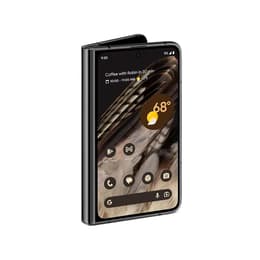
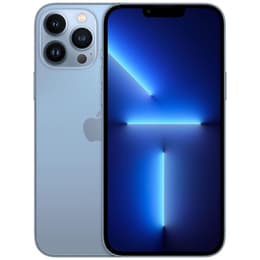

Google Pixel Fold • Unlocked vs iPhone 13 Pro Max • Unlocked

Google Pixel Fold • Unlocked
Starting at

Refurbished price:$591.00

Versus $1,799.00 new

See options
iPhone 13 Pro Max • Unlocked
Starting at

Refurbished price:$362.27

Versus $999.00 new

See options

Ratings

The Google Pixel Fold, released in June 2023, and the iPhone 13 Pro Max, launched in September 2021, represent distinct approaches to high-end smartphone design. The Pixel Fold introduces a foldable form factor, offering a large internal display for enhanced productivity and media consumption, while the iPhone 13 Pro Max maintains a traditional slab design, focusing on a refined user experience within a single, expansive screen. These devices operate on different ecosystems, with the Pixel Fold running Android and the iPhone 13 Pro Max utilizing iOS, leading to varied software experiences and feature sets.

Scores

Durability

The practical lifespan of a smartphone is influenced by its release timeline, software support, and physical durability. The iPhone 13 Pro Max, released in September 2021, typically receives iOS updates for approximately 5-6 years from its launch, meaning it is expected to continue receiving major software support for several more years. [15, 21, 26] The Google Pixel Fold, launched in June 2023, came with Android 13 and is promised up to five major Android upgrades, extending its software longevity well into the future. [7, 11]

  • Software Longevity: The iPhone 13 Pro Max, being an older device, has already received several iOS updates and is expected to continue receiving them, currently supporting iOS 26. [15, 26] The Pixel Fold, as a newer device, started with Android 13 and is anticipated to receive updates up to Android 18, ensuring a long period of current software features and security patches. [11]
  • Physical Durability: The iPhone 13 Pro Max features a Ceramic Shield front cover and an IP68 water resistance rating, contributing to its robust build. [3, 20, 21] The Pixel Fold also boasts IPX8 water resistance and Gorilla Glass Victus on its cover screen, though the internal folding screen has a plastic protective layer, which is typical for foldable devices. [10, 11, 23]
  • Repairability Considerations: The Pixel Fold received a repairability score of 6.5 out of 10 from PBK Reviews, with iFixit noting good modularity for a foldable, despite some challenges with battery removal tabs. [13, 36, 37, 38] While specific repairability scores for the iPhone 13 Pro Max are not as readily available, Apple has introduced self-service repair options for some components, indicating a degree of user-repair potential.

Release Year

2023

2021

Last OS Compatibility

Yes

Yes

OS

Android

iOS

Foldable

Yes

No

Performance

Both devices offer robust performance for daily tasks and demanding applications, though they achieve this through different hardware and software optimizations.

  • Processing Power: The iPhone 13 Pro Max is equipped with a powerful processor that allows for smooth navigation, rapid app launches, and efficient handling of graphics-intensive games and video editing. [21] The Google Pixel Fold features a processor designed to manage the unique demands of a foldable device, providing a responsive experience across its dual screens and supporting advanced AI features. [7]
  • Multitasking and Responsiveness: The iPhone 13 Pro Max, with its optimized operating system, delivers consistent performance even with multiple applications running simultaneously. The Pixel Fold, with its larger RAM capacity, is well-suited for extensive multitasking, particularly when utilizing its unfolded display for multiple apps side-by-side. [2, 11]
  • Storage Options: The iPhone 13 Pro Max offers a wide range of storage configurations, from 128GB up to 1TB, catering to users with varying storage needs, including those who store large media files. [3, 16, 31] The Pixel Fold is available with 256GB or 512GB of internal storage, providing ample space for most users, though without the 1TB option found on the iPhone. [2, 7]

Memory (GB)

12 GB

6 GB

Screen quality

The display experience on these two devices is a primary differentiator, owing to their fundamental design philosophies.

  • Display Technology and Size: The iPhone 13 Pro Max features a 6.7-inch Super Retina XDR OLED display, known for its deep blacks and vibrant colors. [1, 17] The Google Pixel Fold offers a dual-screen setup: a 5.8-inch OLED cover display and a 7.6-inch foldable OLED inner display, providing a larger canvas when unfolded. [2, 7]
  • Resolution and Clarity: The iPhone 13 Pro Max's display has a resolution of 2778 x 1284 pixels at 458 ppi, delivering sharp and detailed visuals. [1, 4] The Pixel Fold's cover display offers 2092 x 1080 pixels at 408 ppi, while its inner display has 2208 x 1840 pixels at 380 ppi, both providing clear images suitable for their respective sizes. [2, 10]
  • Refresh Rate and Brightness: Both devices feature adaptive refresh rates up to 120Hz, ensuring smooth scrolling and fluid animations. [1, 2, 21] The iPhone 13 Pro Max reaches up to 1000 nits typical brightness and 1200 nits peak for HDR content. [1, 22] The Pixel Fold's cover display can reach 1550 nits peak brightness, and its inner display up to 1450 nits, offering good visibility in various lighting conditions. [10]

Resolution

1840 x 2208

1284 x 2778

Screen type

Foldable OLED

Super Retina XDR OLED

Audiovisual

Both smartphones are equipped with advanced camera systems, each with its own strengths in capturing photos and videos.

  • Rear Camera Systems: The iPhone 13 Pro Max features a Pro 12MP triple-camera system, including Wide, Ultra Wide, and Telephoto lenses with 3x optical zoom and Sensor-shift optical image stabilization on the Wide lens. [1, 22] The Google Pixel Fold has a triple-lens rear camera setup with a 48MP main sensor, a 10.8MP ultrawide lens, and a 10.8MP telephoto lens offering 5x optical zoom. [2, 7, 12]
  • Photography Performance: The iPhone 13 Pro Max excels in various lighting conditions, offering detailed images and advanced features like Night mode portraits via its LiDAR Scanner. [1, 22] The Pixel Fold leverages its computational photography capabilities to produce high-quality images, particularly noted for its balanced output and impressive zoom capabilities. [23]
  • Video Recording Capabilities: The iPhone 13 Pro Max supports Cinematic mode for shallow depth-of-field video and ProRes video recording up to 4K at 30fps, making it suitable for professional video creators. [1, 3, 22] The Pixel Fold records video at up to 4K at 60fps, providing clear and stable footage. [23]

Main camera

48 megapixels

12 megapixels

Front camera

8 megapixels

12 megapixels

Miscellaneous

Beyond core specifications, several practical elements contribute to the overall user experience of these devices.

  • Connectivity and Ports: Both devices support 5G connectivity and Wi-Fi 6 (ax) for fast wireless communication. [4, 10, 32] The iPhone 13 Pro Max uses Apple's proprietary Lightning port, while the Google Pixel Fold features a more universal USB-C 3.2 Gen 2 port. [10, 14, 32]
  • Biometric Security: The iPhone 13 Pro Max relies on Face ID for secure facial recognition. [22] The Pixel Fold incorporates a fingerprint sensor for authentication, and its cover camera can also be used for face unlock. [10, 12]
  • Physical Design and Handling: The iPhone 13 Pro Max is a substantial device, weighing 240g with dimensions of 160.8 x 78.1 x 7.65 mm. [9, 22] The Pixel Fold is heavier at 283g and thicker when folded (12.1 mm), but unfolds to a thinner profile (5.8 mm), offering a different ergonomic experience. [2, 10, 11] Its wider cover screen is often praised for being more usable than narrower foldable alternatives. [23]

Weight

7 oz

8000 oz

Screen size (inches)

7.6

6.7

Network

5G

5G

SIM card

Physical SIM + eSIM

Physical SIM + eSIM

Carrier compatibility

Unlocked

Unlocked

Connector

USB-C

Lightning

User feedback for the iPhone 13 Pro Max frequently highlights its exceptional battery life, often cited as a key strength, with many users reporting two-day usage on a single charge. [5, 21, 24] Its camera system is also consistently praised for its versatility and ability to capture high-quality photos and videos, even in challenging conditions. [5, 21] Common criticisms, however, sometimes point to its considerable weight and size, which can make one-handed use challenging for some individuals. [5]

For the Google Pixel Fold, users often commend its innovative foldable design, which offers the utility of a larger screen in a portable form factor. The camera performance, particularly Google's computational photography, receives positive remarks for producing appealing images. [23] However, some users have expressed concerns regarding its durability, especially the internal display, and its overall weight when folded. [2]

Users prioritizing a long-lasting battery and a highly refined, consistent software experience within a traditional smartphone design may find the iPhone 13 Pro Max well-suited to their needs. Those who value a versatile device that can transform into a larger screen for productivity or immersive media, and appreciate Google's Android ecosystem and camera processing, might lean toward the Google Pixel Fold. Both devices offer compelling features, and choosing between them often comes down to a preference for form factor, operating system, and specific usage priorities. For those considering either device, exploring quality-assured refurbished options can provide an eco-friendly alternative.


See all articles

Our recent comparisons