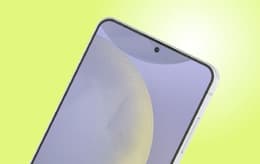
Galaxy S22+ 5G • Locked T-Mobile vs Galaxy S23 • Unlocked

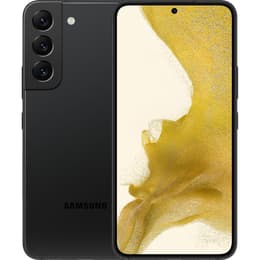
Galaxy S22+ 5G • Locked T-Mobile
Starting at

Refurbished price:$212.82

Versus $959.99 new

See options
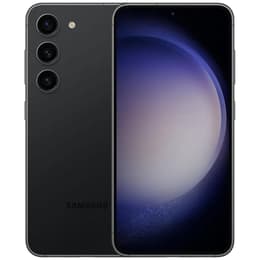
Galaxy S23 • Unlocked
Starting at

Refurbished price:$194.99

Versus $799.00 new

See options

Ratings

The Samsung Galaxy S22+ (released in February 2022) and the Samsung Galaxy S23 (released in February 2023) are both flagship Android smartphones from Samsung's popular Galaxy S series. While they share a similar design philosophy and run on the Android operating system with Samsung's One UI, the Galaxy S23 introduces notable advancements in processing power, battery efficiency, and software longevity. These differences primarily influence overall user experience and the device's long-term viability.

Scores

Durability

When considering the long-term usability of a smartphone, factors like software support, physical durability, and expected lifespan are important.

  • Software Support: The Galaxy S22+ launched with Android 12 and is expected to receive four major Android OS upgrades and five years of security updates, with support likely ending around 2027. The newer Galaxy S23, launched with Android 13, will benefit from one additional year of major Android OS updates and security patches, extending its software support further into the future.
  • Physical Durability: Both devices feature an Armor Aluminum frame and an IP68 rating for dust and water resistance. The Galaxy S22+ uses Gorilla Glass Victus+ for screen and back panel protection. The Galaxy S23 upgrades to Gorilla Glass Victus 2, which offers improved drop resistance, particularly on hard surfaces.
  • Expected Lifespan: Given the extended software support and the more efficient internal components, the Galaxy S23 is positioned to offer a slightly longer practical lifespan for users who prioritize having the latest software features and security updates.

Release Year

2022

2023

Last OS Compatibility

Yes

Yes

OS

Android

Android

Foldable

No

No

Performance

Performance is a key differentiator between these two generations, impacting everything from app responsiveness to gaming and multitasking.

  • Processing Power: The Galaxy S22+ is powered by a processor that, in some regions, was noted by users for potential thermal management challenges, which could lead to performance throttling during demanding tasks. The Galaxy S23 features a newer, more advanced processor specifically optimized for Galaxy devices, offering significant improvements in both raw performance and power efficiency. This results in smoother operation and better sustained performance.
  • Battery Behavior: Despite the Galaxy S22+ having a larger 4500 mAh battery compared to the Galaxy S23's 3900 mAh battery, the Galaxy S23 generally delivers better real-world battery life. This is primarily due to the superior power efficiency of its newer processor. Users of the Galaxy S22+ frequently reported concerns about its battery life, especially under heavy usage.
  • Storage and Responsiveness: Both models come with 8GB of RAM. The Galaxy S22+ utilizes UFS 3.1 storage. The Galaxy S23, in its 256GB and higher storage configurations, features faster UFS 4.0 storage, which can contribute to quicker app loading times and overall system responsiveness compared to UFS 3.1.

Memory (GB)

8 GB

8 GB

Screen quality

Both smartphones offer a high-quality visual experience, but there are differences in size and subtle enhancements.

  • Display Technology and Clarity: Both the Galaxy S22+ and Galaxy S23 feature a Dynamic AMOLED 2X display with a Full HD+ resolution (2340 x 1080 pixels), providing vibrant colors and sharp images.
  • Brightness and Outdoor Visibility: Both devices offer a peak brightness of up to 1750 nits, ensuring good visibility even in bright outdoor conditions.
  • Refresh Rate and Smoothness: Both models support an adaptive refresh rate of up to 120Hz, which allows for smooth scrolling and fluid animations while also conserving battery by scaling down the refresh rate for static content.
  • Screen Size and Viewing Experience: The Galaxy S22+ features a larger 6.6-inch display, offering a more expansive viewing area for media consumption and multitasking. The Galaxy S23 has a more compact 6.1-inch display, which some users may find easier for one-handed use and pocketability.

Resolution

1080 x 2340

1080 x 2340

Screen type

Dynamic AMOLED 2X

Dynamic AMOLED 2X

Audiovisual

Both devices are equipped with versatile camera systems capable of capturing high-quality photos and videos, with the newer model offering some refinements.

  • Rear Camera System: Both the Galaxy S22+ and Galaxy S23 feature a triple-camera setup on the rear, consisting of a 50MP main wide-angle sensor, a 12MP ultrawide sensor, and a 10MP telephoto lens with 3x optical zoom.
  • Photography Performance: While the hardware specifications for the rear cameras are largely similar, the Galaxy S23 benefits from improved image processing capabilities due to its newer processor. This can result in enhanced detail, color accuracy, and low-light performance.
  • Video Recording: Both phones are capable of recording video at up to 8K resolution. The Galaxy S23 offers improved stabilization and can record 8K at 30 frames per second, compared to the S22+'s 8K at 24 frames per second.
  • Front Camera: The Galaxy S22+ features a 10MP front-facing camera. The Galaxy S23 upgrades to a 12MP front camera, which can lead to sharper selfies and improved video call quality.

Main camera

50 megapixels

50 megapixels

Front camera

10 megapixels

12 megapixels

Miscellaneous

Beyond the core features, several practical elements contribute to the overall user experience and device suitability.

  • Connectivity: Both devices support 5G connectivity for fast mobile data. They also feature Wi-Fi 6E for high-speed wireless internet and USB Type-C for charging and data transfer. The Galaxy S23 includes Bluetooth 5.3, a slight upgrade from the Galaxy S22+'s Bluetooth 5.2, potentially offering minor improvements in efficiency and connection stability with compatible accessories.
  • Biometric Security: Both smartphones incorporate an ultrasonic in-display fingerprint sensor and support face recognition for secure unlocking and authentication.
  • Dimensions and Handling: The Galaxy S22+ measures 157.4 x 75.8 x 7.6 mm and weighs 195-196 grams, offering a larger form factor. The Galaxy S23 is more compact at 146.3 x 70.9 x 7.6 mm and lighter at 168 grams, making it potentially more comfortable for users who prefer a smaller device for one-handed operation or carrying in pockets.

Weight

7 oz

6 oz

Screen size (inches)

6.6

6.1

Network

5G

5G

SIM card

Physical SIM + eSIM

Physical SIM + eSIM

Carrier compatibility

T-Mobile

Unlocked

Choosing between the Galaxy S22+ and the Galaxy S23 depends on individual priorities. User feedback on platforms like Reddit often highlights the significant improvements in battery life and sustained performance on the Galaxy S23 as key advantages. Many S22+ users reported dissatisfaction with battery longevity and occasional performance throttling, particularly with the earlier processor generations. The S23, despite its smaller battery, consistently receives praise for its efficiency and ability to last a full day for most users.

Users prioritizing a larger screen and who are less concerned with the absolute latest in processing power or extended software support might find the Galaxy S22+ suitable. However, for those who value a more compact device, superior battery endurance, enhanced long-term software updates, and a more powerful and efficient overall performance, the Galaxy S23 presents a compelling option. The improved durability with Gorilla Glass Victus 2 and the faster UFS 4.0 storage (in higher capacities) on the S23 also contribute to a more future-proof device.

For consumers looking for a quality-assured refurbished option, both models are available, offering a sustainable choice for acquiring these devices.

See all articles

Our recent comparisons