
Galaxy S23 • Unlocked vs iPhone 12 • Unlocked

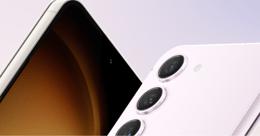
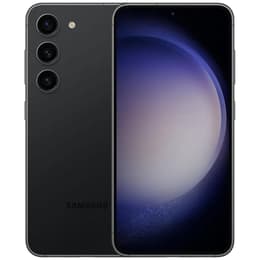
Galaxy S23 • Unlocked
Starting at

Refurbished price:$194.99

Versus $799.00 new

See options
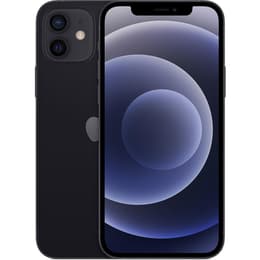
iPhone 12 • Unlocked
Starting at

Refurbished price:$172.96

Versus $629.00 new

See options

Ratings

The Samsung Galaxy S23, released in early 2023, and the Apple iPhone 12, launched in late 2020, represent two distinct approaches to smartphone design and functionality. While both devices offer a premium experience, the Galaxy S23 brings more recent advancements in display technology and camera versatility, whereas the iPhone 12 provides a stable and well-supported entry into the iOS ecosystem. Both operate on their respective flagship operating systems, Android for the S23 and iOS for the iPhone 12.

Scores

Durability

The three-year age gap between these devices significantly influences their expected lifespan and software support timelines. The Samsung Galaxy S23 launched with Android 13 and is expected to receive four major Android OS upgrades, extending its support until Android 17, likely around 2026, and five years of security updates, potentially until 2028. The iPhone 12, released in 2020, typically receives iOS updates for five to seven years from its launch, suggesting software support could continue until approximately 2027-2030.

  • Software Longevity: The Galaxy S23 benefits from a longer projected support window, with major OS updates expected until Android 17 and security patches until 2028. The iPhone 12, while known for Apple's long support cycles, is naturally closer to the end of its update life, with support potentially extending to 2027-2030.
  • Physical Durability: Both devices feature robust builds with glass and metal constructions and IP68 ratings for water and dust resistance. The Galaxy S23 incorporates Gorilla Glass Victus 2 for enhanced scratch resistance, while the iPhone 12 introduced a Ceramic Shield front cover designed to improve drop protection.
  • Repairability: The Galaxy S23 has shown improvements in repairability, with features like pull tabs for easier battery replacement. The iPhone 12 received an iFixit repairability score of 6 out of 10, but some component replacements may require proprietary software for full functionality.

Release Year

2023

2020

Last OS Compatibility

Yes

Yes

OS

Android

iOS

Foldable

No

No

Performance

The performance capabilities of these two smartphones reflect their respective release timelines, with the newer Galaxy S23 offering more advanced internal components.

  • Processor Capabilities: The Galaxy S23 features a current-generation processor, ensuring smooth handling of demanding applications and multitasking. The iPhone 12 is powered by a processor that was highly capable at its release, providing reliable performance for everyday tasks.
  • Multitasking and Responsiveness: With 8GB of RAM, the Galaxy S23 offers enhanced multitasking capabilities, allowing users to switch between numerous applications without slowdowns. The iPhone 12, with 4GB of RAM, handles typical daily usage efficiently, though it may show limitations with a high number of concurrently active applications.
  • Battery Behavior: The Galaxy S23 houses a 3900 mAh battery, which, combined with its efficient processor, often provides a full day of use for many users. The iPhone 12, with a 2815 mAh battery, generally offers sufficient power for a day of moderate use, though heavy usage may require more frequent charging.

Memory (GB)

8 GB

4 GB

Screen quality

The display is a significant point of contrast, affecting everything from reading text to watching videos, with the Galaxy S23 showcasing more recent advancements.

  • Display Technology and Clarity: Both phones feature 6.1-inch OLED displays, providing deep blacks and vibrant colors. The Galaxy S23 uses a Dynamic AMOLED 2X panel with a resolution of 2340x1080 pixels, while the iPhone 12 features a Super Retina XDR OLED display with a resolution of 2532x1170 pixels.
  • Refresh Rate and Smoothness: A key differentiator is the refresh rate; the Galaxy S23 features a high refresh rate display that adjusts up to 120Hz, making scrolling and animations appear exceptionally smooth. The iPhone 12 uses a standard 60Hz refresh rate, which is functional and clear but lacks the fluid visual experience of the S23.
  • Brightness Levels: The Galaxy S23 offers a peak brightness of up to 1750 nits, providing excellent visibility even in bright outdoor conditions. The iPhone 12 offers a peak brightness of 1200 nits for HDR content and 625 nits typical, performing well in most lighting conditions.

Resolution

1080 x 2340

1170 x 2532

Screen type

Dynamic AMOLED 2X

Super Retina XDR OLED

Audiovisual

Photography and media consumption are central to the smartphone experience, and here the hardware differences are quite distinct between the two models.

  • Camera System Capabilities: The Galaxy S23 features a versatile triple-camera setup, including a 50MP main sensor, a 12MP ultrawide lens, and a 10MP telephoto lens with 3x optical zoom. The iPhone 12 has a dual-camera system with two 12MP lenses: a wide and an ultrawide, lacking a dedicated telephoto lens.
  • Photography Performance: The Galaxy S23 is praised for its vibrant colors, detailed photos, and good low-light performance, with advanced Nightography enhancements. The iPhone 12 offers strong everyday photography with consistent and natural color reproduction, and improved low-light performance thanks to Night Mode across all cameras.
  • Video Recording Quality: The Galaxy S23 offers 8K video recording capabilities, alongside 4K at 60fps. The iPhone 12 provides excellent video recording, including Dolby Vision HDR up to 4K at 30fps. Both devices feature 12MP front-facing cameras capable of capturing detailed selfies.

Main camera

50 megapixels

12 megapixels

Front camera

12 megapixels

12 megapixels

Miscellaneous

Beyond core features, several practical elements contribute to the overall user experience, from how a device connects to other hardware to its physical feel.

  • Connectivity Options: Both devices offer 5G connectivity. The Galaxy S23 supports newer Wi-Fi 6E standards and Bluetooth 5.3, offering potentially faster and more stable wireless connections. The iPhone 12 supports Wi-Fi 6 and Bluetooth 5.0.
  • Port Types and Biometrics: The Galaxy S23 uses a USB-C port for charging and data transfer, and features an in-display fingerprint sensor alongside face recognition for security. The iPhone 12 utilizes Apple's proprietary Lightning port and relies solely on Face ID for biometric authentication.
  • Weight and Dimensions: Both phones have a similar 6.1-inch screen size, making them comfortable for one-handed use. The Galaxy S23 weighs 168 grams, and the iPhone 12 weighs 162 grams, making both relatively light. The Galaxy S23 has slightly slimmer bezels, while the iPhone 12 features a flat-edge design.

Weight

6 oz

7 oz

Screen size (inches)

6.1

6.1

Network

5G

5G

SIM card

Physical SIM + eSIM

Physical SIM + eSIM

Carrier compatibility

Unlocked

Unlocked

Users often praise the Galaxy S23 for its vibrant 120Hz display, versatile camera system with optical zoom, and strong overall performance for demanding tasks. Criticisms sometimes point to Samsung's image processing, which can lead to oversaturated colors, and occasional inconsistencies with moving subjects in photos. The iPhone 12 is frequently lauded for its reliable performance for its age, a camera that delivers consistent results, and its integration within the Apple ecosystem. Common concerns for the iPhone 12 include its 60Hz display, which feels less fluid compared to newer devices, and its aging battery capacity.

For users prioritizing the latest display technology, a more versatile camera with optical zoom, and the Android ecosystem, the Galaxy S23 may be a more suitable choice. Its newer processor and higher refresh rate offer a noticeably smoother experience. Conversely, individuals who prefer the intuitive iOS platform, consistent camera performance, and a slightly longer history of software updates might lean towards the iPhone 12. Both devices offer robust performance for daily use, and choosing between them often comes down to ecosystem preference and specific feature priorities. Considering a quality-assured refurbished option for either model can be an eco-friendly alternative, extending the functional life of these devices and providing a sustainable choice.

See all articles

Our recent comparisons