iPhone 14 • Locked T-Mobile vs iPhone SE (2020) • Unlocked

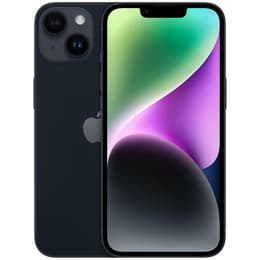
iPhone 14 • Locked T-Mobile
Starting at

Refurbished price:$239.00

Versus $599.00 new

See options
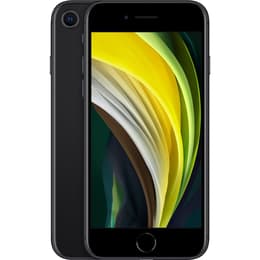
iPhone SE (2020) • Unlocked
Starting at

Refurbished price:$107.00

Versus $399.00 new

See options

Ratings

The iPhone 14, released in September 2022, and the iPhone SE 2020, launched in April 2020, represent different generations within Apple's smartphone lineup. While both devices operate on the iOS platform, they offer distinct experiences primarily due to their age difference and the technological advancements introduced in the newer model. The iPhone 14 features a more modern design, an advanced display, and enhanced camera capabilities, whereas the iPhone SE 2020 maintains a classic form factor with a physical home button. This comparison aims to highlight the practical differences to help users make an informed decision.

Scores

Durability

The expected practical lifespan and software support differ significantly between these two models due to their respective release dates.

  • Release Timeline and OS Support: The iPhone 14, released in September 2022, benefits from a longer period of software updates compared to the iPhone SE 2020, which launched in April 2020. Apple typically provides 5-6 years of major iOS updates from a device's release, meaning the iPhone 14 will receive support for approximately two years longer than the iPhone SE 2020.
  • Physical Durability: The iPhone 14 features a Ceramic Shield front cover, which offers enhanced protection against drops, and an IP68 rating for water and dust resistance, allowing submersion up to 6 meters for 30 minutes. In contrast, the iPhone SE 2020 uses an older glass design and has an IP67 rating, protecting it in water up to 1 meter for 30 minutes.
  • Expected Practical Lifespan: Users prioritizing maximum software longevity and robust physical durability will find the iPhone 14 to be a more future-proof option. The iPhone SE 2020, while still capable, is nearing the end of its expected software support cycle.

Release Year

2022

2020

Last OS Compatibility

Yes

Yes

OS

iOS

iOS

Foldable

No

No

Performance

The performance capabilities of these two iPhones are influenced by their internal components, leading to different user experiences in daily tasks and demanding applications.

  • Processor Capabilities: The iPhone 14 is equipped with a more advanced processor, enabling smoother performance for demanding applications, faster app loading times, and more efficient multitasking. The iPhone SE 2020, while still capable for everyday use, relies on an older generation processor, which handles general tasks well but may show limitations with intensive gaming or complex applications.
  • Battery Behavior: The iPhone 14 offers noticeably longer battery life, providing extended usage for video playback and streaming compared to the iPhone SE 2020. Users report the iPhone 14 can last through a full day of heavy use, whereas the iPhone SE 2020 may require more frequent charging for similar usage patterns.
  • Storage and Responsiveness: Both models offer various storage options, but the iPhone 14 generally provides a more responsive overall system experience, especially when switching between multiple applications or handling large files, partly due to its increased RAM.

Memory (GB)

6 GB

3 GB

Screen quality

The display technology and viewing experience represent a significant difference between the iPhone 14 and the iPhone SE 2020.

  • Display Technology and Clarity: The iPhone 14 features a 6.1-inch Super Retina XDR OLED display, offering deep blacks, vibrant colors, and a high contrast ratio, resulting in a more immersive viewing experience. The iPhone SE 2020 has a 4.7-inch Retina HD LCD display, which provides good color accuracy but does not match the contrast and vibrancy of an OLED panel.
  • Resolution and Brightness: The iPhone 14 boasts a higher resolution of 2532 x 1170 pixels at 460 ppi, and can reach up to 1200 nits peak brightness for HDR content, making it highly visible even in bright outdoor conditions. The iPhone SE 2020 has a resolution of 1334 x 750 pixels at 326 ppi and a typical maximum brightness of 625 nits.
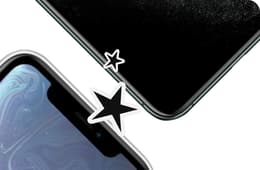
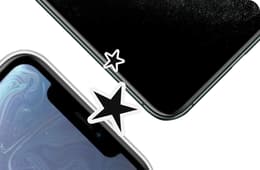
  • Screen Size and Design: The iPhone 14 offers an all-screen design with a larger display area, providing more room for content consumption. The iPhone SE 2020 retains the classic iPhone design with a smaller screen and prominent bezels, including a physical home button.

Resolution

1170 x 2532

750 x 1334

Screen type

Super Retina XDR OLED

Retina IPS LCD

Audiovisual

The camera systems of the iPhone 14 and iPhone SE 2020 offer different capabilities, particularly in advanced computational photography and low-light performance.

  • Rear Camera System: The iPhone 14 features an advanced dual-camera system with a 12MP Main camera (f/1.5 aperture) and a 12MP Ultra Wide camera (f/2.4 aperture), incorporating features like Photonic Engine for improved low-light performance and Action Mode for stabilized video. The iPhone SE 2020 has a single 12MP wide-angle camera (f/1.8 aperture) with optical image stabilization and computational photography features like Portrait Mode for people and Smart HDR.
  • Front Camera and Video Quality: The iPhone 14 includes a 12MP TrueDepth front camera with autofocus and improved low-light capabilities. Both devices support 4K video recording at up to 60 frames per second, but the iPhone 14 adds Cinematic Mode for depth-of-field effects and Action Mode for enhanced video stabilization.
  • Low-Light Performance and Features: The iPhone 14 excels in low-light photography due to its larger sensor, wider aperture on the main camera, and the Photonic Engine, which significantly enhances image quality in challenging lighting conditions. The iPhone SE 2020 performs well in good lighting but shows more noise in low-light scenarios and lacks a dedicated Night Mode.

Main camera

12 megapixels

12 megapixels

Front camera

12 megapixels

7 megapixels

Miscellaneous

Beyond core performance and display, several practical elements differentiate the user experience between these two iPhone models.

  • Connectivity and Ports: The iPhone 14 supports 5G cellular connectivity, offering faster download and upload speeds in compatible areas, along with Wi-Fi 6 and Bluetooth 5.3. The iPhone SE 2020 supports 4G LTE, Wi-Fi 6, and Bluetooth 5.0. Both devices utilize a Lightning port for charging and data transfer.
  • Biometric Authentication: The iPhone 14 relies on Face ID for secure facial recognition and authentication. The iPhone SE 2020 features the classic Touch ID fingerprint sensor integrated into its home button.
  • Physical Characteristics: The iPhone 14 is slightly larger and heavier, measuring 146.7 x 71.5 x 7.8mm and weighing 172 grams. The iPhone SE 2020 is more compact and lighter at 138.4 x 67.3 x 7.3mm and 148 grams, appealing to users who prefer a smaller device.

Weight

6 oz

5 oz

Screen size (inches)

6.1

4.7

Network

5G

LTE

SIM card

eSIM

Physical SIM + eSIM

Carrier compatibility

T-Mobile

Unlocked

Connector

Lightning

Lightning

User feedback for the iPhone 14 often highlights its strong battery life, vibrant OLED display, and significant camera improvements, particularly in low-light conditions and video stabilization. Some users appreciate the modern full-screen design and the inclusion of Face ID. Criticisms are less common for the base iPhone 14, though some users upgrading from older models might note the incremental nature of some updates compared to Pro models.

For the iPhone SE 2020, common praise centers on its compact size, the familiarity of the Touch ID home button, and its capable performance for everyday tasks. Users who prefer a smaller form factor or the traditional home button often find the SE 2020 appealing. However, frequent criticisms include its comparatively shorter battery life, the older LCD display technology, and its single camera system, which lacks advanced features like Night Mode.

Users prioritizing a modern smartphone experience with a larger, more vibrant display, extended battery life, and advanced camera features, including improved low-light performance and video capabilities, will find the iPhone 14 well-suited to their needs. Conversely, individuals who prefer a compact device, the convenience of Touch ID, and a more classic design for essential smartphone functions may lean toward the iPhone SE 2020. Both devices offer a quality-assured refurbished option, providing an eco-friendly alternative for consumers.

See all articles

Our recent comparisons