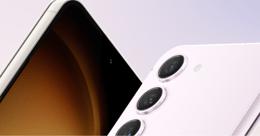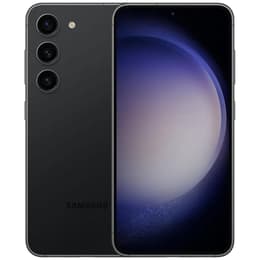


Galaxy S23 • Unlocked vs Google Pixel 9 • Unlocked

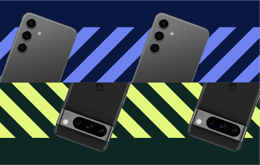
Galaxy S23 • Unlocked
Starting at

Refurbished price:$194.99

Versus $799.00 new

See options
Google Pixel 9 • Unlocked
Starting at

Refurbished price:$379.00

Versus $799.00 new

See options

Ratings

The Samsung Galaxy S23, released in February 2023, and the Google Pixel 9, launched in August 2024, represent distinct approaches to the premium smartphone experience. Both devices operate on the Android platform, offering users a robust ecosystem of applications and services. While the Galaxy S23 emphasizes a balanced hardware package with a versatile camera system, the Pixel 9 focuses on advanced computational photography and a streamlined software experience, powered by Google's custom silicon. These differences cater to varying user priorities, from camera capabilities to long-term software support.

Scores

Durability

When considering the longevity of these devices, several factors come into play, including their release timelines, software support, and physical resilience.

  • Software Support: The Google Pixel 9 offers an extended software commitment, promising seven years of operating system and security updates, ensuring support until at least August 2031. In contrast, the Samsung Galaxy S23 is slated to receive four years of major Android OS updates and five years of security updates, with official support concluding around 2028. This difference means the Pixel 9 will likely receive more future Android versions.
  • Physical Durability: Both smartphones feature an IP68 rating for water and dust resistance, indicating a high level of protection against environmental elements. The Galaxy S23 incorporates Gorilla Glass Victus 2 on its front and back, along with a metal frame, demonstrating good resilience in drop tests, though a protective case is generally recommended. The Pixel 9 also utilizes Gorilla Glass Victus 2 and an aluminum frame, with Google claiming improved durability over its predecessor.
  • Practical Lifespan: Users can expect both devices to perform reliably for several years. The Pixel 9's longer software update policy suggests a potentially longer period of receiving the latest features and security patches, which can be a significant consideration for those who keep their phones for an extended duration.

Release Year

2023

2024

Last OS Compatibility

Yes

Yes

OS

Android

Android

Foldable

No

No

Performance

The performance of a smartphone is crucial for daily tasks, from app navigation to demanding applications and gaming.

  • Processing Power: The Galaxy S23 is equipped with a customized current-generation processor, designed to deliver efficient performance for everyday use and more intensive tasks like gaming. The Pixel 9 features Google's Tensor G4 processor, which is optimized for the device's software and AI capabilities, contributing to smooth operation and responsiveness.
  • Multitasking and Responsiveness: The Pixel 9 typically comes with 12GB of RAM, which supports fluid multitasking and keeps multiple applications running in the background without significant slowdowns. The Galaxy S23 offers 8GB of RAM, providing a capable experience for most users, though heavy multitaskers might notice a difference in extreme scenarios. Both devices offer ample power for navigating interfaces, launching apps, and handling productivity tasks.
  • Battery Behavior: The Pixel 9 includes a 4700 mAh battery, and user reports indicate a notable improvement in battery longevity compared to earlier Pixel models, often lasting a full day even with heavy usage. The Galaxy S23 has a 3900 mAh battery, which, combined with its efficient processor, provides reliable all-day power for many users, with screen-on times varying based on individual usage patterns.

Memory (GB)

8 GB

12 GB

Screen quality

The display is a primary interface for smartphone interaction, and both models offer high-quality viewing experiences.

  • Display Technology and Clarity: The Galaxy S23 features a 6.1-inch Dynamic AMOLED 2X display, known for its vibrant colors, deep blacks, and excellent contrast. The Pixel 9 sports a 6.3-inch OLED display, also delivering rich colors and strong contrast, with a resolution of 2400x1080 pixels, providing sharp visuals.
  • Brightness and Refresh Rate: Both devices offer a 120Hz refresh rate, contributing to smoother scrolling and more fluid animations. The Pixel 9's display can reach high brightness levels, with up to 1800 nits locally and 2700 nits at peak, enhancing visibility in bright outdoor conditions. The Galaxy S23 also provides strong brightness for outdoor use, ensuring content remains legible.
  • Viewing Experience: The slightly larger screen of the Pixel 9 offers a more expansive viewing area for media consumption and productivity. The Galaxy S23's more compact 6.1-inch display is often preferred by users seeking easier one-handed operation and pocketability.

Resolution

1080 x 2340

1080 x 2424

Screen type

Dynamic AMOLED 2X

OLED

Audiovisual

Both the Galaxy S23 and Pixel 9 offer advanced camera systems, though with different strengths and configurations.

  • Rear Camera Systems: The Galaxy S23 features a versatile triple-camera setup, including a 50MP main sensor with optical image stabilization (OIS), a 12MP ultrawide lens, and a 10MP telephoto lens with OIS, allowing for optical zoom capabilities. This configuration provides flexibility for various photographic scenarios, including zoomed shots. The Pixel 9 comes with a dual-camera system, comprising a 50MP main sensor with OIS and electronic image stabilization (EIS), and a 48MP ultrawide lens with a wide field of view. It lacks a dedicated telephoto lens, relying on digital zoom for distant subjects.
  • Photography Performance: The Galaxy S23 generally produces good quality images in well-lit conditions, with its main sensor performing strongly. Some users have noted instances of over-processing with the 50MP camera. The Pixel 9 is praised for its computational photography, delivering detailed images with realistic colors, particularly excelling in low-light environments. Its portrait mode is effective, though it can sometimes struggle with fine hair details.
  • Video and Audio: The Galaxy S23 supports 8K video recording at 24/30fps, offering high-resolution video capture. The Pixel 9 records 4K video at up to 60fps. Both devices provide good microphone quality for calls and recordings, and their speaker outputs are suitable for media consumption.

Main camera

50 megapixels

50 megapixels

Front camera

12 megapixels

10.5 megapixels

Miscellaneous

Beyond core features, practical elements like connectivity, ports, and physical design contribute to the overall user experience.

  • Connectivity and Ports: Both the Galaxy S23 and Pixel 9 support 5G connectivity, ensuring fast mobile data speeds where available. They also feature modern Wi-Fi standards and Bluetooth for wireless connections. The Galaxy S23 uses a USB-C port for charging and data transfer. The Pixel 9 also utilizes a USB-C port, specifically USB-C 3.2, which can offer faster data transfer speeds.
  • Biometric Security and Handling: Both smartphones incorporate fingerprint sensors for secure unlocking and authentication. The Galaxy S23 features an in-display fingerprint sensor. The Pixel 9 also includes a fingerprint sensor. In terms of physical design, the Galaxy S23 is slightly more compact and lighter, measuring approximately 146.3 x 70.9 x 7.6mm and weighing around 168g, making it comfortable for one-handed use. The Pixel 9 is slightly larger and heavier at 152.8 x 72.0 x 8.5mm and 198g.
  • Build Materials: Both devices feature a premium construction with glass backs and aluminum frames, contributing to a solid in-hand feel. The Pixel 9 also highlights its use of 100% recycled aluminum as part of its sustainability practices.

Weight

6 oz

7 oz

Screen size (inches)

6.1

6.3

Network

5G

5G

SIM card

Physical SIM + eSIM

Physical SIM + eSIM

Carrier compatibility

Unlocked

Unlocked

The Samsung Galaxy S23 and Google Pixel 9 each present compelling options for Android users, with distinct strengths that cater to different preferences. Users often praise the Galaxy S23 for its consistent performance, versatile camera system with a dedicated telephoto lens, and compact design. Some criticisms have occasionally pointed to its battery life, though improvements were noted over its predecessor, and some camera processing quirks. The Pixel 9, on the other hand, receives acclaim for its exceptional computational photography, particularly in low light, its long-term software support, and significantly improved battery life. Common observations include its reliance on digital zoom rather than a dedicated optical telephoto lens.

For users who prioritize a comprehensive camera system with optical zoom capabilities and a more compact form factor, the Samsung Galaxy S23 may be a suitable choice. Those who value cutting-edge computational photography, extended software longevity, and a streamlined Android experience with strong battery performance might find the Google Pixel 9 more aligned with their needs. Both devices offer a quality-assured refurbished option, providing an eco-friendly alternative for consumers looking to make an informed and sustainable choice.

See all articles

Our recent comparisons