Galaxy S23+ • Unlocked vs Google Pixel 8 • Unlocked

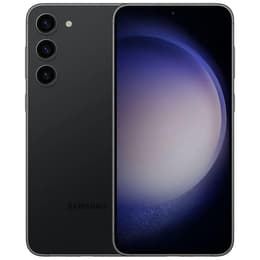
Galaxy S23+ • Unlocked
Starting at

Refurbished price:$259.99

Versus $999.99 new

See options
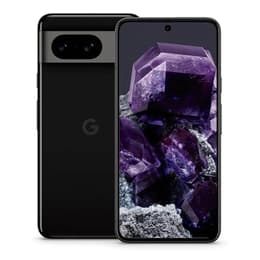
Google Pixel 8 • Unlocked
Starting at

Refurbished price:$254.00

Versus $699.99 new

See options

Ratings

The Samsung Galaxy S23 Plus (released February 2023) and the Google Pixel 8 (released October 2023) are contemporary smartphones that offer distinct experiences within the Android ecosystem. While both devices provide robust performance and capable camera systems, the Galaxy S23 Plus features a larger display and a versatile camera setup, whereas the Pixel 8 emphasizes a more compact design, advanced computational photography, and an extended software support commitment. Both operate on the Android platform, with each manufacturer presenting its unique user interface and feature sets.

Scores

Durability

When considering the long-term usability of these devices, their release timelines and software support policies are key differentiators.

  • Software Longevity: The Google Pixel 8 stands out with an industry-leading commitment of seven years of operating system and security updates from its release date. The Samsung Galaxy S23 Plus typically receives four to five years of major Android updates and five years of security updates, offering a solid but shorter support period.
  • Repairability: The Pixel 8 has received repairability scores around 6-7 out of 10, indicating that while some self-repairs are possible, certain components like the battery can be challenging to replace due to strong adhesives. Information on the S23 Plus's specific repairability score is less prominent, but generally, Samsung devices are considered moderately repairable.
  • Physical Durability: The Galaxy S23 Plus features Corning Gorilla Glass Victus 2 on both the front and back, along with an Armor Aluminum frame, contributing to its overall resilience. The Pixel 8 uses Corning Gorilla Glass Victus for screen protection and has a refined glass and aluminum design. Both devices offer IP68 water and dust resistance.

Release Year

2023

2023

Last OS Compatibility

Yes

Yes

OS

Android

Android

Foldable

No

No

Performance

Both the Galaxy S23 Plus and the Pixel 8 deliver strong performance for everyday tasks and demanding applications, though they achieve this with different underlying hardware philosophies.

  • Processing Power: The Galaxy S23 Plus is equipped with a processor optimized for Samsung devices, allowing it to handle intensive applications and multitasking with efficiency. The Pixel 8 features Google's custom-designed processor, engineered to excel in artificial intelligence and machine learning tasks, which contributes to its unique software features and overall system responsiveness.
  • Multitasking and Responsiveness: Both phones come with 8GB of RAM, enabling smooth multitasking and app switching. Users can expect quick app loading times and a fluid experience across both devices.
  • Battery Behavior: The Galaxy S23 Plus, with its 4700 mAh battery, generally offers strong battery endurance, often lasting through a full day of heavy use and potentially two days for lighter users. The Pixel 8, with a 4575 mAh battery, provides reliable all-day battery life for most users, though heavy usage might require an afternoon top-up.

Memory (GB)

8 GB

8 GB

Screen quality

The visual experience on both smartphones is characterized by vibrant displays, though with some distinctions in size and technology.

  • Display Technology and Size: The Galaxy S23 Plus features a larger 6.6-inch Dynamic AMOLED 2X display, known for its deep blacks and rich colors. The Pixel 8 comes with a slightly more compact 6.2-inch Actua OLED display, which also provides excellent color accuracy and contrast.
  • Resolution and Clarity: Both phones offer a Full HD+ resolution (2340 x 1080 for S23 Plus, 2400 x 1080 for Pixel 8), ensuring sharp text and detailed images for everyday viewing. The Pixel 8, with its smaller screen size and similar resolution, has a slightly higher pixel density.
  • Brightness and Smoothness: The Galaxy S23 Plus offers a peak brightness of 1750 nits, providing good visibility outdoors. Its adaptive refresh rate ranges from 48Hz to 120Hz. The Pixel 8 can reach up to 2000 nits peak brightness in small areas and 1400 nits for full-screen brightness, enhancing outdoor readability. Its variable refresh rate can dynamically adjust between 60Hz and 120Hz, and even lower to 10Hz or 30Hz for power efficiency.

Resolution

1080 x 2340

1080 x 2400

Screen type

Dynamic AMOLED 2X

OLED

Audiovisual

Both devices offer advanced camera systems, but they approach photography with slightly different strengths and capabilities.

  • Rear Camera System: The Galaxy S23 Plus features a versatile triple-camera setup, including a 50MP main sensor with optical image stabilization (OIS), a 12MP ultrawide lens, and a 10MP telephoto lens with 3x optical zoom. The Pixel 8 has a dual-camera system with a 50MP main sensor (with a new sensor for improved light collection) and a 12MP ultrawide camera. The Pixel 8 does not include a dedicated telephoto lens.
  • Photography Performance: The Galaxy S23 Plus delivers good photos with generally saturated colors, and its 3x optical zoom provides flexibility. The Pixel 8 excels in computational photography, producing images with natural colors and strong performance in low-light conditions. Its AI-enhanced features, like 'Best Take', offer unique editing capabilities.
  • Video and Audio: The Galaxy S23 Plus can record 8K video at 30fps and offers improved video stabilization. The Pixel 8 also provides competitive video recording quality with strong stabilization and clean sound recording, even at 4K 60fps.

Main camera

50 megapixels

50 megapixels

Front camera

12 megapixels

10.5 megapixels

Miscellaneous

Beyond core features, several practical elements contribute to the overall user experience of these smartphones.

  • Connectivity and Ports: Both the Galaxy S23 Plus and the Pixel 8 support 5G connectivity, Wi-Fi 6/6E, and Bluetooth 5.3, ensuring fast and reliable wireless connections. Both devices utilize a USB-C port for charging and data transfer.
  • Biometric Security: Both phones incorporate in-display fingerprint sensors for secure unlocking. The Galaxy S23 Plus also offers facial recognition, while the Pixel 8 features face unlock that performs well in adequately lit environments.
  • Design and Handling: The Galaxy S23 Plus measures 157.8 x 76.2 x 7.6 mm and weighs 196g, offering a substantial yet balanced feel. The Pixel 8 is slightly more compact and lighter at 150.5 x 70.8 x 8.9 mm and 187g, potentially making it easier for one-handed use.

Weight

7 oz

7 oz

Screen size (inches)

6.6

6.2

Network

5G

5G

SIM card

Physical SIM + eSIM

Physical SIM + eSIM

Carrier compatibility

Unlocked

Unlocked

The Samsung Galaxy S23 Plus and the Google Pixel 8 each present a compelling package, catering to different user preferences. Users often praise the Galaxy S23 Plus for its robust battery life, vibrant display, and versatile camera system, particularly its dedicated telephoto lens. Some users, however, view it as an iterative update compared to its predecessor. The Pixel 8 receives acclaim for its exceptional computational photography, extended software support, and unique AI-driven features. Common feedback suggests that while its battery life is improved, it may not match the endurance of some larger flagships, and its processor, while capable, might not benchmark as high as some competitors.

Users prioritizing a larger display, a dedicated telephoto camera, and potentially longer battery life for extended use may find the Galaxy S23 Plus well-suited to their needs. Conversely, those who value a more compact device, cutting-edge computational photography, and a significantly longer software update commitment will likely lean towards the Google Pixel 8. Both devices offer a quality-assured refurbished option, providing an eco-friendly alternative for consumers seeking to make informed and sustainable choices.


See all articles

Our recent comparisons