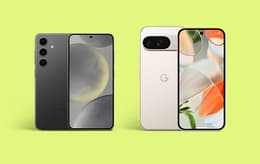
Google Pixel 8 • Unlocked vs iPhone 12 • Unlocked

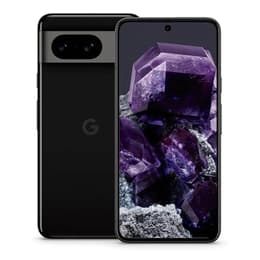
Google Pixel 8 • Unlocked
Starting at

Refurbished price:$254.00

Versus $699.99 new

See options
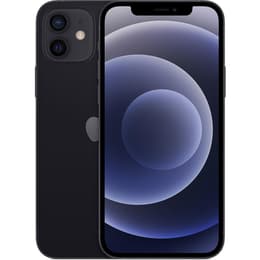
iPhone 12 • Unlocked
Starting at

Refurbished price:$172.96

Versus $629.00 new

See options

Ratings

The Google Pixel 8, released in October 2023, and the iPhone 12, launched in October 2020, represent distinct generations within the smartphone market. While both are designed to offer a capable smartphone experience, the Pixel 8 integrates more recent advancements in processing power, camera technology, and software longevity. The iPhone 12 operates on Apple's iOS, known for its streamlined interface, while the Pixel 8 runs on Android, offering a highly customizable experience and deep integration with Google services.

Scores

Durability

When evaluating the practical lifespan of these devices, their release timelines, software support, and overall build quality are key considerations.

  • Software Longevity: The Pixel 8 is committed to receiving seven years of OS, security, and Feature Drop updates, extending its support until at least October 2030. The iPhone 12, typically receiving 5-7 years of major iOS updates, is expected to receive software support until around 2027, with security updates potentially extending beyond that.
  • Physical Protection: Both devices feature robust build materials and an IP68 rating for dust and water resistance, indicating they can withstand immersion in water. The Pixel 8 utilizes Corning Gorilla Glass Victus for its display, while the iPhone 12 introduced Ceramic Shield on the front for enhanced drop performance.
  • Repairability: Both models are designed with a degree of repairability in mind. Users considering a quality-assured refurbished option for either device can benefit from thorough testing and component replacement, ensuring continued functionality.

Release Year

2023

2020

Last OS Compatibility

Yes

Yes

OS

Android

iOS

Foldable

No

No

Performance

The performance of a smartphone is crucial for daily tasks, from browsing to demanding applications. These two devices offer different levels of responsiveness and capability, largely due to their generational gap.

  • System Responsiveness: The Pixel 8 features a more recent processor, designed to handle complex tasks like live translation and advanced photo editing with ease, resulting in a fluid experience when switching between multiple demanding applications. The iPhone 12, despite its age, remains responsive for everyday browsing and social media, though it may show slight pauses when loading the most recent high-end mobile games compared to the newer Pixel device.
  • Battery Behavior: The Pixel 8 is equipped with a larger battery capacity (4575 mAh) compared to the iPhone 12 (2815 mAh), which can translate to longer usage times between charges for many users. However, user experiences with the Pixel 8's power efficiency have been mixed, with some reporting it to be adequate rather than exceptional. The iPhone 12's battery life was considered good at its release, though some users noted it was less than its predecessor.
  • Multitasking and Storage: The Pixel 8 typically offers 8GB of RAM, contributing to smoother multitasking, while the iPhone 12 comes with 4GB of RAM. The Pixel 8 is available with 128GB or 256GB of internal storage, while the iPhone 12 offers 64GB, 128GB, and 256GB options.

Memory (GB)

8 GB

4 GB

Screen quality

The display is a primary interface for smartphone interaction, and both devices offer vibrant viewing experiences, though with notable differences in technology and capabilities.

  • Display Technology and Clarity: Both the Pixel 8 and iPhone 12 feature OLED displays, providing deep blacks and vibrant colors. The Pixel 8 has a 6.2-inch display with a resolution of 1080x2400 pixels, while the iPhone 12 has a 6.1-inch Super Retina XDR OLED display with a resolution of 1170x2532 pixels.
  • Brightness and Refresh Rate: A key difference lies in the refresh rate; the Pixel 8 features a 120Hz refresh rate, contributing to smoother scrolling and more fluid animations. The iPhone 12 has a standard 60Hz refresh rate. The Pixel 8 also offers a higher peak brightness of up to 2000 nits, compared to the iPhone 12's 1200 nits for HDR content, making the Pixel 8 potentially easier to view in bright outdoor conditions.
  • Viewing Experience: The Pixel 8's higher refresh rate provides a more modern and responsive feel, particularly noticeable during fast-paced content or general navigation. The iPhone 12's display, while still offering excellent color accuracy and contrast, provides a more traditional viewing experience.

Resolution

1080 x 2400

1170 x 2532

Screen type

OLED

Super Retina XDR OLED

Audiovisual

Both smartphones offer capable camera systems, but the Pixel 8, being a newer device, benefits from more advanced hardware and computational photography features.

  • Rear Camera System: The Pixel 8 features a 50 MP main camera and a 12 MP ultrawide camera. The iPhone 12 has a dual 12 MP camera system, with a wide and an ultrawide lens. The Pixel 8's larger main sensor generally captures more detail and performs well in various lighting conditions, often enhanced by its advanced computational photography features like Magic Eraser and Photo Unblur.
  • Photography Features: The Pixel 8 includes advanced software features that leverage artificial intelligence for enhanced image editing and quality. The iPhone 12 delivers consistent and natural-looking photos in various conditions, with strong performance in its Night mode.
  • Video Recording and Front Camera: Both devices are capable of recording 4K video at 60 frames per second. The Pixel 8 has a 10.5 MP front camera, while the iPhone 12 features a 12 MP front camera, both capable of high-quality selfies and video calls.

Main camera

50 megapixels

12 megapixels

Front camera

10.5 megapixels

12 megapixels

Miscellaneous

Beyond core performance and display, several other features contribute to the overall user experience and practical utility of these smartphones.

  • Connectivity: The Pixel 8 supports Wi-Fi 7 and Bluetooth 5.3, offering more advanced and potentially faster wireless connectivity options compared to the iPhone 12's Wi-Fi 6 and Bluetooth 5.0. Both devices support 5G cellular networks.
  • Ports and Biometrics: The Pixel 8 uses a USB-C 3.2 port for charging and data transfer, and includes both an under-display fingerprint sensor and face unlock for security. The iPhone 12 utilizes a Lightning port and relies on Face ID for biometric authentication. The Pixel 8 also supports display output over USB-C, a feature not present on the iPhone 12's Lightning port.
  • Design and Handling: The Pixel 8 measures 150.5 x 70.8 x 8.9 mm and weighs 187g, while the iPhone 12 is slightly more compact and lighter at 146.7 x 71.5 x 7.4 mm and 164g. The Pixel 8 has a glass body with a polished aluminum frame, and the iPhone 12 features an aerospace-grade aluminum frame with a glass back.

Weight

7 oz

7 oz

Screen size (inches)

6.2

6.1

Network

5G

5G

SIM card

Physical SIM + eSIM

Physical SIM + eSIM

Carrier compatibility

Unlocked

Unlocked

Connector

USB-C

Lightning

The Google Pixel 8 and iPhone 12 cater to different user priorities, reflecting their respective release timelines and operating system philosophies. User sentiment often highlights the Pixel 8's strengths in its advanced camera capabilities, extended software support, and vibrant, high-refresh-rate display. However, some users have noted concerns regarding its power efficiency and gaming performance.

Conversely, the iPhone 12 is frequently praised for its consistent performance, the reliability of the iOS ecosystem, and its relatively compact design. Common criticisms often revolve around its standard 60Hz display and, for some, its battery life compared to newer models.

Users prioritizing the latest camera innovations, extensive long-term software support, and a high refresh rate display may find the Google Pixel 8 a more suitable choice. Its Android operating system also offers a different level of customization and integration with Google services. Conversely, individuals who value the established iOS ecosystem, a slightly more compact and lighter design, and consistent performance for everyday tasks might lean towards the iPhone 12. Both devices are available as quality-assured refurbished options, providing an eco-friendly alternative for consumers.

See all articles

Our recent comparisons