
Galaxy S23+ • Unlocked vs iPhone SE (2020) • Unlocked

Galaxy S23+ • Unlocked
Starting at

Refurbished price:$259.99

Versus $999.99 new

See options
iPhone SE (2020) • Unlocked
Starting at

Refurbished price:$101.37

Versus $449.00 new

See options

Ratings

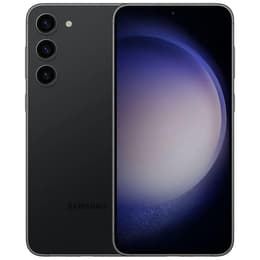
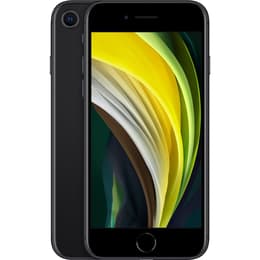
The Samsung Galaxy S23 Plus, released in February 2023, and the iPhone SE 2020, launched in April 2020, represent distinct philosophies in smartphone design and functionality. While both devices offer reliable mobile experiences, they cater to different user preferences through their operating systems, form factors, and core capabilities. The Galaxy S23 Plus operates on Android, providing a larger display and a versatile camera system, whereas the iPhone SE 2020 runs on iOS, featuring a compact design and a streamlined user interface.

Scores

Durability

The age difference between these two models significantly influences their expected software longevity and overall practical lifespan.

  • Software Support: The Galaxy S23 Plus, being a more recent release, is scheduled to receive Android updates and security patches for several years, ensuring compatibility with the latest applications until approximately 2028. The iPhone SE 2020 is approaching the later stages of its official iOS update cycle, though Apple typically provides security support for older devices for an extended period.
  • Physical Build: The Galaxy S23 Plus features modern glass protection, specifically Gorilla Glass Victus 2 on both the front and back, and boasts an IP68 rating for dust and water resistance. The iPhone SE 2020 utilizes a design based on older hardware standards, with a glass front and back and an aluminum frame, offering IP67 water and dust resistance.
  • Repairability: Both manufacturers have made efforts to provide repair parts. The iPhone SE 2020's internal layout is often noted by technicians as being straightforward for common fixes like battery replacements, though its glass back can be less practical to repair.

Release Year

2023

2020

Last OS Compatibility

Yes

Yes

OS

Android

iOS

Foldable

No

No

Performance

Performance levels vary considerably between these two devices due to the generational gap, impacting how each handles demanding tasks and daily multitasking.

  • System Responsiveness: The Galaxy S23 Plus handles intensive applications, high-end gaming, and complex multitasking with ease, maintaining smooth operation even under heavy use. The iPhone SE 2020 remains capable for standard tasks like messaging and browsing, but users might observe slower loading times when opening large files or switching between numerous active applications.
  • Battery Endurance: With a larger physical footprint, the Galaxy S23 Plus provides enough power to last through a full day of heavy usage, including video streaming and navigation, with many users reporting up to two days of moderate use. The iPhone SE 2020 has a significantly smaller battery capacity, which often necessitates a mid-day charge for users who frequently engage with their phones beyond basic communication.
  • Memory Management: The Galaxy S23 Plus includes 8GB of system memory, allowing it to keep many applications open in the background simultaneously without refreshing. The iPhone SE 2020 comes with 3GB of RAM, which is sufficient for typical smartphone usage, though it may close background applications more frequently to maintain system stability.

Memory (GB)

8 GB

3 GB

Screen quality

The viewing experience is a primary differentiator, as these smartphones employ fundamentally different display technologies and sizes.

  • Display Technology and Size: The Galaxy S23 Plus features a 6.6-inch Dynamic AMOLED 2X display, known for its deep blacks, vibrant colors, and high contrast, making it well-suited for media consumption. The iPhone SE 2020 has a smaller 4.7-inch Retina HD IPS LCD, which offers accurate color reproduction and good viewing angles.
  • Resolution and Brightness: The Galaxy S23 Plus provides a 2340x1080 pixel resolution, resulting in a clear and detailed image on its larger screen, and boasts a peak brightness of 1750 nits for excellent outdoor visibility. The iPhone SE 2020 has a 1334x750 pixel resolution and a typical maximum brightness of 625 nits, suitable for most indoor and outdoor environments, though it may struggle in direct sunlight compared to the S23 Plus.
  • Refresh Rate: The Galaxy S23 Plus features an adaptive refresh rate that can go up to 120Hz, providing smoother scrolling and more fluid animations. The iPhone SE 2020 operates at a standard 60Hz refresh rate, which is adequate for general use but does not offer the same level of visual fluidity.

Resolution

1080 x 2340

750 x 1334

Screen type

Dynamic AMOLED 2X

Retina IPS LCD

Audiovisual

Photography and media capabilities highlight the evolution of mobile hardware between 2020 and 2023, particularly regarding lens versatility.

  • Camera Versatility: The Galaxy S23 Plus features a triple-lens system, including a 50MP main sensor with optical image stabilization, a 12MP ultrawide lens, and a 10MP telephoto lens with 3x optical zoom, allowing for a range of photographic options. The iPhone SE 2020 relies on a single 12MP wide-angle lens with optical image stabilization, which performs well in good lighting conditions but lacks optical zoom or ultra-wide capabilities.
  • Low-Light Performance: Night-time photography is a strong point for the Galaxy S23 Plus, which uses modern processing to extract detail from dark scenes. The iPhone SE 2020 lacks a dedicated night mode, meaning photos taken in dim environments often contain more grain and less detail.
  • Video and Audio: Both devices record high-quality video, but the Galaxy S23 Plus offers advanced stabilization and higher resolution options, including 8K video recording at 30 frames per second. The iPhone SE 2020 supports 4K video recording at up to 60 frames per second. For audio, the Galaxy S23 Plus provides an immersive stereo speaker experience, while the iPhone SE 2020 also includes stereo speakers.

Main camera

50 megapixels

12 megapixels

Front camera

12 megapixels

7 megapixels

Miscellaneous

Beyond the core specifications, several practical elements contribute to the overall user experience and device utility.

  • Connectivity Standards: The Galaxy S23 Plus supports 5G networks, Wi-Fi 6E, and Bluetooth 5.3, offering faster wireless speeds and more robust connections. The iPhone SE 2020 supports 4G LTE, Wi-Fi 6, and Bluetooth 5.0.
  • Port Types: The Galaxy S23 Plus uses a USB-C port for charging and data transfer. The iPhone SE 2020 utilizes a Lightning port. Neither device includes a 3.5mm headphone jack.
  • Biometric Security: The Galaxy S23 Plus incorporates an in-display fingerprint sensor and supports face recognition for secure unlocking. The iPhone SE 2020 features Touch ID, a fingerprint sensor integrated into its home button.
  • Physical Characteristics: The Galaxy S23 Plus measures 157.8 x 76.2 x 7.6 mm and weighs 196 grams, offering a larger form factor. The iPhone SE 2020 is more compact at 138.4 x 67.3 x 7.3 mm and weighs 148 grams, making it easier for one-handed use.

Weight

7 oz

5 oz

Screen size (inches)

6.6

4.7

Network

5G

LTE

SIM card

Physical SIM + eSIM

Physical SIM + eSIM

Carrier compatibility

Unlocked

Unlocked

Choosing between the Galaxy S23 Plus and the iPhone SE 2020 involves weighing modern features against compact simplicity. User feedback on forums often praises the Galaxy S23 Plus for its exceptional battery life, vibrant display, and versatile camera system, with many noting its consistent performance even under heavy use. Some common criticisms, however, point to its larger size, which might not appeal to those preferring a more compact device.

Conversely, the iPhone SE 2020 is frequently lauded for its portability, familiar design with Touch ID, and solid performance for its age, making it a suitable option for users who prefer a smaller phone or the iOS ecosystem. Criticisms often highlight its smaller screen, comparatively shorter battery life for heavy users, and the absence of features like Night Mode in its camera.

Users prioritizing a large, high-refresh-rate display, advanced camera capabilities, and extended software support will find the Galaxy S23 Plus well-suited to their needs. Those who value a compact design, the familiarity of Touch ID, and the iOS ecosystem for basic communication and everyday tasks may lean toward the iPhone SE 2020. Both devices are available as quality-assured refurbished options, providing an eco-friendly alternative for consumers.

See all articles

Our recent comparisons