Google Pixel 6a • Unlocked vs iPhone 13 mini • Unlocked

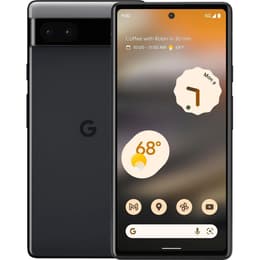
Google Pixel 6a • Unlocked
Starting at

Refurbished price:$141.00

Versus $399.00 new

See options
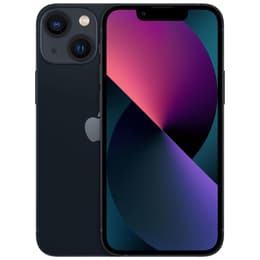
iPhone 13 mini • Unlocked
Starting at

Refurbished price:$215.00

Versus $629.00 new

See options

Ratings

The Google Pixel 6a (released July 2022) and the iPhone 13 Mini (released September 2021) offer distinct approaches to compact smartphone design. While both devices provide capable performance and camera systems, they differ significantly in their operating systems and overall user experience. The Pixel 6a runs on Google's Android platform, emphasizing AI-driven features, whereas the iPhone 13 Mini operates on Apple's iOS, known for its integrated ecosystem and streamlined interface.

Scores

Durability

The practical lifespan of a smartphone is often influenced by its release timeline, software support, and ease of repair.

  • Release Timeline: The iPhone 13 Mini was introduced in September 2021, making it slightly older than the Pixel 6a, which launched in July 2022. This difference in release dates can impact the duration of future software updates.
  • Software Longevity: The Pixel 6a is expected to receive five years of security updates from its release, running on Android. The iPhone 13 Mini, operating on iOS, is anticipated to receive major iOS updates until at least 2027 or 2028, with security patches potentially extending to 2030 or 2031.
  • Repairability: The Google Pixel 6a generally scores higher in repairability, with a rating of 7 out of 10 from some assessments, noting easier battery and display removal. The iPhone 13 Mini, in contrast, has a lower repairability score, around 4.0 out of 10, due to the use of non-reusable adhesives and the need for specialized tools for certain repairs.

Release Year

2022

2021

Last OS Compatibility

Yes

Yes

OS

Android

iOS

Foldable

No

No

Performance

Both devices deliver smooth performance for everyday tasks, though their underlying hardware architectures differ.

  • Processor Capabilities: The Pixel 6a is equipped with a processor designed by Google, enabling efficient handling of demanding applications and advanced on-device AI features. The iPhone 13 Mini features Apple's A15 Bionic chip, which provides robust performance for gaming, multitasking, and graphic-intensive applications.
  • System Responsiveness: Users generally report that both phones offer a fluid and responsive experience when navigating the interface, launching apps, and switching between tasks. The Pixel 6a's performance is often highlighted for its ability to manage complex computational photography tasks quickly. The iPhone 13 Mini maintains a high level of responsiveness, characteristic of its operating system's optimization.
  • Storage and RAM: The Pixel 6a comes with 6GB of RAM and 128GB of internal storage, without an option for expansion. The iPhone 13 Mini offers 4GB of RAM and storage options starting at 128GB, with higher capacities available.

Memory (GB)

6 GB

4 GB

Screen quality

The display experience on these two compact phones offers distinct characteristics in terms of size and visual output.

  • Display Technology and Size: The Google Pixel 6a features a 6.1-inch OLED display, providing vibrant colors and deep blacks. The iPhone 13 Mini has a smaller 5.4-inch Super Retina XDR OLED display, which also delivers excellent contrast and color accuracy.
  • Resolution and Clarity: Both phones offer high-resolution screens suitable for their size. The Pixel 6a has a 1080x2400 pixel resolution, while the iPhone 13 Mini features a 1080x2340 pixel resolution, resulting in a high pixel density that ensures sharp text and clear images.
  • Refresh Rate and Brightness: Both devices feature a standard 60Hz refresh rate, which provides a smooth viewing experience for most content. The iPhone 13 Mini's display is noted for its higher typical brightness levels, which can improve visibility in bright outdoor conditions.

Resolution

1080 x 2400

1080 x 2340

Screen type

OLED

Super Retina XDR OLED

Audiovisual

Both smartphones are recognized for their camera capabilities, leveraging advanced computational photography to produce quality images.

  • Camera System: The Pixel 6a includes a dual-camera setup with a 12.2-megapixel main sensor and a 12-megapixel ultrawide sensor. The iPhone 13 Mini also features a dual 12-megapixel camera system, comprising a wide and an ultrawide lens.
  • Photography Performance: The Pixel 6a is praised for its computational photography, delivering detailed and well-exposed photos, particularly in various lighting conditions, including low light. The iPhone 13 Mini benefits from larger camera sensors and sensor-shift optical image stabilization, contributing to improved low-light performance and overall image quality.
  • Video Recording and Features: Both phones are capable of recording 4K video at 60 frames per second. The iPhone 13 Mini introduces Cinematic mode, which offers a shallow depth of field effect for videos. The Pixel 6a includes features like Magic Eraser and Real Tone for photo editing.

Main camera

12.2 megapixels

12 megapixels

Front camera

8 megapixels

12 megapixels

Miscellaneous

Beyond core features, several practical elements contribute to the overall user experience and device utility.

  • Connectivity and Ports: The Pixel 6a supports 5G, Wi-Fi 6E, and Bluetooth 5.2, utilizing a USB-C port for charging and data transfer. The iPhone 13 Mini also supports 5G and Wi-Fi 6, with Bluetooth 5.0, and uses Apple's proprietary Lightning port. The iPhone 13 Mini also features MagSafe for magnetic accessories and wireless charging.
  • Biometric Authentication: The Pixel 6a incorporates an in-display fingerprint sensor for secure unlocking. The iPhone 13 Mini relies on Face ID, Apple's facial recognition system.
  • Design and Durability: The Pixel 6a has a plastic back, an aluminum frame, and Gorilla Glass 3 on the front, with an IP67 rating for dust and water resistance. The iPhone 13 Mini features a more compact design with a Ceramic Shield front cover and glass back, an aluminum frame, and an IP68 rating for enhanced water resistance. The iPhone 13 Mini is notably lighter at 141 grams compared to the Pixel 6a's 178 grams.

Weight

6 oz

4 oz

Screen size (inches)

6.1

5.4

Network

5G

5G

SIM card

Physical SIM + eSIM

Physical SIM + eSIM

Carrier compatibility

Unlocked

Unlocked

The Google Pixel 6a and iPhone 13 Mini both cater to users seeking a more compact smartphone experience, yet they offer distinct ecosystems and feature sets. Users often praise the Pixel 6a for its exceptional camera performance, driven by Google's computational photography, and its clean Android software experience. Some users, however, note the 60Hz display and inconsistent battery life as areas for improvement.

The iPhone 13 Mini is frequently lauded for its powerful performance in a small form factor, its high-quality OLED display, and its improved battery life compared to its predecessor. Its compact size is a significant draw for those who prefer one-handed use and easy pocketability. Criticisms sometimes point to its battery life still being shorter than larger iPhone models and its proprietary Lightning port.

Users prioritizing an advanced camera with AI-driven features and a pure Android experience in a slightly larger compact form might find the Google Pixel 6a well-suited to their needs. Conversely, those who value a highly integrated ecosystem, robust performance in a very small device, and strong long-term software support may lean towards the iPhone 13 Mini. Both devices represent excellent choices for those looking for quality-assured refurbished options, offering a sustainable choice for their next smartphone.
See all articles

Our recent comparisons