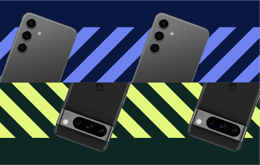
Galaxy S24 • Locked T-Mobile vs Google Pixel 8 • Unlocked

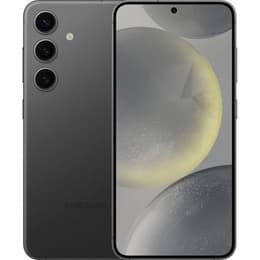
Galaxy S24 • Locked T-Mobile
Starting at

Refurbished price:$277.00

Versus $799.99 new

See options
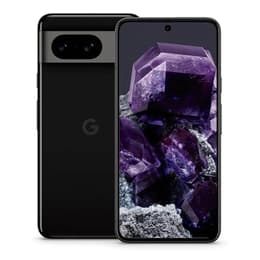
Google Pixel 8 • Unlocked
Starting at

Refurbished price:$254.00

Versus $699.99 new

See options

Ratings

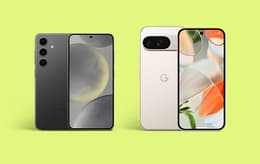
The Samsung Galaxy S24, released in January 2024, and the Google Pixel 8, launched in October 2023, represent two distinct approaches to the modern smartphone experience. Both devices operate on the Android platform, offering a blend of advanced features and user-friendly interfaces. While the Galaxy S24 emphasizes a refined hardware experience with a focus on display technology and a versatile camera system, the Pixel 8 distinguishes itself through its deep integration of artificial intelligence and computational photography capabilities.

Scores

Durability

When considering the long-term usability of these devices, both the Galaxy S24 and the Pixel 8 offer substantial software support, a key factor in their practical lifespan.

  • Software Updates: Both the Samsung Galaxy S24 and the Google Pixel 8 are committed to providing seven years of operating system and security updates. This means both devices are expected to receive updates through Android 21, ensuring prolonged access to new features and security patches.
  • Physical Durability: The Galaxy S24 features Corning Gorilla Glass Victus 2 for display protection and an aluminum frame, contributing to its overall resilience. The Pixel 8 uses Corning Gorilla Glass Victus for its display and also boasts an IP68 rating for water and dust resistance, similar to the S24.
  • Repairability: The Google Pixel 8 generally receives a moderate repairability score, with some assessments placing it around 7 out of 10, indicating that self-repairs are possible for those with some technical skill. Information on the specific repairability score for the base Galaxy S24 is less readily available, but Samsung devices are often noted for being less straightforward to repair independently compared to Pixel phones.

Release Year

2024

2023

Last OS Compatibility

Yes

Yes

OS

Android

Android

Foldable

No

No

Performance

The performance of both smartphones is tailored to handle demanding applications and multitasking, though they achieve this through different hardware configurations.

  • Processing Power: The Galaxy S24 is equipped with a current-generation processor, which in North America and East Asia is the Snapdragon 8 Gen 3, while other regions receive the Exynos 2400. This hardware enables smooth operation for intensive tasks like gaming and complex app usage. The Pixel 8 is powered by Google's Tensor G3 chip, designed to optimize on-device AI and machine learning tasks, contributing to efficient handling of AI-centric features and everyday operations.
  • Multitasking and Storage: Both devices offer 8GB of RAM, which supports fluid multitasking and app switching. For internal storage, the Galaxy S24 is available with 128GB or 256GB, with the 256GB and higher variants utilizing faster UFS 4.0 storage. The Pixel 8 also comes with 128GB or 256GB storage options, using UFS 3.1 technology.
  • Battery Behavior: The Galaxy S24 houses a 4000 mAh battery, and in testing, it has demonstrated around 13-14 hours of web browsing endurance. Users report varying screen-on times, typically ranging from 5 to 7 hours with mixed usage. The Pixel 8 features a larger 4575 mAh battery, with test results showing approximately 9-10 hours of web surfing. Some users find its battery life sufficient for a full day of mixed use, while heavy users might require an afternoon charge, and some have noted faster drain on mobile data.

Memory (GB)

8 GB

8 GB

Screen quality

The visual experience on both the Galaxy S24 and Pixel 8 is characterized by vibrant displays, though with some key differences in technology and brightness.

  • Display Technology and Clarity: The Galaxy S24 features a 6.2-inch Dynamic AMOLED 2X display with an FHD+ resolution (2340 x 1080 pixels), providing sharp and clear visuals. The Pixel 8 also has a 6.2-inch OLED display, referred to as an 'Actua display,' with an FHD+ resolution (2400 x 1080 pixels), offering rich colors and good detail.
  • Brightness and Refresh Rate: The Galaxy S24's display can reach an impressive peak brightness of 2600 nits, ensuring excellent visibility even in bright outdoor conditions. It also boasts an adaptive refresh rate of 1-120Hz, allowing for smooth scrolling and efficient power consumption. The Pixel 8 offers a peak brightness of 2000 nits and a variable refresh rate of 60-120Hz, providing a responsive and bright viewing experience.
  • Viewing Experience: Both phones deliver vibrant colors and deep blacks characteristic of OLED technology. The S24's higher peak brightness can be particularly beneficial for outdoor use, while both offer a smooth visual experience thanks to their high refresh rates.

Resolution

1080 x 2340

1080 x 2400

Screen type

Dynamic LTPO AMOLED 2X

OLED

Audiovisual

Both the Galaxy S24 and Pixel 8 offer advanced camera systems, each with its strengths in capturing photos and videos.

  • Rear Camera Systems: The Galaxy S24 features a versatile triple-camera setup on the rear, including a 50MP wide-angle lens with optical image stabilization (OIS), a 12MP ultrawide lens, and a 10MP telephoto lens with 3x optical zoom and OIS. This configuration provides flexibility for various shooting scenarios, from expansive landscapes to zoomed-in subjects. The Pixel 8 comes with a dual-camera system, comprising a 50MP wide-angle lens with OIS and a 12MP ultrawide lens that also supports macro photography and features autofocus.
  • Photography Performance: The Galaxy S24 benefits from improved imaging algorithms, contributing to generally excellent image quality. The Pixel 8 is highly praised for its computational photography and AI-powered features like Best Take, Magic Editor, and Audio Magic Eraser, which enhance photos and videos significantly. Its main camera is capable of producing high-quality images with vivid colors and good detail, even in low light.
  • Video and Audio: The Galaxy S24 supports 8K video recording at 30 frames per second. The Pixel 8 offers 4K video recording at up to 60 frames per second. Both devices provide good microphone quality for calls and recordings, with the Pixel 8's Audio Magic Eraser feature specifically designed to reduce distracting sounds in videos.

Main camera

50 megapixels

50 megapixels

Front camera

12 megapixels

10.5 megapixels

Miscellaneous

Beyond core features, several practical elements differentiate the user experience of the Galaxy S24 and Pixel 8.

  • Connectivity and Ports: Both smartphones support 5G connectivity for fast mobile data. The Galaxy S24 includes Wi-Fi 6E and Bluetooth 5.3. The Pixel 8 steps up with Wi-Fi 7 and Bluetooth 5.3, offering potentially faster wireless speeds. Both devices utilize a USB-C port for charging and data transfer.
  • Biometrics and Sensors: The Galaxy S24 features an ultrasonic in-screen fingerprint sensor for secure unlocking. The Pixel 8 offers both an in-display fingerprint scanner and facial recognition for authentication. Both phones include a standard array of sensors for navigation and functionality.
  • Design and Handling: The Galaxy S24 measures 147 x 70.6 x 7.6 mm and weighs 168g, featuring an aluminum frame and glass rear. The Pixel 8 is slightly larger and heavier at 150.5 x 70.8 x 8.9 mm and 187g, also with a glass rear. The S24's slightly thinner and lighter profile might appeal to users preferring a more compact feel, while the Pixel 8's design is noted for being polished and easy to use with one hand.

Weight

6 oz

7 oz

Screen size (inches)

6.2

6.2

Network

5G

5G

SIM card

Physical SIM + eSIM

Physical SIM + eSIM

Carrier compatibility

T-Mobile

Unlocked

Connector

USB-C

USB-C

User feedback for the Samsung Galaxy S24 often highlights its improved battery life, stable software, and robust performance as key strengths. The integration of new AI features has also been a point of interest. Some users, however, have noted that while battery life is good, it may not consistently reach a 'two-day' duration under heavy usage.

The Google Pixel 8 receives considerable praise for its AI-powered camera capabilities, including features like Best Take and Magic Editor, which significantly enhance the photography experience. Its bright display and the promise of seven years of software updates are also frequently lauded. Criticisms sometimes point to its performance trailing some competitors and battery life, while improved over its predecessor, not being class-leading, particularly for heavy users on mobile data.

Users prioritizing a versatile camera system with a dedicated telephoto lens, a brighter display for outdoor visibility, and a slightly more compact design may find the Samsung Galaxy S24 well-suited to their needs. Conversely, those who value cutting-edge computational photography, deep AI integration for everyday tasks, and a strong commitment to long-term software support might lean towards the Google Pixel 8. Both devices offer a quality-assured refurbished option, providing an eco-friendly alternative for consumers seeking a sustainable choice in their smartphone purchase.

See all articles

Our recent comparisons