Galaxy S24 • Unlocked vs Galaxy S24 FE • Unlocked

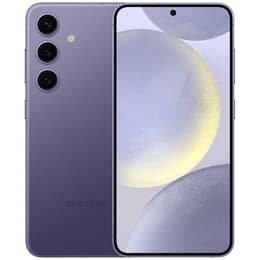
Galaxy S24 • Unlocked
Starting at

Refurbished price:$342.00

Versus $766.00 new

See options
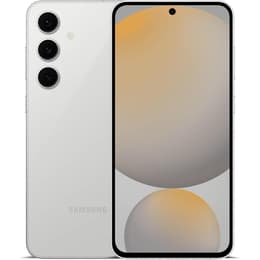
Galaxy S24 FE • Unlocked
Starting at

Refurbished price:$290.21

Versus $589.99 new

See options

Ratings

The Samsung Galaxy S24 (released January 2024) and the Samsung Galaxy S24 FE (released October 2024) are both Android smartphones from Samsung's popular Galaxy S series. While the S24 represents the core flagship experience in a compact form, the S24 FE, or 'Fan Edition,' offers a larger display and battery, often with slightly adjusted specifications to cater to a broader audience. Both devices run on the Android operating system with Samsung's One UI, providing a consistent software experience.

Scores

Durability

When considering the longevity of these devices, both the Galaxy S24 and S24 FE offer substantial software support and robust build quality, though with some distinctions.

  • Release Timeline: The Galaxy S24 was released in January 2024, while the S24 FE followed in October 2024 [5]. This means the S24 FE will receive software updates for a slightly longer period, extending its practical lifespan by a few months.
  • OS Support: Both models are committed to receiving up to seven years of Android OS and security updates, ensuring long-term usability and security through 2031 [5, 13]. This extended support aligns them with industry leaders in software longevity.
  • Durability Features: The Galaxy S24 features Gorilla Glass Victus 2 for display protection and an Armor Aluminum frame, offering enhanced resistance to drops and scratches [2, 9]. The S24 FE utilizes Gorilla Glass Victus Plus, which is an older generation of protective glass, and also features an aluminum frame [9, 11, 13]. Both devices carry an IP68 rating for dust and water resistance, providing protection against immersion in water [1, 9].

Release Year

2024

2024

Last OS Compatibility

Yes

Yes

OS

Android

Android

Foldable

No

No

Performance

The performance of the Galaxy S24 and S24 FE varies primarily due to their internal processing units and battery configurations, impacting how they handle demanding tasks and daily usage.

  • Processing Power: The Galaxy S24 is equipped with a current-generation processor, either the Snapdragon 8 Gen 3 for Galaxy or the Exynos 2400 for Galaxy, depending on the region [2, 5]. This allows it to handle intensive applications, complex multitasking, and graphic-heavy gaming with high responsiveness. The S24 FE features an Exynos 2400e chipset, which is an underclocked variant of the Exynos 2400 [5, 10, 18]. While still capable of smooth performance for most daily tasks and many demanding apps, it may exhibit slightly less raw power compared to the S24's processor.
  • Multitasking and Storage: Both phones come with 8GB of RAM, providing ample capacity for running multiple applications simultaneously without significant slowdowns [1, 3]. The Galaxy S24 offers storage options up to 512GB with UFS 4.0 technology, contributing to faster app loading and data transfer speeds [2]. The S24 FE is available with up to 256GB of storage [3].
  • Battery Behavior: The Galaxy S24 has a 4000mAh battery, while the S24 FE features a larger 4700mAh battery [1, 3]. Despite the S24 FE's larger capacity, real-world battery life can be comparable, with some users reporting that the S24's efficient processor allows it to last a full day of moderate to heavy use [9, 14, 19]. The S24 FE also generally offers good battery life, often lasting through a full day [13, 17]. Both support 25W wired and 15W wireless charging [9].

Memory (GB)

8 GB

8 GB

Screen quality

The display experience on the Galaxy S24 and S24 FE offers vibrant visuals, but with notable differences in size, brightness, and protection.

  • Display Technology and Size: Both devices feature AMOLED displays with a 120Hz refresh rate, providing smooth scrolling and vibrant colors [1, 3, 9]. The Galaxy S24 has a more compact 6.2-inch screen, while the S24 FE offers a larger 6.7-inch display, aligning it closer to the S24 Plus in screen real estate [9, 11, 13].
  • Brightness and Clarity: The Galaxy S24 boasts a higher peak brightness of 2600 nits, making it highly visible even in bright outdoor conditions [2, 9]. The S24 FE reaches a peak brightness of 1900 nits, which is still bright for most environments but may be less legible under direct sunlight compared to the S24 [9, 18]. Both offer FHD+ resolution, ensuring sharp text and clear images [1, 3].
  • Visual Experience: The S24 FE has noticeably thicker bezels around its display compared to the S24, which features slimmer bezels for a more immersive viewing experience [9, 23]. The S24 also benefits from Gorilla Glass Victus 2, while the S24 FE uses Gorilla Glass Victus Plus for screen protection [9, 11].

Resolution

1080 x 2340

1080 x 2340

Screen type

Dynamic LTPO AMOLED 2X

Dynamic AMOLED 2X

Audiovisual

Both the Galaxy S24 and S24 FE offer versatile camera systems, but the S24 generally provides a more refined imaging experience, particularly in specific areas.

  • Rear Camera System: Both phones feature a triple-camera setup on the rear, including a 50MP main sensor and a 12MP ultra-wide lens [1, 3, 11]. The primary difference lies in the telephoto lens: the Galaxy S24 has a 10MP sensor with 3x optical zoom, while the S24 FE has an 8MP telephoto sensor, also with 3x optical zoom [1, 3, 11, 13].
  • Photography Performance: The S24's camera system is noted for producing natural-looking colors and good dynamic range in well-lit conditions, with improvements in image processing over previous generations [19, 24]. While the S24 FE's cameras are generally good for everyday use, some reviews indicate that its colors can appear unrealistic and shadows washed out, and low-light performance is good but not exceptional [15, 17, 20].
  • Front Camera and Video: The Galaxy S24 features a 12MP front camera with autofocus, contributing to sharp selfies [1, 24]. The S24 FE comes with a 10MP front camera, which some users find can overexpose bright areas and produce softer details [3, 11, 20]. Both devices are capable of 8K video recording at 30fps [18, 20]. The S24 also offers 4K 120fps slow-motion video recording [24].

Main camera

50 megapixels

50 megapixels

Front camera

12 megapixels

10 megapixels

Miscellaneous

Beyond core specifications, several practical elements differentiate the Galaxy S24 and S24 FE, influencing daily interaction and overall user experience.

  • Connectivity and Ports: Both devices support modern connectivity standards, including 5G, Wi-Fi 802.11 ax, and Bluetooth v5 [1]. They both utilize a USB-C port for charging and data transfer. Neither phone includes a traditional 3.5mm headphone jack.
  • Biometric Security: The Galaxy S24 incorporates an ultrasonic in-display fingerprint sensor, which is known for its speed and accuracy [6, 22]. In contrast, the S24 FE uses an optical in-display fingerprint sensor, which is generally considered to be slower and less secure than its ultrasonic counterpart [6, 22]. Both also offer face recognition for unlocking.
  • Design and Handling: The Galaxy S24 is a more compact device, measuring 147.00 x 70.60 x 7.60mm and weighing 168g [1]. The S24 FE is larger and heavier, with dimensions closer to the S24 Plus and a weight of 213g [9, 12, 13]. This size difference significantly impacts one-handed usability, with the S24 being more pocket-friendly. The S24 features a frosted matte finish on its Gorilla Glass Victus 2 back, while the S24 FE uses Gorilla Glass Victus Plus with a glossy finish [9].

Weight

6 oz

7 oz

Screen size (inches)

6.2

6.7

Network

5G

5G

SIM card

Physical SIM + eSIM

Physical SIM

Carrier compatibility

Unlocked

Unlocked

User feedback for the Galaxy S24 often praises its compact size, impressive performance for its form factor, and the extended software support. Many users appreciate its vibrant display and capable main camera for everyday photography. However, some criticisms include its battery life not always matching larger flagships and occasional disappointment with low-light camera performance or battery drain after certain software updates [14, 16, 19].

The Galaxy S24 FE is frequently lauded for offering a larger screen and a bigger battery, making it appealing to users who prioritize media consumption and extended usage without frequent charging [13, 17, 20]. Its camera system is generally considered good for its segment, though some users note that the selfie camera and low-light capabilities do not quite reach flagship levels [17, 20, 21]. The optical fingerprint sensor is also a point of comparison, being less responsive than the ultrasonic sensor found in the S24 [6, 22].

Users prioritizing a compact device with top-tier processing power and a premium build will find the Galaxy S24 well-suited to their needs. Its advanced display protection and ultrasonic fingerprint sensor contribute to a refined user experience. Conversely, users who value a larger display for content viewing and a bigger battery for extended use, and are comfortable with slightly adjusted specifications, may lean toward the Galaxy S24 FE. Both devices offer a long software support window, making them viable choices for long-term ownership. For those considering an eco-friendly and quality-assured alternative, exploring refurbished options for either model can provide a sustainable choice.

See all articles

Our recent comparisons