
Galaxy S24 • Unlocked vs Google Pixel 9 • Unlocked

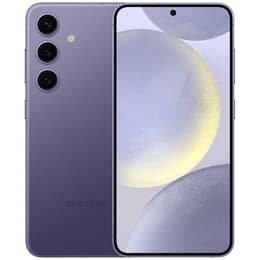
Galaxy S24 • Unlocked
Starting at

Refurbished price:$342.00

Versus $766.00 new

See options
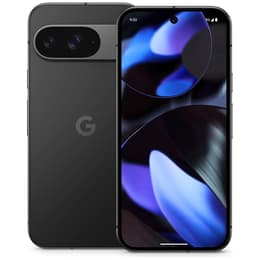
Google Pixel 9 • Unlocked
Starting at

Refurbished price:$379.00

Versus $799.00 new

See options

Ratings

The Samsung Galaxy S24, released in early 2024, and the Google Pixel 9, launched in mid-2024, represent two distinct approaches to the flagship smartphone experience. While both devices operate on the Android platform, they differentiate themselves through their core processing philosophies, camera hardware, and display characteristics. This comparison aims to highlight these practical differences to assist users in making an informed decision.

Scores

Durability

When considering the long-term usability of a smartphone, factors like software support and physical resilience are key. The Galaxy S24 and Pixel 9 offer robust foundations for extended use.

  • Software Longevity: Both the Samsung Galaxy S24 and the Google Pixel 9 are designed for extended software support. The Galaxy S24 was launched with a commitment to seven years of operating system and security updates, ensuring it remains current and secure for a significant period. The Pixel 9, following Google's recent trends, also offers a comparable long-term update policy, providing users with a similar duration of software relevance.
  • Physical Durability: The Samsung Galaxy S24 features Corning Gorilla Glass Victus 2 for display protection and an Armor aluminum frame, contributing to its overall resilience against drops and scratches. It also carries an IP68 rating for dust and water resistance, offering protection against immersion. The Google Pixel 9 introduces a design with more rounded edges and a flat screen, which can contribute to a comfortable grip and potentially better impact distribution. While specific glass protection details for the Pixel 9 are less emphasized in initial reports, its construction is expected to meet contemporary durability standards for flagship devices.
  • Practical Lifespan: Given their respective release timelines in 2024 and extensive software support, both devices are built to offer a practical lifespan of several years. Users can expect consistent performance and access to new features and security patches well into the future, making either a suitable choice for those seeking a device to keep for an extended period.

Release Year

2024

2024

Last OS Compatibility

Yes

Yes

OS

Android

Android

Foldable

No

No

Performance

The performance of a smartphone is largely dictated by its internal processing unit and how efficiently it handles daily tasks and demanding applications. The Galaxy S24 and Pixel 9 approach this with different hardware and optimization strategies.

  • Processing Power: The Samsung Galaxy S24 is powered by either the Snapdragon 8 Gen 3 for Galaxy or the Exynos 2400, depending on the region. These processors are engineered for high raw computational speed, enabling smooth multitasking, rapid app loading, and capable handling of graphically intensive games. The Google Pixel 9 features the Tensor G4 processor, which Google designs with a strong emphasis on artificial intelligence and machine learning tasks. While its raw benchmark scores may not always match the highest-end competitors, the Tensor G4 excels in AI-driven features, such as advanced image processing and on-device language tasks.
  • Multitasking and Responsiveness: The Galaxy S24 typically comes with 8GB of RAM, providing ample capacity for running multiple applications simultaneously without significant slowdowns. Its efficient processors ensure a responsive user experience across various scenarios, from web browsing to video editing. The Pixel 9 is rumored to offer up to 12GB of RAM, which would provide substantial headroom for heavy multitasking and future-proofing against more demanding applications. Both devices are expected to deliver a fluid and responsive interface for everyday use.
  • Storage Options: The Galaxy S24 offers various storage configurations, including 128GB, 256GB, and 512GB, with the higher capacities utilizing faster UFS 4.0 technology. The Pixel 9 is expected to come with 128GB or 256GB storage options. Users who store large media files or numerous applications may find the Galaxy S24's broader range of storage capacities and faster UFS 4.0 in higher tiers beneficial.

Memory (GB)

8 GB

12 GB

Screen quality

The visual experience on a smartphone is heavily influenced by its display technology, resolution, and brightness. Both the Galaxy S24 and Pixel 9 offer high-quality screens designed for immersive viewing.

  • Display Technology and Clarity: The Samsung Galaxy S24 features a 6.2-inch Dynamic AMOLED 2X display, known for its deep blacks, vibrant colors, and excellent contrast. It offers an FHD+ resolution (2340x1080 pixels), providing sharp and clear visuals for text and images. The Google Pixel 9 comes with a 6.24-inch flat-panel OLED display, which also delivers rich colors and strong contrast inherent to OLED technology. Its resolution is 2424 x 1080 pixels, resulting in a high pixel density for clear viewing.
  • Brightness and Smoothness: The Galaxy S24 boasts an impressive peak brightness of 2600 nits, making it highly visible even in bright outdoor conditions. It also features an adaptive refresh rate that can dynamically adjust from 1Hz to 120Hz, ensuring smooth scrolling and animations while optimizing battery consumption. The Pixel 9's display offers an HDR brightness of 1800 nits, which is a significant improvement over previous Pixel models and provides good visibility in various lighting. It also supports a 120Hz refresh rate for a fluid user experience.
  • Viewing Experience: Both devices provide a premium viewing experience suitable for media consumption, gaming, and everyday use. The Galaxy S24's higher peak brightness might offer a slight advantage in extremely sunny environments, while the Pixel 9 introduces 'Adaptive Touch' technology, which automatically adjusts touch sensitivity based on environmental factors like wet fingers or screen protectors, enhancing usability in diverse conditions.

Resolution

1080 x 2340

1080 x 2424

Screen type

Dynamic LTPO AMOLED 2X

OLED

Audiovisual

Camera capabilities are a primary consideration for many smartphone users, and both the Galaxy S24 and Pixel 9 offer advanced systems with distinct strengths.

  • Rear Camera Systems: The Samsung Galaxy S24 features a versatile triple-camera setup on its rear: a 50MP wide-angle main sensor with optical image stabilization (OIS), a 12MP ultrawide lens, and a 10MP telephoto lens capable of 3x optical zoom with OIS. This configuration provides flexibility for various photographic situations, including distant subjects. The Google Pixel 9, in its base model, is equipped with a dual-camera system comprising a 50MP main sensor and a 48MP ultrawide lens with macro focus capabilities. While the base Pixel 9 lacks a dedicated telephoto lens, its ultrawide is a high-resolution sensor that can capture detailed wide-angle shots and close-up macro photography.
  • Photography Performance: The Galaxy S24 delivers excellent image quality in various conditions, with its 50MP main sensor capturing detailed and vibrant photos. Its telephoto lens is beneficial for zooming without significant loss of quality. The Pixel 9 leverages Google's renowned computational photography, with its Tensor G4 processor enhancing image processing for impressive results, particularly in challenging lighting. The upgraded ultrawide sensor on the Pixel 9 is designed to gather more light and focus closely, improving low-light and macro performance.
  • Video and Audio: The Galaxy S24 supports video recording up to 8K at 30 frames per second and 4K at 60 frames per second, offering high-resolution video capture. The Pixel 9 is also expected to offer strong video capabilities, with potential for 8K video recording at 30FPS, though this was not confirmed at launch. Both devices are expected to provide clear audio recording for videos and calls, with Google's Pixel line often praised for its microphone quality and noise reduction.

Main camera

50 megapixels

50 megapixels

Front camera

12 megapixels

10.5 megapixels

Miscellaneous

Beyond the core features, several practical elements contribute to the overall user experience and differentiate these two smartphones.

  • Connectivity and Ports: Both the Samsung Galaxy S24 and the Google Pixel 9 support modern connectivity standards, including 5G for fast mobile data and Wi-Fi 802.11ax for high-speed wireless internet. The Galaxy S24 uses Bluetooth v5.3 for wireless accessories. The Pixel 9 introduces new Qi2 charging technology, which enhances wireless charging speeds up to 15W and offers improved alignment. Both devices feature a USB-C port for charging and data transfer.
  • Biometric Security: The Galaxy S24 includes an ultrasonic in-screen fingerprint sensor for secure and convenient unlocking. The Pixel 9 is also expected to feature advanced biometric options, likely including an in-display fingerprint sensor and potentially enhanced face recognition, aligning with Google's focus on security and user experience.
  • Design and Handling: The Galaxy S24 measures 147.00 x 70.60 x 7.60mm and weighs 168 grams, presenting a compact and lightweight profile. It features a flat display and a refined design. The Pixel 9, with rumored dimensions of approximately 152.65 x 71.88 x 8.38mm, is also designed for comfortable handling, featuring more rounded edges and a flat screen. The choice between the two may come down to personal preference for design aesthetics and subtle differences in in-hand feel.

Weight

6 oz

7 oz

Screen size (inches)

6.2

6.3

Network

5G

5G

SIM card

Physical SIM + eSIM

Physical SIM + eSIM

Carrier compatibility

Unlocked

Unlocked

The Samsung Galaxy S24 and Google Pixel 9 each present compelling options within the flagship smartphone market, catering to slightly different user priorities. The Galaxy S24 is often praised for its vibrant and exceptionally bright display, offering a peak brightness that stands out, and its versatile camera system that includes a dedicated telephoto lens for optical zoom. Users frequently commend its robust performance for demanding applications and gaming, particularly the Snapdragon-equipped variants. Some criticisms for the S24 have occasionally pointed to regional differences in processor performance, with the Exynos variant sometimes showing slightly lower benchmark scores in raw graphics performance compared to the Snapdragon version, though daily usage differences are often minimal.

The Google Pixel 9, on the other hand, garners praise for its deep integration of artificial intelligence, which enhances various aspects of the user experience, from camera processing to smart features. Its battery life has shown significant improvements over previous Pixel generations, addressing a common past concern and offering competitive endurance. User feedback often highlights the Pixel's clean Android experience and timely software updates. A frequent point of discussion for the base Pixel 9 is the absence of a dedicated telephoto lens, which is present on its Pro counterparts and the Galaxy S24.

Users prioritizing a device with a dedicated optical zoom lens and a display with higher peak brightness for outdoor visibility may find the Samsung Galaxy S24 well-suited to their needs. Conversely, users who value cutting-edge AI features, a clean software experience, and a significantly improved battery life, even without a telephoto lens on the base model, may lean toward the Google Pixel 9. Both devices offer long-term software support, making them sustainable choices for extended use. For those considering an eco-friendly alternative, quality-assured refurbished options for both models can provide excellent value and contribute to a more sustainable consumption cycle.
See all articles

Our recent comparisons