

Galaxy S24 • Unlocked vs OnePlus 10 Pro • Unlocked

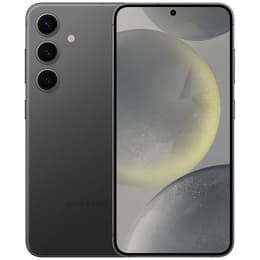
Galaxy S24 • Unlocked
Starting at

Refurbished price:$342.00

Versus $766.00 new

See options
OnePlus 10 Pro • Unlocked
Starting at

Refurbished price:$369.00

Versus $999.00 new

See options

Ratings

The Samsung Galaxy S24, released in January 2024, and the OnePlus 10 Pro, launched in January 2022, represent different generations of Android flagship smartphones. While both offer premium experiences, the two-year gap introduces notable distinctions in their core specifications and software longevity. The Galaxy S24 operates on Android 14 with Samsung's One UI 6.1, whereas the OnePlus 10 Pro debuted with Android 12 and OxygenOS 12.1.

Scores

Durability

The expected lifespan and software support differ significantly between these two devices, primarily due to their respective release dates and manufacturer policies.

  • Release Timeline and Age: The Galaxy S24 was released in January 2024, making it a more recent device. The OnePlus 10 Pro, launched in January 2022, is two years older. This age difference directly impacts the remaining period of official software support.
  • OS Support Duration: Samsung has committed to an extensive seven years of OS and security updates for the Galaxy S24, offering prolonged software longevity. In contrast, the OnePlus 10 Pro typically receives three major Android updates and four years of security updates from its release.
  • Build and Protection: The Galaxy S24 features an Armor Aluminum frame and Corning Gorilla Glass Victus 2 for display protection, along with an IP68 rating for dust and water resistance. The OnePlus 10 Pro utilizes Gorilla Glass Victus on the front, Gorilla Glass 5 on the back, and an aluminum frame. Its IP rating can vary by region, with some versions, like the T-Mobile variant, carrying an IP68 rating, while others may not have an official certification.

Release Year

2024

2022

Last OS Compatibility

Yes

Yes

OS

Android

Android

Foldable

No

No

Performance

Performance is a key area where the generational gap between these two smartphones becomes apparent, influencing how smoothly they handle daily tasks and demanding applications.

  • Processor Capabilities: The Galaxy S24 is equipped with a more current-generation processor (Snapdragon 8 Gen 3 for Galaxy in some regions or Exynos 2400 globally), which translates to enhanced speed and efficiency for everyday use, multitasking, and graphically intensive games. The OnePlus 10 Pro features a previous-generation processor (Snapdragon 8 Gen 1), which still offers capable performance for most tasks but may not match the S24's responsiveness in the most demanding scenarios.
  • Memory and Storage: Both devices offer configurations with 8GB or 12GB of RAM, allowing for effective multitasking. The Galaxy S24 uses UFS 3.1 for its 128GB storage option and the faster UFS 4.0 for 256GB and 512GB variants, contributing to quicker app loading and data transfer. The OnePlus 10 Pro primarily uses UFS 3.1 storage.
  • Battery and Charging: The Galaxy S24 houses a 4000 mAh battery with 25W wired fast charging and 15W wireless charging. The OnePlus 10 Pro features a larger 5000 mAh battery, supporting 80W wired fast charging (65W in North America) and 50W wireless charging. While the OnePlus 10 Pro has a larger battery and faster charging speeds, the Galaxy S24's more efficient processor and adaptive display technology can contribute to optimized power consumption, potentially offering comparable real-world battery endurance for some users.

Memory (GB)

8 GB

12 GB

Screen quality

The visual experience on both devices is delivered through high-quality displays, though they differ in size, resolution, and peak brightness.

  • Display Technology and Size: The Galaxy S24 features a 6.2-inch Dynamic AMOLED 2X display, providing a compact viewing experience. The OnePlus 10 Pro offers a larger 6.7-inch Fluid AMOLED LTPO 2.0 display, which is well-suited for users who prefer more screen real estate.
  • Resolution and Brightness: The Galaxy S24 has an FHD+ resolution (2340x1080 pixels) and boasts a high peak brightness of 2600 nits, ensuring excellent visibility even in bright outdoor conditions. The OnePlus 10 Pro features a QHD+ resolution (1440x3216 pixels), offering a sharper image on its larger screen, with a peak brightness of around 1300 nits.
  • Refresh Rate: Both smartphones incorporate adaptive refresh rate technology, ranging from 1Hz to 120Hz. This allows for smooth scrolling and animations while conserving power by adjusting the refresh rate based on the content being displayed.

Resolution

1080 x 2340

1440 x 3216

Screen type

Dynamic LTPO AMOLED 2X

LTPO2 Fluid AMOLED

Audiovisual

Both devices offer versatile camera systems designed to capture a variety of moments, each with its own strengths and features.

  • Rear Camera Systems: The Galaxy S24 features a triple rear camera setup, including a 50MP wide-angle lens with optical image stabilization (OIS), a 12MP ultrawide lens, and a 10MP telephoto lens with 3x optical zoom and OIS. The OnePlus 10 Pro also has a triple rear camera system, comprising a 48MP wide-angle lens with OIS, a 50MP ultrawide lens, and an 8MP telephoto lens with 3.3x optical zoom and OIS.
  • Photography Features: The Galaxy S24 benefits from newer computational photography and AI-enhanced features, which can improve image processing and detail. The OnePlus 10 Pro features Hasselblad color calibration, aiming for natural and accurate color reproduction in its photos.
  • Video Recording and Front Camera: The Galaxy S24 is capable of recording 8K video at 30 frames per second (fps) and 4K video at 60fps, with a 12MP front-facing camera. The OnePlus 10 Pro supports 8K video recording at 24fps and 4K video at 60fps, and it includes a 32MP front camera.

Main camera

50 megapixels

48 megapixels

Front camera

12 megapixels

32 megapixels

Miscellaneous

Beyond the core performance and display, several other practical elements contribute to the overall user experience of these smartphones.

  • Connectivity: The Galaxy S24 supports 5G, Wi-Fi 6E, and Bluetooth 5.3, offering more current wireless communication standards. The OnePlus 10 Pro also supports 5G, along with Wi-Fi 6 and Bluetooth 5.2.
  • Ports and Sensors: Both devices utilize a USB-C port for charging and data transfer. For biometric security, both feature in-display fingerprint sensors; the Galaxy S24 uses an ultrasonic sensor, while the OnePlus 10 Pro employs an optical sensor.
  • Physical Design and Handling: The Galaxy S24 is a more compact and lighter device, measuring 147 x 70.6 x 7.6 mm and weighing 168g, making it easier for one-handed use and pocketability. The OnePlus 10 Pro is larger and heavier at 163 x 73.9 x 8.55 mm and 200.5g, providing a more substantial feel in hand.

Weight

6 oz

7 oz

Screen size (inches)

6.2

6.7

Network

5G

5G

SIM card

Physical SIM + eSIM

Physical SIM

Carrier compatibility

Unlocked

Unlocked

The Samsung Galaxy S24 and the OnePlus 10 Pro cater to slightly different user preferences, largely influenced by their release timelines and design philosophies. Users often praise the Galaxy S24 for its compact size, bright display, and the promise of extended software support, making it a compelling choice for those seeking a long-lasting and manageable device. Some users might note its battery capacity is smaller than some competitors, though real-world usage can vary due to processor efficiency.

The OnePlus 10 Pro, on the other hand, is frequently lauded for its larger, higher-resolution screen, very fast charging capabilities, and a substantial battery, appealing to users who prioritize immersive media consumption and quick power-ups. Some feedback has occasionally pointed to its software experience being less refined than some rivals at launch.

Users prioritizing a compact form factor, the latest processor technology, and an industry-leading commitment to software updates will find the Galaxy S24 well-suited to their needs. Conversely, those who value a larger, sharper display, a bigger battery, and exceptionally fast wired and wireless charging might lean towards the OnePlus 10 Pro. Both devices, whether new or as quality-assured refurbished options, offer distinct advantages depending on individual priorities, allowing consumers to make an informed and sustainable choice.


See all articles

Our recent comparisons