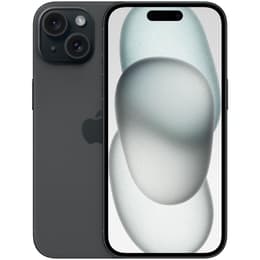
Galaxy S25 Ultra • Unlocked vs iPhone 15 • Locked AT&T

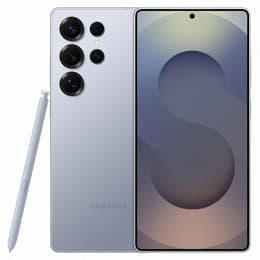
Galaxy S25 Ultra • Unlocked
Starting at

Refurbished price:$749.99

Versus $1,299.00 new

See options
iPhone 15 • Locked AT&T
Starting at

Refurbished price:$349.43

Versus $729.00 new

See options

Ratings

The Samsung Galaxy S25 Ultra, released in February 2025, and the Apple iPhone 15, launched in September 2023, represent distinct approaches to high-end smartphone design and functionality. While both devices offer premium experiences, the Galaxy S25 Ultra emphasizes a larger display, advanced camera versatility, and a comprehensive suite of AI-powered features, whereas the iPhone 15 focuses on a streamlined user experience, robust core performance, and deep integration within its ecosystem. Both operate on their respective flagship operating systems, Android 15 with One UI 7 for the S25 Ultra and iOS 17 for the iPhone 15.

Scores

Durability

When considering the long-term usability of these devices, their release timelines and software support policies are key factors.

  • Release Timeline: The Galaxy S25 Ultra, released in February 2025, benefits from a more recent launch, positioning it further along in its product cycle compared to the iPhone 15, which debuted in September 2023.
  • Software Longevity: Samsung has committed to providing seven years of operating system and security updates for the Galaxy S25 series, extending its software support into the early 2030s. The iPhone 15, running on iOS, typically receives major software updates for approximately five to six years from its release.
  • Durability Features: Both devices feature robust build materials designed for resilience. The Galaxy S25 Ultra incorporates Gorilla Glass Armor 2 for display protection and a titanium frame, contributing to its overall durability. The iPhone 15 utilizes Ceramic Shield on its front display and an aluminum frame with a color-infused glass back, offering substantial protection against everyday wear.

Release Year

2025

2023

Last OS Compatibility

Yes

Yes

OS

Android

iOS

Foldable

No

No

Performance

Both smartphones deliver high levels of performance, capable of handling demanding applications and multitasking with ease, though they achieve this through different hardware configurations.

  • Processing Power: The Galaxy S25 Ultra is equipped with a current-generation processor optimized for its ecosystem, enabling smooth operation across various tasks, from intensive gaming to complex AI features. The iPhone 15 features a powerful chip that ensures responsive performance for everyday use, demanding applications, and efficient computational photography.
  • Multitasking Capabilities: The Galaxy S25 Ultra typically offers more memory, with configurations including 12GB or 16GB of RAM, which allows for aggressive multitasking and keeping numerous applications active in the background without performance degradation. The iPhone 15 comes with 6GB of RAM, which is efficiently managed by its operating system to provide a fluid experience for most users and common multitasking scenarios.
  • Storage Options: Both devices offer a range of internal storage capacities to suit different user needs. The Galaxy S25 Ultra is available with 256GB, 512GB, or 1TB of storage. The iPhone 15 provides options of 128GB, 256GB, or 512GB.

Memory (GB)

12 GB

6 GB

Screen quality

The visual experience on both devices is a highlight, though they differ in size, resolution, and refresh rate, catering to varied preferences.

  • Display Technology and Size: The Galaxy S25 Ultra features a large 6.9-inch Dynamic AMOLED display, offering a spacious viewing area. The iPhone 15 comes with a 6.1-inch Super Retina XDR OLED display, providing a more compact form factor.
  • Resolution and Clarity: The S25 Ultra's display boasts a QHD+ resolution of 3120x1440 pixels, resulting in sharp and detailed visuals. The iPhone 15 offers a resolution of 2556x1179 pixels, delivering a high pixel density for clear images and text.
  • Refresh Rate and Brightness: The Galaxy S25 Ultra features a 120Hz adaptive refresh rate, contributing to smoother scrolling and more fluid animations, alongside a peak brightness of 2600 nits for excellent outdoor visibility. The iPhone 15 has a 60Hz refresh rate and reaches a peak outdoor brightness of 2000 nits, ensuring good visibility in bright conditions.

Resolution

1440x3120

1179 x 2556

Screen type

Dynamic LTPO AMOLED 2X

Super Retina XDR OLED

Audiovisual

Both smartphones offer advanced camera systems capable of capturing high-quality photos and videos, but they approach imaging with different hardware configurations and software enhancements.

  • Rear Camera Systems: The Galaxy S25 Ultra features a versatile quad-camera setup, including a 200-megapixel main sensor, a 50-megapixel ultrawide lens, a 50-megapixel telephoto lens with 5x optical zoom, and a 10-megapixel telephoto lens with 3x optical zoom, providing extensive zoom capabilities and detail. The iPhone 15 is equipped with a dual-camera system, featuring a 48-megapixel main sensor with sensor-shift optical image stabilization and a 12-megapixel ultrawide lens, capable of 2x telephoto shots by utilizing the main sensor.
  • Photography Performance: The S25 Ultra is noted for capturing stunning detail and vibrant colors, with advanced algorithms and AI enhancements for sharp photos and good low-light performance. The iPhone 15's camera system is designed for balanced performance and accurate color reproduction, with improvements in low-light shooting and next-generation portraits.
  • Video Recording and Audio: The Galaxy S25 Ultra supports video recording up to 8K resolution at 30 frames per second. The iPhone 15 offers 4K Dolby Vision video recording up to 60 frames per second, known for its smooth and stable video output. Both devices provide quality microphone performance for calls and recordings, and their speakers deliver a good media consumption experience.

Miscellaneous

Beyond core performance and display, several practical elements differentiate the user experience of these two devices.

  • Connectivity and Ports: Both devices support 5G connectivity and modern Wi-Fi standards. The Galaxy S25 Ultra supports Wi-Fi 7. Both have adopted USB-C ports for charging and data transfer, though the iPhone 15's USB-C port operates at USB 2.0 speeds.
  • Biometric Security: The Galaxy S25 Ultra features an in-display fingerprint sensor for secure unlocking and authentication. The iPhone 15 relies on Face ID, its facial recognition system, for biometric security.
  • Unique Features: A notable differentiator for the Galaxy S25 Ultra is the integrated S Pen stylus, offering enhanced productivity and creative input. It also includes advanced Galaxy AI features. The iPhone 15 features the Dynamic Island, an interactive area around the front camera cutout that displays alerts and live activities.
  • Physical Characteristics: The Galaxy S25 Ultra is a larger and heavier device due to its expansive screen and battery, while the iPhone 15 offers a more compact and lighter design, which some users find more comfortable for one-handed use.

Weight

8 oz

171 oz

Screen size (inches)

6.9

6.1

Network

5G

5G

SIM card

Physical SIM + eSIM

eSIM

Carrier compatibility

Unlocked

AT&T

Connector

USB-C

USB-C (USB 2)

User feedback for the Samsung Galaxy S25 Ultra frequently highlights its exceptional display, robust battery life, and the versatility of its camera system, particularly the extensive zoom capabilities. Many users also praise the integration of Galaxy AI features for enhancing daily tasks. Some common concerns include the placement of the in-display fingerprint sensor, with some preferring a side-mounted alternative, and observations that while software advancements are significant, hardware upgrades might feel incremental to some.

For the iPhone 15, users often commend its powerful main camera, impressive screen brightness, and the overall smooth and intuitive iOS experience. The updated design with a color-infused glass back and the inclusion of the Dynamic Island are also frequently cited as positive aspects. However, a recurring point of criticism is the 60Hz refresh rate of the display, which some users find less fluid compared to devices with higher refresh rates. The ultrawide camera's performance and the preference for a fingerprint sensor over Face ID are also sometimes mentioned.

Users prioritizing a large, high-refresh-rate display, extensive camera versatility with advanced zoom, and integrated stylus functionality with AI enhancements may find the Galaxy S25 Ultra well-suited to their needs. Conversely, individuals who value a more compact form factor, a highly optimized software ecosystem, consistent camera performance for everyday photography, and a focus on core user experience might lean towards the iPhone 15. Both devices offer compelling features for different user profiles, and considering a quality-assured refurbished option for either model can be an eco-friendly alternative.


See all articles

Our recent comparisons