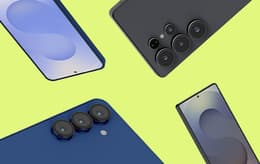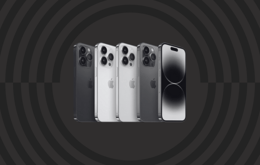

Galaxy S25 • Unlocked vs iPhone 14 • Locked T-Mobile

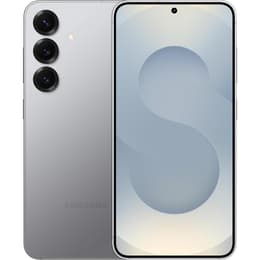
Galaxy S25 • Unlocked
Starting at

Refurbished price:$425.00

Versus $1,299.00 new

See options
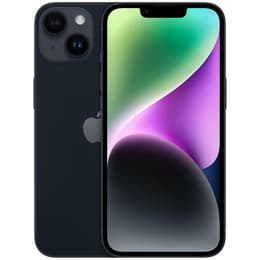
iPhone 14 • Locked T-Mobile
Starting at

Refurbished price:$269.00

Versus $599.00 new

See options

Ratings

The Samsung Galaxy S25 (2025) and the Apple iPhone 14 (2022) represent different generations of flagship smartphones, offering distinct experiences rooted in their respective operating systems. While the iPhone 14 focuses on a refined ecosystem and established performance, the Galaxy S25 introduces more recent advancements in hardware and software, including enhanced AI capabilities. This comparison will explore the practical differences between these two devices to help users determine which aligns best with their needs.

Scores

Durability

The expected practical lifespan of a smartphone is influenced by its initial release date and the manufacturer's commitment to software updates and hardware durability.

  • Release Timeline: The Galaxy S25 was released in February 2025, making it a newer device compared to the iPhone 14, which launched in September 2022. This age difference means the Galaxy S25 benefits from more recent component technology and a longer potential support window.
  • Software Support: Samsung typically provides several years of Android OS updates and security patches for its flagship devices, with the Galaxy S25 expected to receive up to seven major Android upgrades. Apple is known for its extended software support, often providing iOS updates for five to six years from a device's release. Given its later release, the Galaxy S25 will likely receive software updates for a longer duration into the future than the iPhone 14.
  • Durability Features: Both devices feature robust builds. The iPhone 14 includes a Ceramic Shield front cover and an aluminum design, offering splash, water, and dust resistance with an IP68 rating. The Galaxy S25 also boasts an IP68 rating for dust and water resistance, featuring Gorilla Glass Victus 2 on both the front and back, and an aluminum frame.

Release Year

2025

2022

Last OS Compatibility

Yes

Yes

OS

Android

iOS

Foldable

No

No

Performance

Performance in daily use is a key differentiator, with the newer Galaxy S25 offering more advanced processing capabilities compared to the iPhone 14.

  • Processor Capabilities: The Galaxy S25 is equipped with a current-generation processor, designed to handle demanding applications and multitasking smoothly. This processor is manufactured using a 3 nm process, featuring an octa-core CPU with high-performance and efficiency cores, and an advanced GPU, enabling strong performance in resource-intensive applications. The iPhone 14 utilizes a previous-generation processor, which still provides responsive performance for everyday tasks and many demanding applications.
  • System Responsiveness: Users of the Galaxy S25 can expect a highly responsive experience, with faster app loading times and smoother transitions, particularly noticeable in graphically intensive games or when running multiple applications simultaneously. The iPhone 14 also offers a fluid user experience, though the newer hardware in the S25 provides a performance advantage in the most demanding scenarios.
  • Memory and Storage: The Galaxy S25 comes with 12 GB of RAM across all models, contributing to efficient multitasking. Storage options for the base S25 model start at 128 GB, with higher configurations available for other models in the series. The iPhone 14 features 6 GB of RAM and offers storage configurations starting from 128 GB, up to 512 GB.

Memory (GB)

12 GB

6 GB

Screen quality

The display technologies in both devices offer vibrant visuals, but they differ in refresh rates and peak brightness levels.

  • Display Technology and Resolution: The Galaxy S25 features a 6.2-inch Dynamic LTPO AMOLED 2X display with a resolution of 2340 x 1080 pixels, offering vibrant colors and deep blacks. The iPhone 14 comes with a 6.1-inch Super Retina XDR OLED display, providing a resolution of 2532 x 1170 pixels, also known for its excellent color accuracy and contrast.
  • Refresh Rate and Brightness: The Galaxy S25's display supports an adaptive 120 Hz refresh rate, which contributes to smoother scrolling and more fluid animations. It can reach a peak brightness of 2600 nits, enhancing visibility in bright outdoor conditions. The iPhone 14 has a standard 60 Hz refresh rate. Its display offers a typical brightness of 800 nits and a peak brightness of 1200 nits for HDR content.
  • Viewing Experience: Both phones provide an immersive viewing experience for media consumption. The Galaxy S25's higher refresh rate offers a noticeable improvement in smoothness, particularly for users who frequently engage with fast-paced content or gaming. The iPhone 14's display, while at 60 Hz, still delivers excellent clarity and color reproduction for general use.

Resolution

1080x2340

1170 x 2532

Screen type

Dynamic LTPO AMOLED 2X

Super Retina XDR OLED

Audiovisual

Both smartphones offer capable camera systems, but the Galaxy S25, being a newer model, incorporates more advanced sensor technology and computational photography features.

  • Rear Camera Systems: The Galaxy S25 features a triple rear camera system, including a 50 MP wide-angle main camera with optical image stabilization (OIS), a 12 MP ultra-wide camera, and a 10 MP telephoto camera with 3x optical zoom and OIS. The iPhone 14 has a dual-camera system, consisting of a 12 MP wide-angle main camera with sensor-shift OIS and a 12 MP ultra-wide camera.
  • Photography Performance: The Galaxy S25's larger main sensor and higher megapixel count, combined with advanced image processing, contribute to capturing detailed photos with improved low-light performance and better zoom capabilities. The iPhone 14 also excels in everyday photography, offering consistent image quality and strong performance in various lighting conditions, particularly with its Photonic Engine for enhanced low-light capture.
  • Video Recording and Features: The Galaxy S25 supports video recording up to 8K resolution at 30 frames per second, along with features like Super Steady video. The iPhone 14 records video up to 4K HDR at 60 frames per second and includes Cinematic mode for depth-of-field effects and Action mode for smooth video capture during movement. Both devices offer a 12 MP front-facing camera for selfies and video calls.

Miscellaneous

Beyond core features, several practical elements contribute to the overall user experience and differentiate these two devices.

  • Connectivity and Ports: The Galaxy S25 supports 5G connectivity, Wi-Fi 7, and Bluetooth 5.4, along with a USB Type-C 3.2 port for data transfer and charging. The iPhone 14 also offers 5G connectivity, Wi-Fi 6, and Bluetooth 5.3. It uses a Lightning port for charging and data transfer.
  • Biometrics and Sensors: The Galaxy S25 features an ultrasonic in-screen fingerprint sensor for secure unlocking. The iPhone 14 relies on Face ID, Apple's facial recognition system, for biometric authentication. Both devices include a range of sensors such as accelerometers, gyroscopes, and ambient light sensors.
  • Design and Handling: The Galaxy S25 has dimensions of 146.9 x 70.5 x 7.2 mm and weighs 162 grams, featuring a flat-edge design. The iPhone 14 measures 146.7 x 71.5 x 7.8 mm and weighs 172 grams, with an aerospace-grade aluminum body. The choice between the two often comes down to personal preference for Android or iOS and the specific design language.

Weight

8 oz

6 oz

Screen size (inches)

6.2

6.1

Network

5G

5G

SIM card

Physical SIM + eSIM

eSIM

Carrier compatibility

Unlocked

T-Mobile

Connector

USB-C

Lightning

The Samsung Galaxy S25 and iPhone 14 cater to different user priorities, largely due to their generational gap and operating system ecosystems. Users frequently praise the Galaxy S25 for its cutting-edge performance, advanced camera system, and vibrant 120 Hz display, making it well-suited for those who prioritize the latest technology and a highly responsive user experience. Its extended software support and AI-driven features are also noted as significant advantages.

On the other hand, the iPhone 14 is often lauded for its consistent performance, robust build quality, and the seamless integration within the Apple ecosystem. Users appreciate its reliable camera for everyday photos and videos, and the long-term software support Apple provides, even if it's an older model. Some users might find the 60 Hz display a limitation compared to newer devices.

Users prioritizing a device with the most current hardware, a high refresh rate display, and advanced camera capabilities, along with a longer future-proof window for software updates, may find the Galaxy S25 to be a more suitable choice. Conversely, individuals who value the established iOS ecosystem, consistent performance for daily tasks, and a proven track record of durability might lean towards the iPhone 14. Both devices offer quality-assured refurbished options, providing an eco-friendly alternative for consumers seeking to make informed and sustainable choices.

See all articles

Our recent comparisons