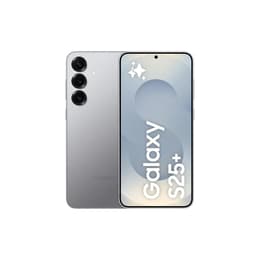


Galaxy S25+ • Unlocked vs OnePlus 10 Pro • Unlocked

Galaxy S25+ • Unlocked
Starting at

Refurbished price:$570.79

Versus $999.99 new

See options
OnePlus 10 Pro • Unlocked
Starting at

Refurbished price:$369.00

Versus $999.00 new

See options

Ratings

The Samsung Galaxy S25 Plus, released in early 2025, and the OnePlus 10 Pro, launched globally in early 2022, represent different generations of flagship Android smartphones. While both offer premium experiences, the Galaxy S25 Plus benefits from more recent technological advancements, particularly in processing power and software longevity, whereas the OnePlus 10 Pro focused on a strong display and rapid charging at its release. Both devices operate on the Android platform, with Samsung's One UI and OnePlus's OxygenOS offering distinct user interfaces.

Scores

Durability

The expected practical lifespan of a smartphone is significantly influenced by its release timeline and the manufacturer's commitment to software updates.

  • Release Timeline: The Galaxy S25 Plus, having been released in February 2025, is a much newer device compared to the OnePlus 10 Pro, which saw its global launch in April 2022. This age difference inherently means the S25 Plus will remain current for a longer period.
  • OS Support Duration: Samsung has committed to an extensive seven years of OS and security updates for the Galaxy S25 series, with support projected to end around 2032. In contrast, the OnePlus 10 Pro typically received four years of software updates from its release. This difference in support directly impacts how long each device will receive new features and security patches.
  • Durability Features: The Galaxy S25 Plus features an IP68 rating for dust and water resistance, along with Gorilla Glass Victus 2 on both the front and back for enhanced protection. The OnePlus 10 Pro, while featuring Gorilla Glass Victus on its display, generally lacks an official IP rating for most global models, which could be a consideration for users in environments where exposure to elements is common.

Release Year

2025

2022

Last OS Compatibility

No

Yes

OS

Android

Android

Foldable

No

No

Performance

Performance is a key area where the generational gap between these two devices becomes apparent, influencing how smoothly they handle demanding applications and multitasking.

  • Processing Capabilities: The Galaxy S25 Plus is equipped with a current-generation processor, enabling it to handle intensive applications, complex multitasking, and advanced gaming with notable responsiveness. This newer architecture also contributes to improved power efficiency. The OnePlus 10 Pro, powered by a previous-generation processor, still offers capable performance for everyday tasks and many demanding applications, though it may show its age with the most graphically intensive games or future software updates.
  • Multitasking and Responsiveness: Both devices offer configurations with ample RAM, allowing for smooth transitions between multiple open applications. The Galaxy S25 Plus typically comes with 12GB of RAM, providing extensive headroom for heavy multitasking. The OnePlus 10 Pro is available with 8GB or 12GB of RAM, which is sufficient for most users' multitasking needs.
  • Storage Options: Both smartphones offer generous internal storage options, with the Galaxy S25 Plus available in 256GB and 512GB configurations, and the OnePlus 10 Pro offering 128GB and 256GB variants. Neither device supports expandable storage, so choosing the appropriate capacity at the time of purchase is important.

Memory (GB)

12 GB

12 GB

Screen quality

The display is a primary interaction point, and both devices offer high-quality viewing experiences with distinct characteristics.

  • Display Technology and Clarity: The Galaxy S25 Plus features a 6.7-inch Dynamic AMOLED 2X display, offering vibrant colors, deep blacks, and sharp QHD+ resolution (3120x1440 pixels). The OnePlus 10 Pro also boasts a 6.7-inch Fluid AMOLED display with QHD+ resolution (3216x1440 pixels), known for its excellent color reproduction and clarity. Both displays provide a crisp viewing experience for text, images, and video.
  • Brightness and Refresh Rate: The Galaxy S25 Plus offers a high peak brightness of 2600 nits, ensuring excellent visibility even in bright outdoor conditions. It also features an adaptive refresh rate that scales from 1Hz to 120Hz for smooth scrolling and efficient power use. The OnePlus 10 Pro has a peak brightness of 1300 nits and an adaptive 1Hz to 120Hz refresh rate (LTPO 2.0 technology), providing a fluid visual experience while conserving battery life.
  • Screen Design: The Galaxy S25 Plus utilizes a flat display panel, which some users may prefer for its durability and ease of screen protector application. The OnePlus 10 Pro features a curved display, which can offer a more immersive viewing experience and a sleeker feel in hand.

Resolution

1440x3120

1440 x 3216

Screen type

Dynamic LTPO AMOLED 2X

LTPO2 Fluid AMOLED

Audiovisual

Both smartphones offer versatile camera systems designed to capture a variety of moments, though with different strengths and software enhancements.

  • Rear Camera System: The Galaxy S25 Plus is equipped with a triple rear camera setup, including a 50 MP main sensor, a 12 MP ultra-wide lens, and a 10 MP telephoto lens with 3x optical zoom. It benefits from advanced image processing and AI features for improved object recognition and color reproduction, especially in varying lighting conditions. The OnePlus 10 Pro also features a triple rear camera system, comprising a 48 MP main sensor, a 50 MP ultra-wide lens with a wide 150° field of view, and an 8 MP telephoto lens with 3.3x optical zoom. Its cameras were developed in collaboration with Hasselblad, focusing on color science and specific shooting modes.
  • Photography Performance: The Galaxy S25 Plus delivers sharp, detailed photos with consistent color accuracy across its lenses, and its AI enhancements contribute to better low-light performance and clearer zoomed shots. The OnePlus 10 Pro's main camera produces vibrant and detailed images, with its ultra-wide lens offering a unique perspective. While its main camera performs well in low light, the secondary lenses may show some inconsistencies.
  • Video Capabilities: Both devices are capable of recording video at up to 8K resolution, with the Galaxy S25 Plus supporting 8K at 30 fps and the OnePlus 10 Pro at 24 fps. Both offer various video modes and stabilization features. The Galaxy S25 Plus also features a 12 MP front-facing camera with autofocus and 4K video recording, while the OnePlus 10 Pro has a 32 MP front camera.

Miscellaneous

Beyond core performance and display, several other features contribute to the overall user experience and daily practicality of these devices.

  • Connectivity and Ports: Both smartphones support 5G connectivity for fast mobile data. The Galaxy S25 Plus is expected to feature the latest Wi-Fi standards (likely Wi-Fi 6E or 7) and Bluetooth. The OnePlus 10 Pro supports Wi-Fi 6 and Bluetooth 5.2. The Galaxy S25 Plus uses a USB-C port, as does the OnePlus 10 Pro, which supports USB 3.1 Gen1 for faster data transfer.
  • Biometrics and Sensors: Both devices incorporate in-display fingerprint sensors for secure unlocking. The Galaxy S25 Plus uses an ultrasonic sensor, while the OnePlus 10 Pro uses an optical sensor. Both also offer facial recognition for convenient access.
  • Design and Handling: The Galaxy S25 Plus has dimensions of 158.4 x 75.8 x 7.3 mm and weighs 190 g, featuring a flat display and an aluminum frame. The OnePlus 10 Pro measures 163 x 73.9 x 8.55 mm and weighs 200 g, with a curved display and a slightly thicker profile. The choice between a flat or curved display, and the subtle differences in weight and dimensions, can influence how each device feels in hand and its overall aesthetic.

Weight

7 oz

7 oz

Screen size (inches)

6.7

6.7

Network

5G

5G

SIM card

Physical SIM + eSIM

Physical SIM

Carrier compatibility

Unlocked

Unlocked

The Samsung Galaxy S25 Plus and the OnePlus 10 Pro cater to users with varying priorities, largely due to their different release timelines and the advancements in smartphone technology over the years separating them.

Users often praise the Galaxy S25 Plus for its cutting-edge performance, driven by its newer processor, and its extended software support, which ensures longevity and access to the latest features. Its bright, high-resolution display and comprehensive camera system with AI enhancements are also frequently highlighted as strong points. Some users have noted that while battery life is generally good, it might not always surpass its predecessors in all scenarios, and charging speeds, while respectable, are not the fastest available.

The OnePlus 10 Pro, on the other hand, received acclaim for its stunning AMOLED display with a smooth adaptive refresh rate and its exceptionally fast wired charging capabilities at its release. Its camera system, tuned with Hasselblad, was appreciated for its color science and unique ultra-wide lens. Common user feedback sometimes pointed to inconsistencies across its multiple camera lenses and the lack of an official IP rating for many models. Its battery life was generally considered good, often lasting a full day for many users.

Users prioritizing the absolute latest in processing power, the longest software support, and a robust, officially rated durable design may find the Galaxy S25 Plus to be a more suitable choice. Its advanced AI features and consistent camera performance make it appealing for those who value modern smartphone capabilities. Conversely, users who appreciate a curved display, exceptionally fast wired charging, and a camera system with a distinct character, and who are comfortable with a device from an earlier generation, might lean towards the OnePlus 10 Pro. Both devices offer a premium Android experience, and choosing between them often comes down to whether the benefits of a newer model outweigh the specific strengths of a slightly older, yet still capable, device. For those seeking an eco-friendly alternative, quality-assured refurbished options for both models can provide a sustainable choice.


See all articles

Our recent comparisons