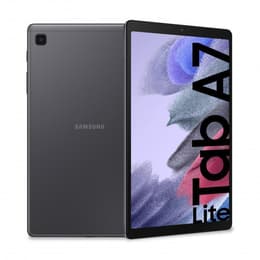
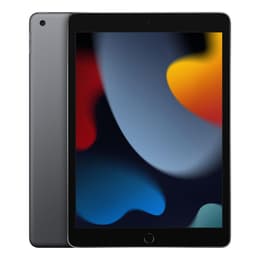

Galaxy Tab A7 Lite (8.7", 2021) vs iPad 9 (2021, A13 series)

Galaxy Tab A7 Lite (8.7", 2021)
Starting at

Refurbished price:$61.00

Versus $169.00 new

See options
iPad 9 (2021, A13 series)
Starting at

Refurbished price:$164.84

Versus $329.00 new

See options

Ratings

The Samsung Galaxy Tab A7 Lite (2021) and the Apple iPad (9th Generation, 2021) are both tablets released in the same year, offering distinct experiences based on their operating systems and design philosophies. The Galaxy Tab A7 Lite runs on Android, emphasizing portability and a compact form factor, while the iPad (9th Gen) operates on iPadOS, providing a larger display and a more robust ecosystem. These devices cater to different user needs, with the Samsung tablet focusing on basic media consumption in a smaller package and the Apple iPad offering a more versatile experience for productivity and entertainment.

Scores

Durability

When considering the long-term usability of these tablets, their release timelines and software support play a significant role. Both devices were launched in 2021, but their respective manufacturers offer different update policies.

  • Software Longevity: The Samsung Galaxy Tab A7 Lite, released in June 2021, launched with Android 11 and received major OS updates up to Android 14 (One UI 6.1). However, major software updates for this model concluded in June 2025, with security patches also ending around that time. In contrast, the iPad (9th Gen), released in September 2021, shipped with iPadOS 15 and is expected to receive major iPadOS updates until approximately 2027, with security updates potentially extending into 2028 or 2029.
  • Physical Durability: The Galaxy Tab A7 Lite features a mostly aluminum body with some plastic components, offering a solid feel for its category. The iPad (9th Gen) also utilizes an aluminum back and frame with a glass front. Neither device has an official IP rating for water or dust resistance.
  • Expected Lifespan: Users prioritizing extended software support and access to the latest operating system features will find the iPad (9th Gen) offers a longer practical lifespan in terms of software. For basic tasks, both devices can remain functional beyond their official update periods, though the iPad may offer a more current software experience for a longer duration.

Release Year

2021

2021

Last OS Compatibility

Yes

Yes

OS

Android

iPadOS

Performance

The performance of these tablets varies significantly, impacting how smoothly they handle everyday tasks, multitasking, and more demanding applications.

  • Processing Power: The Galaxy Tab A7 Lite is equipped with a MediaTek Helio P22T octa-core processor, which is suitable for basic tasks like web browsing, video playback, and light applications. However, users have reported that it can experience slowdowns and stutters when multitasking or running more demanding apps. The iPad (9th Gen) features the Apple A13 Bionic chip, which provides a more responsive experience for general use, including browsing, streaming, and running standard applications. While capable, power users might notice occasional stutters with intensive tasks like high-resolution photo or video editing.
  • Multitasking and Storage: The Galaxy Tab A7 Lite typically comes with 3GB or 4GB of RAM, which can limit its ability to keep many applications open simultaneously without reloading. It offers 32GB or 64GB of internal storage, expandable via a microSD card up to 1TB. The iPad (9th Gen) includes 3GB of RAM, which some users have noted can lead to apps reloading when switching between them, especially with large PDFs. It comes with 64GB or 256GB of internal storage, but does not offer expandable storage.
  • Battery Behavior: The Galaxy Tab A7 Lite has a 5100mAh battery, providing around 10 hours of web browsing or 6.5-10 hours of mixed usage, though real-world usage can range from 5 to 7 hours depending on tasks. Charging can take up to four hours. The iPad (9th Gen) has an 8557mAh battery, rated for up to 10 hours of web surfing or video playback on Wi-Fi, and 9 hours on cellular. User experiences generally align with 8-9 hours of general use, with some reporting it lasting up to two days with lighter usage.

Memory (GB)

3 GB

3 GB

Screen quality

The visual experience on a tablet is largely defined by its display, and these two models offer different characteristics.

  • Display Technology and Resolution: The Galaxy Tab A7 Lite features an 8.7-inch TFT LCD display with a resolution of 1340 x 800 pixels, resulting in a pixel density of approximately 179 ppi. This resolution is considered modest but sufficient for streaming videos and general browsing. The iPad (9th Gen) sports a larger 10.2-inch Retina IPS LCD display with a resolution of 2160 x 1620 pixels, yielding a higher pixel density of 264 ppi. This provides a clearer and sharper image for text and visuals.
  • Brightness and Viewing Experience: The iPad (9th Gen) offers 500 nits of brightness and includes True Tone technology, which adjusts the display's color temperature to match ambient light, enhancing viewing comfort. Colors are described as vivid and details sharp enough for streaming. However, it has a non-laminated display, which can result in noticeable glare, especially outdoors. Information on the Galaxy Tab A7 Lite's peak brightness is less prominent, but its screen is generally considered good for indoor use, though reflections can be an issue in bright light.
  • Screen Size and Refresh Rate: The smaller 8.7-inch screen of the Galaxy Tab A7 Lite makes it more portable and comfortable for one-handed holding, particularly for media consumption. Both tablets feature a standard 60Hz refresh rate, which provides a smooth enough experience for most casual use, but does not offer the fluidity of higher refresh rate displays found on some other devices.

Resolution

800 x 1340

2160 x 1620

Screen type

TFT LCD

Retina display

Pixel density

180ppp

264ppp

Audiovisual

While tablets are not typically primary photography devices, their camera systems are important for video calls and occasional captures.

  • Rear Camera Capabilities: The Galaxy Tab A7 Lite includes an 8-megapixel rear camera capable of recording 1080p video. Reviews indicate that while it's functional for document scanning or quick snaps in good lighting, photos can appear washed out, lack fine detail, and colors may be muted. The iPad (9th Gen) also features an 8-megapixel rear camera, which can capture serviceable images in good light and record 1080p video. Its performance is generally considered adequate for a tablet, but not on par with modern smartphone cameras.
  • Front Camera and Video Conferencing: The Galaxy Tab A7 Lite has a 2-megapixel front-facing camera, which is deemed acceptable for video calls but may produce blurry or low-contrast images. It records video at 720p. The iPad (9th Gen) boasts a significantly more capable 12-megapixel Ultra-Wide front camera with a 122-degree field of view, a notable upgrade from previous models. This camera supports Apple's Center Stage feature, which automatically keeps the user centered in the frame during video calls, greatly enhancing the video conferencing experience.
  • Audio Experience: Both tablets feature stereo speakers. The Galaxy Tab A7 Lite's speakers are considered decent for its price point, offering real stereo separation. The iPad (9th Gen) also has stereo speakers, though some users describe them as "tinny" compared to higher-end models. Both devices retain a 3.5mm headphone jack.

Miscellaneous

Beyond core performance and display, several practical features contribute to the overall user experience of these tablets.

  • Connectivity and Ports: Both the Galaxy Tab A7 Lite and the iPad (9th Gen) support Wi-Fi 5 (802.11ac) and Bluetooth 5.0 (Tab A7 Lite) or 4.2 (iPad). Both also offer optional LTE models for cellular connectivity. The Galaxy Tab A7 Lite uses a USB-C port for charging and data transfer. The iPad (9th Gen) is notable for being the last iPad model to feature a Lightning port, rather than the more common USB-C found on newer Apple devices. Both tablets include a 3.5mm headphone jack.
  • Security and Biometrics: The Galaxy Tab A7 Lite does not include a fingerprint scanner but offers facial recognition for unlocking. The iPad (9th Gen) retains the physical home button, which integrates Touch ID for secure fingerprint authentication.
  • Dimensions and Handling: The Galaxy Tab A7 Lite is designed for portability, measuring 212.5 x 124.7 x 8.0mm and weighing approximately 366 grams (Wi-Fi model). Its compact size makes it comfortable for one-handed use. The iPad (9th Gen) is larger and heavier, with dimensions of 250.6 x 174.1 x 7.5mm and a weight of 487 grams (Wi-Fi model). This larger size provides more screen real estate but is less suited for single-handed operation.

Weight

22 oz

16 oz

Width

7 in

7 in

Height

10 in

9.7 in

Depth

3 in

0.2 in

Screen size (inches)

8.7

10.2

Network

Wi-Fi

Wi-Fi

Carrier compatibility

Unlocked

Without SIM Port

User feedback for the Samsung Galaxy Tab A7 Lite often highlights its compact size and solid build quality as positive attributes, making it convenient for reading and casual media consumption. However, common criticisms revolve around its performance, with many users finding it slow for multitasking or demanding applications, and its display resolution being modest. The cameras are generally considered basic, suitable for video calls but not for high-quality photography.

For the iPad (9th Gen), users frequently praise its robust performance for everyday tasks, the quality of its Retina display, and the significant upgrade to the front-facing camera with Center Stage, which is highly valued for video calls. Its long software support is also a recurring positive. Criticisms often point to its dated design with large bezels, the continued use of the Lightning port instead of USB-C, and the non-laminated display that can cause glare.

Users prioritizing a highly portable, lightweight Android tablet for basic media consumption and web browsing may find the Galaxy Tab A7 Lite well-suited to their needs, especially if they value expandable storage. Those who require a more powerful tablet for a wider range of applications, including light productivity, more intensive gaming, and superior video conferencing, will likely lean towards the iPad (9th Gen). Its larger, sharper display and longer software support also make it a strong contender for users seeking a device with extended longevity. Both tablets are available as quality-assured refurbished options, providing a sustainable choice for consumers.


See all articles

Our recent comparisons