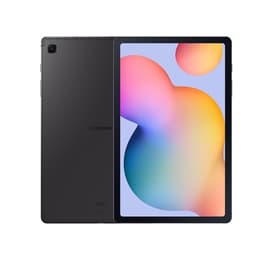
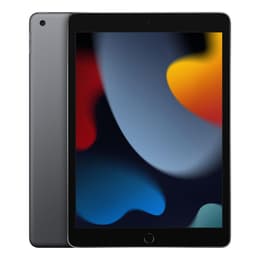
Galaxy Tab S6 Lite (10.4", 2022) vs iPad 9 (2021, A13 series)

Galaxy Tab S6 Lite (10.4", 2022)
Starting at

Refurbished price:$205.00

Versus $1,055.22 new

See options
iPad 9 (2021, A13 series)
Starting at

Refurbished price:$164.84

Versus $329.00 new

See options

Ratings

The Samsung Galaxy Tab S6 Lite (2022) and the Apple iPad (9th generation, 2021) are both popular tablets designed for everyday use, offering distinct experiences based on their respective operating systems. While the Galaxy Tab S6 Lite runs on Android with Samsung's One UI, the iPad operates on Apple's iPadOS. These devices cater to users seeking a balance of portability, functionality, and digital interaction, with key differences emerging in their included accessories and ecosystem integration.

Scores

Durability

When considering the long-term usability of these tablets, their release timelines and software support play a significant role. The iPad (9th generation) was released in September 2021, while the Galaxy Tab S6 Lite (2022) followed in May 2022.

  • Software Updates: Apple typically provides iPadOS updates for approximately 5-6 years from a device's release, suggesting the iPad (9th generation) will receive support for several more years. Samsung has committed to four years of OS upgrades for the Galaxy Tab S6 Lite (2022), potentially extending its software lifespan to Android 16.
  • Practical Lifespan: Both tablets are expected to offer a practical lifespan suitable for general tasks, with the iPad potentially having a slight edge in software longevity due to Apple's historical update policies.
  • Repairability: The iPad's display, while not fully laminated, can be a factor in its repairability, as non-laminated screens can sometimes be less costly to replace if damaged.

Release Year

2022

2021

Last OS Compatibility

Yes

Yes

OS

Android

iPadOS

Performance

The performance of these tablets is influenced by their internal components and how efficiently their operating systems utilize them. Both are designed for smooth operation in typical daily tasks, though they approach performance from different architectural standpoints.

  • Processing Power: The iPad (9th generation) features a capable processor that handles multitasking, gaming, and various applications with responsiveness. The Galaxy Tab S6 Lite (2022) is equipped with a processor that provides a smooth experience for general use, including web browsing, media consumption, and light productivity.
  • Multitasking: Users of the iPad (9th generation) generally report smooth performance, though some note occasional app reloads when switching between many applications, which can be related to its memory configuration. The Galaxy Tab S6 Lite (2022) also handles multiple applications effectively, with some users observing occasional brief stutters during rapid app switching, particularly with more demanding tasks.
  • Storage Options: The iPad offers storage configurations of 64GB and 256GB, without expandable storage. The Galaxy Tab S6 Lite comes with 64GB or 128GB of internal storage and supports microSD cards for expansion up to 1TB, providing flexibility for users with large media libraries or documents.

Memory (GB)

4 GB

3 GB

Screen quality

The visual experience on these tablets is a key differentiator, with both offering displays suitable for media consumption and productivity, but with varying characteristics.

  • Display Technology: The iPad (9th generation) features a 10.2-inch Retina IPS LCD display, known for its clarity and color accuracy. The Galaxy Tab S6 Lite (2022) has a 10.4-inch TFT LCD display, which provides a full HD quality viewing experience.
  • Resolution and Brightness: The iPad offers a 2160 x 1620 pixel resolution at 264 pixels per inch and a brightness of 500 nits, along with True Tone technology for adaptive color temperature. The Galaxy Tab S6 Lite provides a 2000 x 1200 resolution and a brightness of 400 nits.
  • Viewing Experience: Both tablets feature a 60Hz refresh rate. The iPad's display is not fully laminated, which can create a slight gap between the glass and the display panel, sometimes noted by users when using a stylus. The Galaxy Tab S6 Lite's display is optimized for widescreen video content, reducing letterboxing.

Resolution

1200 x 2000

2160 x 1620

Screen type

TFT LCD

Retina display

Pixel density

230ppp

264ppp

Audiovisual

While tablets are not typically primary photography devices, both models include camera systems capable of handling video calls, document scanning, and casual photography.

  • Rear Camera: Both the iPad (9th generation) and the Galaxy Tab S6 Lite (2022) are equipped with an 8-megapixel rear camera. The iPad's rear camera supports 1080p HD video recording at 30 frames per second. The Galaxy Tab S6 Lite's rear camera also records video at 1080p at 30 frames per second.
  • Front Camera: The iPad (9th generation) features a 12-megapixel Ultra Wide front camera with Center Stage, which automatically adjusts to keep subjects in frame during video calls. The Galaxy Tab S6 Lite (2022) has a 5-megapixel front camera suitable for video conferencing.
  • Audio Experience: Both tablets include stereo speakers and dual microphones, providing a clear audio experience for media consumption and video calls.

Miscellaneous

Beyond core specifications, several practical elements contribute to the overall user experience and differentiate these two tablets.

  • Stylus Support: The Galaxy Tab S6 Lite (2022) includes an S Pen in the box, which is battery-free and attaches magnetically to the tablet, offering pressure sensitivity for note-taking and drawing. The iPad (9th generation) supports the first-generation Apple Pencil, which is sold separately and charges via the Lightning port.
  • Connectivity and Ports: Both devices support Wi-Fi 802.11ac and Bluetooth. The Galaxy Tab S6 Lite features a USB Type-C port and a 3.5mm headphone jack. The iPad (9th generation) retains a Lightning port and a 3.5mm headphone jack.
  • Security and Design: The iPad (9th generation) incorporates Touch ID for secure authentication via its home button. The Galaxy Tab S6 Lite (2022) uses facial recognition for unlocking, lacking a fingerprint sensor. Both tablets feature an aluminum build, contributing to their durability.

Weight

18 oz

16 oz

Screen size (inches)

10.4

10.2

Network

Wi-Fi

Wi-Fi

Carrier compatibility

Without SIM Port

Without SIM Port

The choice between the Galaxy Tab S6 Lite (2022) and the iPad (9th generation) often comes down to individual priorities and ecosystem preference. Users frequently praise the iPad (9th generation) for its consistent performance, robust app ecosystem, and the utility of its front-facing camera with Center Stage for video calls. Some common criticisms from users include the non-laminated display and the continued use of the Lightning port, which can be less convenient than USB-C for some.

Conversely, the Galaxy Tab S6 Lite (2022) is often lauded for including the S Pen, its expandable storage, and the flexibility of the Android operating system. User feedback sometimes points to occasional performance stutters with heavy multitasking and the display's brightness in direct sunlight as areas for improvement. Users prioritizing a tablet for extensive note-taking, digital art, or those who value expandable storage and the Android ecosystem may find the Galaxy Tab S6 Lite (2022) well-suited to their needs. Those who prefer a streamlined experience, a strong app library, and a tablet deeply integrated into the Apple ecosystem, particularly for video conferencing, may lean toward the iPad (9th generation).

For consumers evaluating these devices, considering quality-assured refurbished options can be an eco-friendly alternative to purchasing new, offering a sustainable choice without compromising on functionality.
See all articles

Our recent comparisons