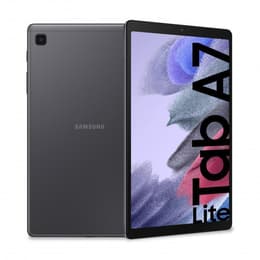
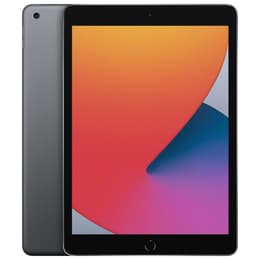

Galaxy Tab A7 Lite (8.7", 2021) vs iPad 8 (2020, A12 series)

Galaxy Tab A7 Lite (8.7", 2021)
Starting at

Refurbished price:$71.00

Versus $219.00 new

See options
iPad 8 (2020, A12 series)
Starting at

Refurbished price:$113.00

Versus $329.00 new

See options

Ratings

The Samsung Galaxy Tab A7 Lite, released in June 2021, and the Apple iPad 8th Generation, launched in September 2020, are both tablets designed for everyday use. While the Galaxy Tab A7 Lite runs on Android, the iPad 8th Gen operates on Apple's iPadOS. These devices cater to users seeking portable solutions for media consumption, browsing, and light productivity, with key differences in their operating systems and overall performance capabilities.

Scores

Durability

When considering the longevity of these tablets, both offer a practical lifespan for general use, though their software support timelines differ.

  • Release Timeline: The Galaxy Tab A7 Lite was released in June 2021, making it slightly newer than the iPad 8th Gen, which debuted in September 2020. This difference in release year can influence the duration of future software support.
  • Software Longevity: The Galaxy Tab A7 Lite launched with Android 11 and received three major Android updates, reaching Android 14-based One UI 6.1. However, Samsung officially ended software update support for this model in June 2025. In contrast, the iPad 8th Gen, which started with iPadOS 14, is capable of updating to iPadOS 17.x and is generally expected to receive major OS updates until at least September 2025 or even 2027. This suggests a potentially longer period of official software updates for the iPad.
  • Repairability: While specific repairability scores are not readily available for both models, the general design of tablets often makes user-level repairs challenging. Both devices are built with durable materials, but the availability of parts and service options can vary by region and manufacturer.

Release Year

2021

2020

Last OS Compatibility

Yes

Yes

OS

Android

iPadOS

Performance

The performance of these tablets varies significantly, impacting how smoothly they handle different tasks and applications.

  • Processor Capabilities: The Galaxy Tab A7 Lite is powered by an octa-core processor that is suitable for basic tasks like web browsing, video streaming, and light gaming. However, users may experience slowdowns and hitches when opening many apps simultaneously or playing more demanding games. The iPad 8th Gen features a more powerful hexa-core processor, which provides a considerably faster and more responsive experience. It handles routine web browsing, sketching, photo-editing, and even some demanding applications with ease.
  • System Responsiveness and Multitasking: The iPad 8th Gen generally offers a smoother and more fluid user experience, with quick app loading and efficient multitasking. The Galaxy Tab A7 Lite, while adequate for casual use, can exhibit lag and sluggishness, especially when multiple applications are running or when navigating complex interfaces.
  • Storage and RAM: The Galaxy Tab A7 Lite typically comes with 3GB of RAM (some 64GB models have 4GB) and storage options of 32GB or 64GB, expandable via microSD up to 1TB. The iPad 8th Gen includes 3GB of RAM and offers 32GB or 128GB of internal storage, without expandable storage. The expandable storage on the Tab A7 Lite offers flexibility for users with large media libraries.

Memory (GB)

3 GB

3 GB

Screen quality

The visual experience on these tablets is shaped by their display technology, resolution, and overall brightness.

  • Display Technology and Resolution: The Galaxy Tab A7 Lite features an 8.7-inch TFT display with a resolution of 1340x800 pixels, resulting in a pixel density of approximately 179 ppi. This resolution is sufficient for everyday viewing but may show some blurring or less sharpness in detailed content. The iPad 8th Gen boasts a larger 10.2-inch Retina IPS LCD with a higher resolution of 2160x1620 pixels, providing a sharper image at 264 ppi.
  • Brightness and Clarity: The Galaxy Tab A7 Lite's display reaches a maximum brightness of around 315 nits, which is generally adequate for indoor use but can be challenging to view in bright outdoor conditions. The iPad 8th Gen offers a brighter screen with up to 500 nits, making it more comfortable for outdoor viewing and providing better contrast.
  • Viewing Experience: While both screens are responsive to touch, the iPad's display is noted for its vibrant colors and clarity. The Galaxy Tab A7 Lite's colors are decent, but some users have noted that viewing angles can affect color and contrast. The iPad 8th Gen's display is not laminated, which means there is a small air gap between the glass and the display panel, though this is less noticeable than in older models.

Resolution

800 x 1340

2160 x 1620

Screen type

TFT LCD

Retina display

Pixel density

180ppp

264ppp

Audiovisual

The camera systems on both tablets are designed for functional use rather than high-end photography, with varying capabilities for photos and video calls.

  • Camera System: The Galaxy Tab A7 Lite is equipped with an 8-megapixel rear camera with autofocus and a 2-megapixel front-facing camera. The iPad 8th Gen also has an 8-megapixel rear camera and a 1.2-megapixel front-facing FaceTime HD camera.
  • Photography and Video Quality: For the Galaxy Tab A7 Lite, the cameras are generally considered "good enough" for video calls and occasional photos, but they may produce washed-out colors, muted details, and struggle in low-light conditions. The rear camera is acceptable for document scanning. Video recording is possible at 1080p at 30 frames per second, but can be shaky. The iPad 8th Gen's rear camera performs adequately in good lighting, though it lacks advanced features like optical zoom or night modes, and images can be noisy in low light. Video recording is also 1080p at 30 frames per second.
  • Front Camera for Communication: The 2-megapixel front camera on the Galaxy Tab A7 Lite is acceptable for video calls. The iPad 8th Gen's 1.2-megapixel front camera is considered low resolution for modern video conferencing standards, though it can be sufficient in good lighting.
  • Audio Experience: The Galaxy Tab A7 Lite features dual speakers with Dolby Atmos support, which can enhance the audio experience for media consumption. The iPad 8th Gen also has stereo speakers, providing a decent audio output for videos and music.

Miscellaneous

Beyond core performance and display, several practical elements differentiate these two tablets, influencing their daily usability and connectivity.

  • Connectivity Options: Both tablets support Wi-Fi 5 (802.11ac) for wireless internet access. The Galaxy Tab A7 Lite features Bluetooth 5.0, while the iPad 8th Gen uses Bluetooth 4.2. Both offer optional LTE models for cellular connectivity.
  • Ports and Accessories: The Galaxy Tab A7 Lite includes a USB-C port for charging and data transfer, along with a 3.5mm headphone jack. It also supports microSD card expansion up to 1TB. The iPad 8th Gen uses a Lightning port for charging and data and retains a 3.5mm headphone jack. It supports the first-generation Apple Pencil and Smart Keyboard via a Smart Connector.
  • Weight and Dimensions: The Galaxy Tab A7 Lite is a more compact device, weighing approximately 366g (Wi-Fi) or 371g (LTE) and measuring 212.5 x 124.7 x 8.0 mm. Its lightweight design makes it easy to hold and carry. The iPad 8th Gen is larger and heavier, at about 490g (Wi-Fi) or 495g (LTE) and dimensions of 250.6 x 174.1 x 7.5 mm.
  • Security and Build Materials: The iPad 8th Gen features Touch ID for secure authentication. Both devices utilize aluminum for their back and frame, contributing to a sturdy feel.

Weight

12 oz

17 oz

Width

4,91 in

6.8 in

Height

8,37 in

9.8 in

Depth

0,31 in

0.2 in

Screen size (inches)

8.7

10.2

Network

Wi-Fi + 4G

Wi-Fi

Carrier compatibility

Unlocked

Without SIM Port

User sentiment for the Samsung Galaxy Tab A7 Lite often highlights its compact size, lightweight design, and suitability for basic tasks like reading, streaming videos, and light gaming. Common criticisms revolve around its performance limitations, with some users reporting lag and sluggishness, especially with demanding applications or after software updates. The camera quality is also frequently mentioned as being adequate for video calls but not for high-quality photography.

For the iPad 8th Gen, users frequently praise its robust performance, bright and sharp display, and consistent battery life, making it a strong option for students and casual users. The ability to handle more demanding apps and its longer software support are also highly valued. Criticisms often point to its dated design, including thick bezels and a non-laminated display, as well as the low resolution of its front-facing camera, which can be a drawback for modern video conferencing.

Users prioritizing a highly portable, lightweight device primarily for media consumption and basic browsing may find the Galaxy Tab A7 Lite well-suited to their needs. Its expandable storage is also a significant advantage for those with large media libraries. Conversely, users who require more robust performance for multitasking, light content creation, or a longer period of software updates will likely lean towards the iPad 8th Gen. Its compatibility with accessories like the Apple Pencil and Smart Keyboard also makes it a more versatile option for productivity. Both tablets offer a gateway into their respective ecosystems, and choosing between them often comes down to individual preferences for Android or iPadOS, and the specific balance of portability versus performance. For those considering either device, exploring quality-assured refurbished options can provide a sustainable choice.


See all articles

Our recent comparisons