iPad 6 (2018, A10 series) vs iPad 8 (2020, A12 series)

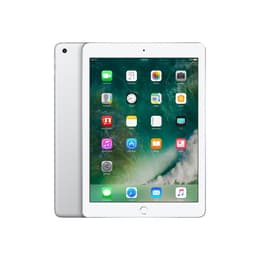
iPad 6 (2018, A10 series)
Starting at

Refurbished price:$68.00

Versus $329.00 new

See options
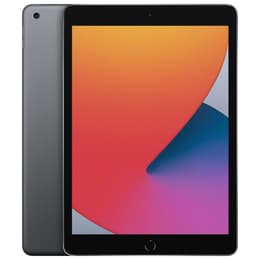
iPad 8 (2020, A12 series)
Starting at

Refurbished price:$113.00

Versus $329.00 new

See options

Ratings

The iPad 2018 (6th generation) and the iPad 2020 (8th generation) are two entry-level tablet models from Apple, released in March 2018 and September 2020, respectively. Both devices run on Apple's iPadOS, offering a consistent user experience, but the 2020 model features a more advanced processor and a slightly larger display, providing notable differences in performance and visual experience.

Scores

Durability

When considering the long-term usability of these tablets, several factors come into play, primarily their release timelines, software support, and repairability.

  • Release Timeline and Software Support: The iPad 2018, released in March 2018, received its last major iPadOS update with iPadOS 17, and does not support iPadOS 18 or later versions. In contrast, the iPad 2020, launched in September 2020, shipped with iPadOS 14 and is expected to receive software updates for a longer period, including support for iPadOS 18 and beyond, extending its practical lifespan.
  • Expected Practical Lifespan: Users prioritizing the latest software features and security updates will find the iPad 2020 offers a longer period of current functionality. The iPad 2018 will continue to function, but without new OS features or potentially critical security patches in the future.
  • Repairability: Both models generally present challenges for repair due to the extensive use of strong adhesives to secure internal components, resulting in low repairability scores (e.g., 2 out of 10 for the iPad 2018 by iFixit). However, the display on both models is not fully laminated, which can make screen replacements potentially less costly than on models where the display and glass are fused.

Release Year

2018

2020

Last OS Compatibility

No

Yes

OS

iPadOS

iPadOS

Maximum Operating System supported

iPadOS 17

iPadOS 18

Performance

The performance of these iPads is largely determined by their internal processing capabilities, impacting app responsiveness, multitasking, and battery efficiency.

  • Processor Capabilities: The iPad 2018 is equipped with an A10 Fusion processor and 2GB of RAM, which handles everyday tasks and moderate multitasking smoothly. The iPad 2020 features a more powerful A12 Bionic chip with a Neural Engine and 3GB of RAM, offering a significant boost in processing power. This translates to faster app loading, smoother graphics for demanding applications and games, and more efficient handling of complex tasks.
  • Storage Options: Both models are available with 32GB or 128GB of internal storage. Users who plan to download many applications, store large media files, or work with extensive documents may find the 128GB option more suitable for either device.
  • Battery Behavior: Both iPads are rated for up to 10 hours of web surfing over Wi-Fi or video playback. User experiences with the iPad 2020 suggest it can achieve around 12-13 hours in some web browsing tests, though heavy usage like streaming or intensive applications can reduce this to 4.5-5.5 hours. The iPad 2018 also offers reliable all-day battery life for typical use.

Memory (GB)

2 GB

3 GB

Processor

Apple A10 Fusion

Apple A12 Bionic

Screen quality

The visual experience on these tablets is defined by their display technology, resolution, and physical dimensions.

  • Display Technology and Resolution: Both the iPad 2018 and iPad 2020 feature an IPS LCD Retina display, providing clear visuals and good color reproduction. The iPad 2018 has a 9.7-inch display with a 2048 x 1536 pixel resolution, while the iPad 2020 offers a slightly larger 10.2-inch display with a 2160 x 1620 pixel resolution. Both maintain a pixel density of 264 pixels per inch (ppi), ensuring sharpness for text and images.
  • Brightness and Coatings: The iPad 2020 offers a typical brightness of 500 nits, which is beneficial for outdoor visibility. Both models include an oleophobic coating to resist fingerprints. Neither display is fully laminated, meaning there is a small gap between the glass and the LCD, and they lack an anti-reflective coating, which can lead to more noticeable glare in bright environments.
  • Viewing Experience: The larger 10.2-inch screen of the iPad 2020 provides a slightly more expansive viewing area for media consumption and productivity tasks compared to the 9.7-inch display of the iPad 2018.

Resolution

2048 x 1536

2160 x 1620

True Tone

No

No

Pro-Motion

No

No

Screen type

Retina display

Retina display

Pixel density

264ppp

264ppp

Brightness

500 nits brightness

500 nits brightness

Sound quality

Speakers

Stereo speakers

Stereo speakers

Audiovisual

While tablets are not typically primary photography devices, their camera systems are important for video calls, document scanning, and occasional photo capture.

  • Rear Camera Performance: Both the iPad 2018 and iPad 2020 feature an 8-megapixel rear camera with an f/2.4 aperture, capable of recording 1080p video at 30 frames per second. The iPad 2020 benefits from the A12 Bionic chip's image signal processor, which can enhance photo quality with features like Smart HDR. In good lighting, both cameras produce acceptable images, but performance diminishes in low-light conditions.
  • Front Camera Performance: For video calls and selfies, both models include a 1.2-megapixel front-facing camera, supporting 720p video recording. The iPad 2018's front camera has an f/2.2 aperture, while the iPad 2020's is f/2.4. This camera is generally considered adequate for video conferencing rather than high-quality photography.
  • Audio Experience: Both iPads feature stereo speakers, though they are located on one side, which means true stereo separation is not achieved when holding the device in landscape orientation. They also include microphones suitable for calls and audio recording.

Miscellaneous

Beyond core specifications, practical elements like connectivity, physical design, and accessory support contribute to the overall user experience.

  • Connectivity and Ports: Both the iPad 2018 and iPad 2020 support Wi-Fi 802.11ac with dual-band (2.4GHz and 5GHz) and MIMO capabilities, along with Bluetooth 4.2. Cellular models offer LTE connectivity. Both devices retain a Lightning port for charging and data transfer, and a 3.5mm headphone jack.
  • Dimensions and Weight: The iPad 2018 measures 240 x 169.5 x 7.5 mm and weighs approximately 469g (Wi-Fi model). The iPad 2020 is slightly larger and heavier at 250.6 x 174.1 x 7.5 mm and about 490g (Wi-Fi model). Both maintain a slim profile, making them portable.
  • Accessory Support and Sensors: Both iPads support the 1st generation Apple Pencil, enabling drawing and note-taking. The iPad 2020 additionally supports the Smart Keyboard via a Smart Connector, offering a more integrated typing experience. Both include Touch ID for secure authentication.

Weight

17 oz

17 oz

Width

6.8 in

6.8 in

Height

9.8 in

9.8 in

Depth

0.2 in

0.2 in

Screen size (inches)

9.7

10.2

Network

Wi-Fi

Wi-Fi

Carrier compatibility

Without SIM Port

Without SIM Port

Wi-Fi technology

Wi-Fi 6 802.11a/b/g/n/ac

Wi-Fi 6 802.11a/b/g/n/ac

Bluetooth Version

Bluetooth 4.2

Bluetooth 4.2

Face ID

No

No

Touch ID

Yes

Yes

Connector

Lightning connector

Lightning connector

User feedback for both the iPad 2018 and iPad 2020 generally highlights their reliability and value as entry-level tablets. For the iPad 2018, common praise points include its solid performance for everyday tasks and its introduction of Apple Pencil support to a more accessible price point. Criticisms often revolve around its aging processor and the eventual cessation of major software updates. Users of the iPad 2020 frequently commend its significant performance boost due to the A12 Bionic chip, which makes it more capable for demanding applications and offers a longer period of software support. Some users note that its design, while functional, feels less modern compared to other iPads.

Users prioritizing a more future-proof device with enhanced performance for gaming, heavier multitasking, or more intensive applications will find the iPad 2020 better suited to their needs. Its extended software support also makes it a more suitable choice for those seeking longer device longevity. Conversely, users primarily needing a tablet for basic web browsing, email, media consumption, and light productivity, and who are comfortable with an older software ecosystem, may find the iPad 2018 still meets their requirements. Both models offer a quality-assured refurbished option, providing an eco-friendly alternative for consumers looking to make informed and sustainable choices. Ultimately, the decision depends on the user's specific performance demands and desired software longevity.
See all articles

Our recent comparisons