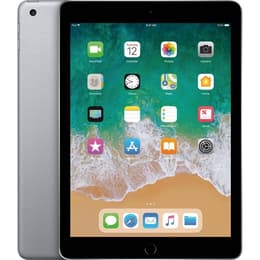
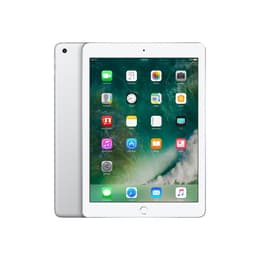
iPad 5 (2017, A9 series) vs iPad 6 (2018, A10 series)

iPad 5 (2017, A9 series)
Starting at

Refurbished price:$60.32

Versus $329.00 new

See options
iPad 6 (2018, A10 series)
Starting at

Refurbished price:$68.00

Versus $329.00 new

See options

Ratings

The iPad 2017, also known as the 5th generation iPad, was released in March 2017, while its successor, the iPad 2018 (6th generation), followed in March 2018. Both devices operate on Apple's iPadOS, offering a consistent user experience across their software. The primary distinctions between these two tablets lie in their internal processing power and the 2018 model's introduction of support for the Apple Pencil.

Scores

Durability

When considering the longevity of these tablets, several factors come into play, including their release dates, software support, and repairability.

  • Release Timeline: The iPad 2017 was released in March 2017, making it a year older than the iPad 2018, which launched in March 2018. This difference in release date directly impacts their expected software support lifespan.
  • OS Support Duration: The iPad 2017 originally shipped with iOS 10.3.2 and supports up to iPadOS 16.7.12. The iPad 2018 launched with iOS 11.3 and is capable of running later versions, including unofficial support for iPadOS 18, suggesting it will receive software updates for approximately one year longer than its predecessor.
  • Repairability: Both models received a low repairability score of 2 out of 10 from iFixit, primarily due to the extensive use of strong adhesives that make internal components difficult to access. However, a notable point for both is that their displays are not fused to the front glass, which can make replacing a cracked outer glass panel a less complex and potentially more affordable repair.

Release Year

2017

2018

Last OS Compatibility

No

No

OS

iPadOS

iPadOS

Maximum Operating System supported

iPadOS 16

iPadOS 17

Performance

The performance of these two iPad models is largely dictated by their internal processing units, affecting how smoothly they handle applications and multitasking.

  • Processing Capabilities: The iPad 2017 features an A9 processor, while the iPad 2018 is equipped with the A10 Fusion chip. The A10 Fusion processor in the 2018 model offers a noticeable improvement, providing approximately 40 percent faster CPU performance and 50 percent faster graphics performance compared to the A9.
  • Multitasking and App Responsiveness: This enhanced processing power means the iPad 2018 handles demanding applications, augmented reality experiences, and multitasking scenarios with greater fluidity. Users engaging in more intensive tasks like gaming or using creative applications will likely experience smoother operation on the newer model.
  • Battery Behavior: Both iPads are designed to offer up to 10 hours of web browsing over Wi-Fi. While the iPad 2017 has a slightly larger battery capacity (32.9 Wh) compared to the iPad 2018 (32.4 Wh), the more efficient A10 Fusion chip in the 2018 model helps it maintain comparable, and in some tests, slightly better battery life during typical usage.

Memory (GB)

2 GB

2 GB

Processor

Apple A9

Apple A10 Fusion

Screen quality

Both iPad models share many display characteristics, providing a consistent visual experience for general use, with one key difference.

  • Display Technology and Resolution: Both the iPad 2017 and iPad 2018 feature a 9.7-inch Retina IPS LCD display with a resolution of 2048 x 1536 pixels, resulting in a pixel density of 264 pixels per inch (ppi). This delivers clear text and vibrant images for everyday viewing.
  • Lamination and Coating: Neither model features a fully laminated display, meaning there is a small air gap between the display panel and the cover glass. However, the iPad 2018 includes an oleophobic coating, which helps resist fingerprint smudges, a feature absent in the iPad 2017.
  • Brightness and Refresh Rate: Both devices offer similar brightness levels suitable for indoor use. They also share a standard 60Hz refresh rate, which provides a smooth experience for most content, though it is not as fluid as higher refresh rate displays found in more recent tablets.

Resolution

2048 x 1536

2048 x 1536

True Tone

No

No

Pro-Motion

No

No

Screen type

Retina display

Retina display

Pixel density

264ppp

264ppp

Brightness

500 nits brightness

500 nits brightness

Sound quality

Speakers

Stereo speakers

Stereo speakers

Audiovisual

The camera systems and audio capabilities of these two iPad generations are largely identical, providing a consistent experience for casual photography, video calls, and media consumption.

  • Camera System: Both the iPad 2017 and iPad 2018 are equipped with an 8-megapixel rear camera with an f/2.4 aperture, capable of recording 1080p HD video. For the front, they both feature a 1.2-megapixel FaceTime HD camera with an f/2.2 aperture, suitable for video calls and basic selfies.
  • Photography Performance: The performance of these cameras is adequate for capturing documents, casual photos in good lighting, and video conferencing. Neither model includes advanced features like optical image stabilization or a rear flash.
  • Audio Experience: Both tablets feature stereo speakers, which provide a decent audio experience for watching videos or listening to music. The microphone quality is suitable for voice calls and basic recordings.

Miscellaneous

Beyond core performance, several practical elements differentiate or unify these two iPad models, impacting their utility in daily life.

  • Connectivity Options: Both the iPad 2017 and iPad 2018 support Wi-Fi 802.11ac (dual-band) and Bluetooth 4.2. Cellular models of both devices also include GPS and GLONASS for location services.
  • Port Types and Sensors: Both tablets utilize a Lightning port for charging and data transfer, and they retain a 3.5mm headphone jack. For security, both include a Touch ID fingerprint sensor integrated into the home button.
  • Physical Design and Build: The dimensions and weight of the iPad 2017 and iPad 2018 are identical, measuring 240 x 169.5 x 7.5 mm and weighing 469 grams for Wi-Fi models (478 grams for cellular). Both feature an aluminum back and frame with a glass front.

Weight

16 oz

17 oz

Width

6.6 in

6.8 in

Height

9.4 in

9.8 in

Depth

0.2 in

0.2 in

Screen size (inches)

9.7

9.7

Network

Wi-Fi

Wi-Fi

Carrier compatibility

Without SIM Port

Without SIM Port

Wi-Fi technology

Wi-Fi 6 802.11a/b/g/n/ac

Wi-Fi 6 802.11a/b/g/n/ac

Bluetooth Version

Bluetooth 4.2

Bluetooth 4.2

Face ID

No

No

Touch ID

Yes

Yes

Connector

Lightning connector

Lightning connector

The iPad 2017 and iPad 2018, while visually similar, offer distinct advantages that cater to different user needs. User sentiment often highlights the iPad 2017 as a reliable and capable device for general media consumption, web browsing, and light productivity, with many users praising its solid performance for its age. Its main criticism often revolves around the lack of Apple Pencil support and the non-laminated display.

The iPad 2018, on the other hand, is frequently lauded for its enhanced processing power, which provides a smoother experience for more demanding applications and augmented reality. Its key differentiator, Apple Pencil support, makes it a popular choice for students, artists, and anyone who benefits from precise input for note-taking or creative work. Some users note that while the performance is improved, the camera system remains basic, and the display still lacks lamination, though the oleophobic coating is a welcome addition.

Users prioritizing a foundational tablet experience for everyday tasks like browsing, email, and video streaming may find the iPad 2017 to be a suitable option. However, those who require more robust performance for multitasking, gaming, or creative endeavors, particularly with stylus input, will find the iPad 2018 better suited to their needs. The added Apple Pencil compatibility significantly expands the utility of the 2018 model for specific workflows. Both models remain viable choices, especially as quality-assured refurbished options, offering an eco-friendly alternative for consumers.
See all articles

Our recent comparisons