
Galaxy Tab S8 Ultra (14.6", 2022) vs Galaxy Tab S9 Ultra (14.6", 2023)

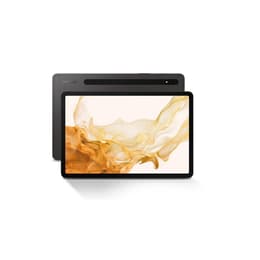
Galaxy Tab S8 Ultra (14.6", 2022)
Starting at

Refurbished price:$435.00

Versus $1,049.00 new

See options
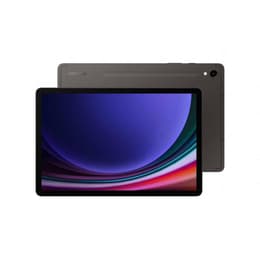
Galaxy Tab S9 Ultra (14.6", 2023)
Starting at

Refurbished price:$580.05

Versus $1,200.00 new

See options

Ratings

The Samsung Galaxy Tab S8 Ultra, released in 2022, and the Galaxy Tab S9 Ultra, launched in 2023, represent Samsung's top-tier large-screen Android tablets. While both devices offer expansive displays and robust capabilities, the newer Tab S9 Ultra introduces enhancements in processing power, durability, and display brightness. Both tablets operate on the Android platform, featuring Samsung's One UI for a consistent user experience.

Scores

Durability

When considering the longevity of these large tablets, software support and physical resilience are key factors.

  • Software Updates: The Galaxy Tab S8 Ultra, as a 2022 flagship, is expected to receive four major Android operating system updates and five years of security updates from its release. This means it should continue to receive OS updates until Android 16 (One UI 8) and security patches until 2027. The Galaxy Tab S9 Ultra, released in 2023, benefits from a similar policy, ensuring OS updates up to Android 17 and security updates until 2028, providing an additional year of software support.
  • Repairability: Samsung tablets generally present a moderate challenge for repairs due to the extensive use of adhesive in their construction. While specific repairability scores for these Ultra models are not readily available, the design often involves careful disassembly to access internal components. The Galaxy Tab S9 Ultra introduces an IP68 rating for water and dust resistance, which enhances its protection against environmental elements but can add complexity to certain repair procedures.
  • Practical Lifespan: Both devices are built with premium materials, including an aluminum frame, contributing to their overall durability. Users report that the Galaxy Tab S8 Ultra feels rigid and solid despite its thin profile, suggesting good physical longevity. The added IP68 rating on the Tab S9 Ultra provides an extra layer of protection against accidental spills and dust exposure, potentially extending its practical lifespan in varied environments.

Release Year

2022

2023

Compatible with latest Update

Yes

Yes

OS

Android

Android

Performance

The performance of these tablets is central to their utility, particularly for demanding applications and multitasking.

  • Processing Power: The Galaxy Tab S8 Ultra is equipped with a capable processor that handles everyday tasks, productivity applications, and many games smoothly. The Galaxy Tab S9 Ultra features a next-generation processor, offering a noticeable improvement in raw performance. This translates to faster app loading, smoother multitasking, and enhanced capabilities for intensive tasks like video editing or high-fidelity gaming.
  • System Responsiveness: Users upgrading from the Tab S8 Ultra to the Tab S9 Ultra often report that the newer model feels more responsive and exhibits smoother animations. This is partly due to the more efficient processor and potentially optimized software. For users who push their devices with multiple demanding applications simultaneously, the Tab S9 Ultra provides more headroom and consistent performance.
  • Storage and Battery Behavior: Both tablets offer ample storage options, typically ranging from 128GB to 1TB, and support microSD card expansion for additional space. The Galaxy Tab S9 Ultra utilizes faster internal storage technology, which can result in quicker file transfers and app installations. Both devices house a large 11,200 mAh battery. While the Tab S8 Ultra provides solid battery life, the Tab S9 Ultra generally achieves slightly longer usage times due to its more power-efficient processor and adaptive display refresh rate, which optimizes power consumption based on content.

Memory (GB)

8 GB

12 GB

Processor

Qualcomm SM8450 Snapdragon 8 Gen 1

Qualcomm SM8550-AC Snapdragon 8 Gen 2

Screen quality

The visual experience on these large tablets is a primary draw, with both offering impressive displays.

  • Display Technology and Resolution: Both the Galaxy Tab S8 Ultra and Tab S9 Ultra feature a 14.6-inch Dynamic AMOLED 2X display with a resolution of 2960 x 1848 pixels. This technology delivers deep blacks, vibrant colors, and excellent contrast, making them well-suited for media consumption, creative work, and detailed tasks.
  • Brightness and Clarity: The Galaxy Tab S9 Ultra offers a higher peak brightness of up to 930 nits, compared to the Tab S8 Ultra's typical maximum brightness of around 583 nits. This increased brightness on the S9 Ultra improves visibility, especially in brightly lit indoor environments or when used outdoors, though direct sunlight can still pose a challenge for any reflective screen.
  • Refresh Rate and Viewing Experience: Both tablets boast a 120Hz adaptive refresh rate, ensuring smooth scrolling, fluid animations, and a responsive experience whether navigating the interface or playing compatible games. This high refresh rate contributes to a more comfortable and immersive viewing experience. The large screen size on both models provides an expansive canvas for productivity and entertainment.

Resolution

1848 x 2960

1848 x 2960

Screen type

Super AMOLED

Dynamic AMOLED 2X

Pixel density

240ppp

240ppp

Audiovisual

While tablets are not typically primary photography devices, their camera systems are important for video calls and document scanning.

  • Camera System Capabilities: Both the Galaxy Tab S8 Ultra and Tab S9 Ultra are equipped with a dual-camera setup on the front, featuring two 12MP sensors (one wide and one ultrawide). On the rear, both have a 13MP main camera. The key difference lies in the rear ultrawide camera, which is 8MP on the Tab S9 Ultra, an upgrade from the 6MP ultrawide on the Tab S8 Ultra.
  • Photography and Video Performance: The front-facing cameras on both models are well-regarded for video conferencing, offering clear images and wide-angle views suitable for group calls. The rear cameras are capable of capturing documents and casual photos, with the Tab S9 Ultra offering slightly more detail with its improved ultrawide sensor. Both tablets support video recording at up to 4K resolution at 30 frames per second.
  • Audio Quality: Both devices feature quad stereo speakers tuned by AKG with Dolby Atmos support, providing a rich and immersive audio experience for media consumption. The microphone quality on both is also suitable for clear voice capture during calls and recordings.

Miscellaneous

Beyond core specifications, several practical elements differentiate these two large tablets.

  • Connectivity Options: Both the Galaxy Tab S8 Ultra and Tab S9 Ultra support Wi-Fi 6E for fast wireless internet connections. For Bluetooth, the Tab S9 Ultra features Bluetooth 5.3, a slight upgrade from the Tab S8 Ultra's Bluetooth 5.2, potentially offering minor improvements in connection stability and efficiency with compatible accessories. Both also offer 5G connectivity options.
  • Ports and Sensors: Both tablets include a USB-C 3.2 port for charging and data transfer. Neither device features a traditional 3.5mm headphone jack. For security, both integrate an on-screen fingerprint sensor, providing convenient and secure unlocking.
  • Build Materials and Durability Features: The physical dimensions of both tablets are nearly identical, with a remarkably thin profile of 5.5mm. The Tab S9 Ultra is marginally heavier, weighing around 732g (Wi-Fi) compared to the Tab S8 Ultra's 726g (Wi-Fi). A significant distinction is the IP68 rating for water and dust resistance on the Galaxy Tab S9 Ultra, a feature absent from its predecessor. This rating means the S9 Ultra can withstand immersion in fresh water up to 1.5 meters for 30 minutes, offering enhanced protection against environmental exposure. Both come with an S Pen included, which magnetically attaches to the tablet for charging and storage.

Weight

25 oz

15 oz

Screen size (inches)

14.6

14.6

Network

Wi-Fi

Wi-Fi

Carrier compatibility

Without SIM Port

Without SIM Port

Connector

USB Type-C

USB Type-C

The Samsung Galaxy Tab S8 Ultra and Tab S9 Ultra both stand as formidable large-screen Android tablets, each catering to slightly different user priorities. User feedback for the Galaxy Tab S8 Ultra often highlights its impressive large AMOLED display and capable performance, which remains strong for most tasks even years after its release. Some users noted that its battery life, while adequate, could be improved for heavy usage, and the absence of an official water resistance rating was a point of consideration.

The Galaxy Tab S9 Ultra, on the other hand, receives praise for its enhanced processing power, leading to a smoother and more responsive experience, particularly for demanding applications and gaming. Its improved battery efficiency, largely due to the newer processor and adaptive display, is also a frequently cited benefit. A significant upgrade is the inclusion of an IP68 rating for water and dust resistance, providing greater peace of mind for users who might use their tablet in various environments. However, some users question if the incremental upgrades justify an immediate switch from a well-performing Tab S8 Ultra.

Users prioritizing a large, vibrant display for media consumption, general productivity, and creative tasks, who do not require the absolute latest in processing power or water resistance, may find the Galaxy Tab S8 Ultra to be a suitable option. Conversely, those who need the most powerful Android tablet for intensive creative work, competitive gaming, or require enhanced durability with water and dust resistance, will find the Galaxy Tab S9 Ultra better suited to their needs. For those seeking a quality-assured refurbished option, both models offer a sustainable choice to access premium tablet technology.


See all articles

Our recent comparisons