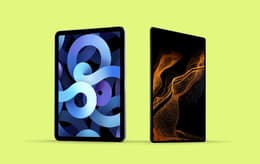
Galaxy Tab S8 Ultra (14.6", 2022) vs iPad 8 (2020, A12 series)

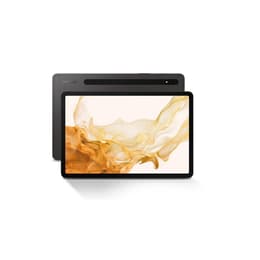
Galaxy Tab S8 Ultra (14.6", 2022)
Starting at

Refurbished price:$435.00

Versus $1,049.00 new

See options
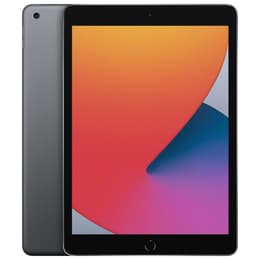
iPad 8 (2020, A12 series)
Starting at

Refurbished price:$113.00

Versus $329.00 new

See options

Ratings

The Samsung Galaxy Tab S8 Ultra, released in February 2022, and the Apple iPad (8th Generation), launched in September 2020, represent distinct approaches to the tablet experience. While both devices offer robust platforms for productivity and entertainment, they cater to different user preferences through their operating systems, display sizes, and overall design philosophies. The Tab S8 Ultra runs on Android, offering a large, expansive display, whereas the iPad (8th Gen) operates on iPadOS, providing a more compact and integrated ecosystem experience.

Scores

Durability

When considering the long-term usability of these tablets, their release timelines and software support policies are key factors. The Galaxy Tab S8 Ultra, being a 2022 release, benefits from Samsung's commitment to providing several years of software updates, while the 2020 iPad (8th Gen) has a strong track record of extended iPadOS support from Apple.

  • Software Longevity: The Galaxy Tab S8 Ultra is expected to receive Android OS updates up to Android 16 (One UI 8) and security updates until 2027, offering a substantial period of support from its 2022 release. The iPad (8th Gen), released in 2020, typically receives 5-6 years of major iPadOS updates, with users anticipating support potentially through iPadOS 19 or 20, and security updates often extending beyond that.
  • Practical Lifespan: Both devices are built to last, with their respective operating systems ensuring continued functionality for everyday tasks even after major OS updates cease. The Galaxy Tab S8 Ultra's newer release date gives it a slight edge in terms of future-proofing for the latest software features.
  • Repairability: While specific repairability scores can vary, both manufacturers offer repair services. The design of the iPad (8th Gen) is consistent with previous generations, suggesting a familiar repair process, while the Tab S8 Ultra's extremely thin profile might present unique challenges for certain repairs.

Release Year

2022

2020

Last OS Compatibility

Yes

Yes

OS

Android

iPadOS

Performance

The performance capabilities of these two tablets are influenced by their internal components and operating system optimizations, impacting how smoothly they handle various tasks from everyday browsing to more demanding applications.

  • Processing Power: The Galaxy Tab S8 Ultra, equipped with a high-end processor from 2022, delivers strong performance for demanding applications, multitasking, and graphic-intensive games. The iPad (8th Gen) features a capable processor from 2020, which provides a responsive experience for general use, web browsing, and many popular apps, with users noting a significant performance boost over its predecessor.
  • Multitasking and Responsiveness: The Tab S8 Ultra's generous RAM options (8GB, 12GB, 16GB) allow for seamless multitasking with multiple applications open simultaneously, further enhanced by Android's flexible window management. The iPad (8th Gen) comes with 3GB of RAM, which is sufficient for smooth navigation within iPadOS and handling several apps concurrently, though it may show limitations with very heavy multitasking compared to the Tab S8 Ultra.
  • Storage Options: The Galaxy Tab S8 Ultra offers flexible storage configurations (128GB, 256GB, 512GB) and includes a microSD card slot for expandable storage, providing ample space for large files and media. The iPad (8th Gen) is available with 32GB or 128GB of internal storage, without an option for expansion, which might require users to manage storage more actively depending on their needs.

Memory (GB)

8 GB

3 GB

Screen quality

The visual experience on a tablet is largely defined by its display, and both the Galaxy Tab S8 Ultra and the iPad (8th Gen) offer distinct screen technologies and sizes that cater to different viewing preferences.

  • Display Technology and Size: The Galaxy Tab S8 Ultra features a large 14.6-inch Super AMOLED display, known for its deep blacks, vibrant colors, and high contrast, providing an immersive viewing experience. The iPad (8th Gen) has a 10.2-inch Retina IPS LCD, which offers clear and sharp images with accurate color reproduction, suitable for a wide range of tasks.
  • Resolution and Clarity: The Tab S8 Ultra boasts a resolution of 2960 x 1848 pixels, resulting in a sharp and detailed picture across its expansive screen. The iPad (8th Gen) provides a 2160 x 1620 pixel resolution, delivering a crisp visual experience on its smaller display.
  • Refresh Rate and Brightness: The Galaxy Tab S8 Ultra offers a 120Hz refresh rate, contributing to smoother scrolling and more fluid animations, and a bright display suitable for various lighting conditions. The iPad (8th Gen) features a standard 60Hz refresh rate and a typical brightness of 500 nits, which is generally sufficient for indoor and some outdoor use.

Resolution

1848 x 2960

2160 x 1620

Screen type

Super AMOLED

Retina display

Pixel density

240ppp

264ppp

Audiovisual

While tablets are not typically primary photography devices, their cameras are increasingly important for video calls, document scanning, and casual photography. Both devices offer camera systems designed to meet these practical needs.

  • Rear Camera Capabilities: The Galaxy Tab S8 Ultra includes a dual rear camera setup with a 13MP wide lens and a 6MP ultrawide lens, capable of capturing detailed photos and 4K video. The iPad (8th Gen) features an 8MP rear camera that performs well in good lighting conditions and can record 1080p video at 30 frames per second.
  • Front Camera for Communication: The Tab S8 Ultra stands out with dual 12MP front cameras (wide and ultrawide), which are well-suited for high-quality video calls and selfies, even supporting 4K video recording. The iPad (8th Gen) has a 1.2MP front-facing camera, which is functional for video conferencing but offers lower resolution compared to the Tab S8 Ultra.
  • Audio Experience: The Galaxy Tab S8 Ultra is equipped with quad speakers tuned by AKG and Dolby Atmos support, providing a rich and immersive audio experience for media consumption. The iPad (8th Gen) features stereo speakers, delivering clear audio for general use and media playback.

Miscellaneous

Beyond core performance and display, several other features contribute to the overall user experience, including connectivity, physical design, and integrated sensors.

  • Connectivity and Ports: The Galaxy Tab S8 Ultra supports Wi-Fi 6E and Bluetooth 5.2, with optional 5G connectivity, offering fast and modern wireless communication. It features a versatile USB-C 3.2 Gen 1 port. The iPad (8th Gen) supports Wi-Fi 5 (802.11ac) and Bluetooth 4.2, with optional LTE models available. It utilizes a Lightning port for charging and data transfer.
  • Biometric Security: The Tab S8 Ultra incorporates an under-display optical fingerprint sensor and facial recognition for secure unlocking. The iPad (8th Gen) uses Touch ID, an integrated fingerprint sensor within its home button, for secure authentication.
  • Design and Portability: The Galaxy Tab S8 Ultra is notably thin at 5.5mm and weighs around 726-728g, but its large 14.6-inch screen makes it a substantial device. The iPad (8th Gen) is more compact at 7.5mm thick and weighs approximately 490-495g, making it more portable and easier to handle with one hand. The Tab S8 Ultra includes an S Pen in the box, enhancing its utility for creative and productivity tasks. The iPad (8th Gen) supports the first-generation Apple Pencil, which is sold separately.

Weight

25 oz

17 oz

Screen size (inches)

14.6

10.2

Network

Wi-Fi

Wi-Fi

Carrier compatibility

Without SIM Port

Without SIM Port

The Samsung Galaxy Tab S8 Ultra and the iPad (8th Generation) cater to different user needs and preferences. Users often praise the Tab S8 Ultra for its expansive and vibrant Super AMOLED display, which provides an immersive experience for media consumption and multitasking. Its inclusion of the S Pen and robust multitasking features are frequently highlighted as benefits for productivity and creative work. Some users, however, find its large size potentially unwieldy for handheld use and note that while powerful, its battery life might not always match its large capacity in heavy usage scenarios.

Conversely, the iPad (8th Gen) receives consistent praise for its reliable performance, ease of use within the Apple ecosystem, and solid battery life for its class. Its more compact form factor is often appreciated for portability. Criticisms sometimes point to its dated design with thicker bezels, the lower resolution of its front-facing camera, and the limited base storage option without expansion.

Users prioritizing a large, high-quality display for media, drawing, or extensive multitasking with an included stylus may find the Galaxy Tab S8 Ultra well-suited to their needs. Those who value a more compact, user-friendly device with consistent performance for general tasks, education, or integrated ecosystem benefits may lean toward the iPad (8th Gen). Both devices offer compelling experiences, and considering quality-assured refurbished options can provide an eco-friendly alternative for either choice.


See all articles

Our recent comparisons