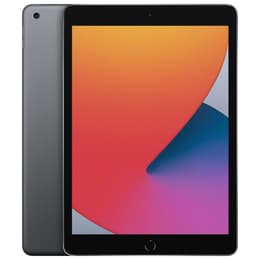
Galaxy Tab A9+ (11.0", 2023) vs iPad 8 (2020, A12 series)

Galaxy Tab A9+ (11.0", 2023)
Starting at

Refurbished price:$144.95

Versus $495.00 new

See options
iPad 8 (2020, A12 series)
Starting at

Refurbished price:$113.00

Versus $329.00 new

See options

Ratings

The Samsung Galaxy Tab A9+ (released in October 2023) and the Apple iPad (8th Generation, released in September 2020) are two distinct tablet offerings, each operating on a different ecosystem. The Galaxy Tab A9+ runs on Android, while the iPad 8th Gen uses Apple's iPadOS. Key differences lie in their operating systems, display technologies, and the overall user experience they aim to provide, reflecting their respective release timelines.

Scores

Durability

When considering the long-term usability of a tablet, factors such as software support and physical durability are important. The Galaxy Tab A9+ is a newer device, launched in late 2023, while the iPad 8th Gen was released in late 2020. This difference in release year impacts their expected software longevity and overall practical lifespan.

  • Software Updates: The iPad 8th Gen, running iPadOS, typically receives major software updates for approximately 5-6 years from its release, meaning its support is gradually phasing out. The Galaxy Tab A9+, being an Android tablet, is promised around four years of software updates from its 2023 release, offering a longer future support window from the current date.
  • Physical Durability: Both tablets feature aluminum backs, contributing to a sturdy feel. The iPad 8th Gen has a glass front, and while the Galaxy Tab A9+ also has a glass front, neither device specifies advanced screen protection like Ceramic Shield, which is found on some other devices.
  • Practical Lifespan: For general tasks, both devices are built to last several years. The iPad's longer historical software support means older models often remain functional for basic use even after official updates cease. The newer release of the Galaxy Tab A9+ provides a more current starting point for its operational life.

Release Year

2023

2020

Last OS Compatibility

Yes

Yes

OS

Android

iPadOS

Performance

The performance of a tablet is crucial for smooth daily operation, from launching applications to multitasking and gaming. Both the Galaxy Tab A9+ and the iPad 8th Gen are designed to handle common tablet tasks, but they approach performance with different hardware architectures.

  • Everyday Responsiveness: The iPad 8th Gen, powered by its A12 Bionic chip, offers a highly optimized experience within iPadOS, resulting in fluid navigation and quick app launches for most users. The Galaxy Tab A9+, with its current-generation processor, provides smooth performance for daily tasks like web browsing, video streaming, and social media.
  • Multitasking and Demanding Apps: The iPad 8th Gen handles demanding applications and multitasking effectively due to the efficiency of its processor and iPadOS. The Galaxy Tab A9+ is capable of multitasking, and users report it handles light to medium productivity tasks well, especially with its available RAM configurations.
  • Battery Behavior: The iPad 8th Gen is rated for approximately 10 hours of web surfing on Wi-Fi, providing consistent all-day use for many. The Galaxy Tab A9+ features a 7040 mAh battery, which typically provides around 7-8 hours of usage, depending on the intensity of tasks.

Memory (GB)

8 GB

3 GB

Screen quality

The display is a primary interface for any tablet, and both the Galaxy Tab A9+ and the iPad 8th Gen offer screens suitable for media consumption and productivity, though with distinct characteristics.

  • Display Technology and Size: The Galaxy Tab A9+ features an 11-inch LCD panel, providing a larger viewing area. The iPad 8th Gen comes with a 10.2-inch IPS LCD Retina display.
  • Resolution and Clarity: The iPad 8th Gen offers a resolution of 2160 x 1620 pixels, resulting in a pixel density of 264 ppi, which contributes to sharp text and images. The Galaxy Tab A9+ has a resolution of 1920 x 1200 pixels.
  • Refresh Rate and Brightness: A notable difference is the refresh rate; the Galaxy Tab A9+ supports an adaptive 90Hz refresh rate, which can provide smoother scrolling and a more fluid visual experience compared to the iPad 8th Gen's standard 60Hz display. The iPad 8th Gen offers a typical brightness of 500 nits, suitable for various lighting conditions.

Resolution

1200 x 1920

2160 x 1620

Screen type

TFT LCD

Retina display

Pixel density

210ppp

264ppp

Audiovisual

While tablets are not typically primary photography devices, their cameras are important for video calls, document scanning, and casual captures. Both the Galaxy Tab A9+ and the iPad 8th Gen include camera systems for these purposes.

  • Rear Camera Performance: Both tablets are equipped with an 8-megapixel rear camera. This allows for decent photo quality in well-lit conditions and is suitable for scanning documents or taking quick reference photos.
  • Front Camera and Video Calls: The Galaxy Tab A9+ features a 5-megapixel front-facing camera, which is well-suited for video conferencing and selfies. The iPad 8th Gen has a 1.2-megapixel front camera, which is functional for video calls but offers less detail.
  • Audio Experience: The Galaxy Tab A9+ is equipped with quad speakers, providing a more immersive audio experience for media consumption. The iPad 8th Gen features stereo speakers. Both include a 3.5mm headphone jack for private listening.

Miscellaneous

Beyond core specifications, several practical features contribute to the overall user experience of a tablet, including connectivity, physical design, and accessory support.

  • Connectivity and Ports: The Galaxy Tab A9+ supports Wi-Fi 5 and Bluetooth 5.1, with an optional 5G variant for mobile data access. It uses a USB-C port for charging and data transfer. The iPad 8th Gen also supports Wi-Fi 5 and Bluetooth 4.2, with an optional LTE model. It utilizes a Lightning port. Both devices retain a 3.5mm headphone jack.
  • Weight, Dimensions, and Handling: The Galaxy Tab A9+ is slightly thinner and lighter, measuring 257.1 x 168.7 x 6.9 mm and weighing 480g (Wi-Fi model). The iPad 8th Gen measures 250.6 x 174.1 x 7.5 mm and weighs 490g (Wi-Fi model). These differences can impact portability and comfort during extended use.
  • Security and Accessories: The iPad 8th Gen features Touch ID for secure fingerprint authentication. It also supports the first-generation Apple Pencil for note-taking and drawing, and the Smart Keyboard. The Galaxy Tab A9+ relies on face recognition and traditional PIN/pattern security, lacking a fingerprint sensor. While it doesn't officially support an S Pen, third-party styluses can be used.

Weight

480 oz

17 oz

Width

4 in

6.8 in

Height

12 in

9.8 in

Depth

8 in

0.2 in

Screen size (inches)

11.0

10.2

Network

Wi-Fi + 5G

Wi-Fi

Carrier compatibility

Unlocked

Without SIM Port

User feedback for the Galaxy Tab A9+ often highlights its smooth 90Hz display and capable performance for its category, making it a strong contender for media consumption and general use. Some users note that while the battery life is good, charging speeds could be faster. The inclusion of quad speakers is frequently praised for enhancing the audio experience.

The iPad 8th Gen is consistently lauded for its robust app ecosystem, reliable performance, and the long-term software support provided by Apple. Its compatibility with the first-generation Apple Pencil and Smart Keyboard makes it a versatile tool for students and those needing basic productivity. Criticisms sometimes point to the dated design with larger bezels and the lower-resolution front camera.

Users prioritizing a larger, smoother display and the Android ecosystem for app flexibility may find the Galaxy Tab A9+ well-suited to their needs, especially if 5G connectivity is a consideration. Those who value the established iPadOS ecosystem, consistent software updates over a longer period, and specific accessory support like the Apple Pencil for creative or educational tasks may lean toward the iPad 8th Gen. Both devices offer a practical entry into the tablet market, and considering a quality-assured refurbished option can be an eco-friendly alternative for either model.


See all articles

Our recent comparisons