iPad 8 (2020, A12 series) vs iPad Pro (2020, A12 series)

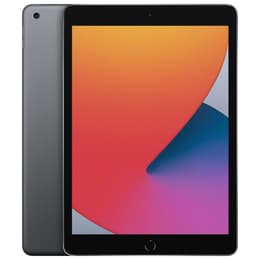
iPad 8 (2020, A12 series)
Starting at

Refurbished price:$113.00

Versus $329.00 new

See options
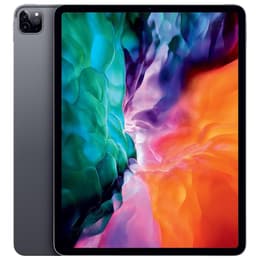
iPad Pro (2020, A12 series)
Starting at

Refurbished price:$370.99

Versus $899.00 new

See options

Ratings

The iPad (8th generation), released in September 2020, and the iPad Pro (2020 models), launched in March 2020, represent distinct tiers within Apple's tablet lineup from the same year. While both devices operate on iPadOS and offer a versatile tablet experience, the iPad Pro is designed for more demanding tasks and creative professionals, featuring a more advanced display, a sophisticated camera system, and a more powerful processor variant. The standard iPad (8th generation) provides a solid foundation for everyday use, learning, and entertainment.

Scores

Durability

Evaluating the long-term usability of these tablets involves considering their release timelines, software support, and physical design.

  • Release Timeline: The iPad Pro 2020 models were released in March 2020, preceding the iPad (8th generation) which arrived in September 2020. This six-month difference means the iPad Pro will likely receive major iPadOS updates for a slightly shorter period than the iPad (8th generation).
  • Software Longevity: Both devices launched with iPadOS 14 or earlier versions and are capable of running current iPadOS versions. Apple typically provides 5-6 years of major software updates for its iPads, suggesting both models still have several years of support remaining. Users can expect consistent performance and access to new features for the foreseeable future.
  • Repairability and Build: Both iPads feature an aluminum back and glass front. The iPad (8th generation) maintains a design with larger bezels and a Home button, while the iPad Pro 2020 features a more modern, all-screen design with Face ID. While specific repairability scores can vary, both are designed with Apple's standard construction, and refurbished options offer a quality-assured alternative for extended use.

Release Year

2020

2020

Last OS Compatibility

Yes

Yes

OS

iPadOS

iPadOS

Maximum Operating System supported

iPadOS 18

iPadOS 18

Performance

The processing capabilities and overall responsiveness differ between these two 2020 iPad models, impacting how they handle various applications and tasks.

  • Processing Power: The iPad Pro 2020 is equipped with a more advanced processor variant, which includes additional graphics cores compared to the standard iPad (8th generation)'s processor. This translates to smoother performance in graphically intensive applications, complex video editing, and advanced augmented reality experiences. The iPad (8th generation) offers a significant performance boost over its predecessor, handling everyday tasks, web browsing, and most games with ease.
  • Multitasking and Responsiveness: The iPad Pro 2020 typically features more RAM (6GB across all configurations) compared to the iPad (8th generation)'s 3GB. This difference allows the iPad Pro to keep more applications active in memory, resulting in a more fluid multitasking experience and quicker switching between demanding apps without needing to reload content.
  • Battery Behavior: Both devices are designed to offer up to 10 hours of web surfing or video playback on Wi-Fi. The iPad Pro models, particularly the 12.9-inch version, have larger battery capacities to power their more advanced displays and processors. Real-world battery life can vary based on usage patterns, with heavy users potentially noticing more frequent charging on the standard iPad when running intensive applications.

Memory (GB)

3 GB

6 GB

Processor

Apple A12 Bionic

Apple A12Z Bionic

Screen quality

The display is a primary differentiator, offering distinct visual experiences tailored to different user needs.

  • Display Technology and Clarity: The iPad (8th generation) features a 10.2-inch Retina IPS LCD display with a resolution of 2160x1620 pixels, providing clear visuals for general use. The iPad Pro 2020 models come with Liquid Retina IPS LCD displays, available in 11-inch (2388x1668 pixels) and 12.9-inch (2732x2048 pixels) sizes, offering similar pixel density but with additional advanced features.
  • Advanced Display Features: The iPad Pro 2020 includes ProMotion technology, enabling an adaptive refresh rate up to 120Hz for smoother scrolling and more responsive interactions, a feature absent on the 60Hz iPad (8th generation). The Pro models also boast Wide Color (P3) support for more vibrant and accurate colors, True Tone for automatic white balance adjustment, and an anti-reflective coating, enhancing the viewing experience, especially for creative work. The iPad (8th generation) display is not fully laminated, which can result in a slight gap between the glass and the display panel.
  • Brightness: The iPad Pro 2020 offers a higher typical brightness of 600 nits, compared to the iPad (8th generation)'s 500 nits. This increased brightness on the Pro models can improve visibility in brightly lit environments or outdoors.

Resolution

2160 x 1620

2388 x 1668

True Tone

No

Yes

Pro-Motion

No

Yes

Screen type

Retina display

Liquid Retina display

Pixel density

264ppp

264ppp

Brightness

500 nits brightness

600 nits brightness max

Sound quality

Speakers

Stereo speakers

Four speaker audio

Audiovisual

The camera systems on these two iPads cater to different levels of photographic and video needs.

  • Rear Camera Capabilities: The iPad (8th generation) features a single 8MP wide-angle rear camera capable of recording 1080p HD video at 30 frames per second. The iPad Pro 2020 significantly upgrades this with a dual-camera system, including a 12MP wide-angle lens and a 10MP ultra-wide-angle lens, along with a LiDAR Scanner. This Pro setup allows for 4K video recording at up to 60 frames per second and offers enhanced augmented reality experiences due to the LiDAR Scanner.
  • Front Camera and Video Calls: For video calls and selfies, the iPad (8th generation) has a 1.2MP FaceTime HD front camera that records 720p HD video. The iPad Pro 2020 features a 7MP TrueDepth front camera, enabling Face ID for secure authentication and supporting 1080p HD video recording.
  • Audio Experience: The iPad (8th generation) includes stereo speakers. The iPad Pro 2020 enhances the audio experience with a four-speaker audio system, providing a more immersive sound for media consumption and video conferencing. Both models feature dual microphones for clear audio recording and calls.

Miscellaneous

Beyond core performance and display, several practical features distinguish these two iPad models.

  • Connectivity Standards: Both iPads support Wi-Fi (802.11ac) and Bluetooth 4.2 on the iPad (8th generation). The iPad Pro 2020 offers more advanced connectivity with Wi-Fi 6 (802.11ax) and Bluetooth 5.0, providing potentially faster wireless speeds and improved range with compatible accessories. Both are available in Wi-Fi only and Wi-Fi + Cellular configurations, with the cellular models supporting LTE.
  • Ports and Accessories: The iPad (8th generation) utilizes a Lightning connector for charging and data transfer, and retains a 3.5mm headphone jack. It supports the 1st generation Apple Pencil and the Smart Keyboard. In contrast, the iPad Pro 2020 features a versatile USB-C port, allowing for connection to a wider range of peripherals, external displays, and faster data transfer. It supports the 2nd generation Apple Pencil, which attaches magnetically and charges wirelessly, and is compatible with the Magic Keyboard with a built-in trackpad.
  • Biometric Security and Design: The iPad (8th generation) uses Touch ID integrated into the Home button for secure authentication. The iPad Pro 2020 employs Face ID, using its TrueDepth camera system for facial recognition. The Pro models also feature a thinner design and come in 11-inch and 12.9-inch screen sizes, offering a larger display area relative to their body size compared to the 10.2-inch iPad (8th generation).

Weight

17 oz

16 oz

Width

6.8 in

7 in

Height

9.8 in

9.7 in

Depth

0.2 in

0.2 in

Screen size (inches)

10.2

11

Network

Wi-Fi

Wi-Fi

Carrier compatibility

Without SIM Port

Without SIM Port

Wi-Fi technology

Wi-Fi 6 802.11a/b/g/n/ac

Wi-Fi 6 802.11ax

Bluetooth Version

Bluetooth 4.2

Bluetooth 5.0

Face ID

No

Yes

Touch ID

Yes

No

Connector

Lightning connector

USB Type-C

User feedback for the iPad (8th generation) often highlights its strong performance for its category, making it a reliable device for general productivity, media consumption, and educational purposes. Common praise points include its all-day battery life and the significant performance upgrade over previous entry-level models. Criticisms frequently mention its dated design with large bezels, the lower-resolution front camera, and the 60Hz display, which some users find less fluid compared to more modern tablets.

For the iPad Pro 2020, users generally commend its powerful processing capabilities, the vibrant and smooth Liquid Retina display with ProMotion, and the versatile camera system with the LiDAR Scanner for augmented reality. The introduction of USB-C and support for the 2nd generation Apple Pencil and Magic Keyboard are also frequently praised for enhancing its professional utility. Some users note that while the camera system is advanced for a tablet, the ergonomics of using a large tablet for photography can be awkward. Additionally, some power users still find iPadOS, despite its advancements, to have limitations compared to a full desktop operating system for certain multi-application workflows.

Users prioritizing a cost-effective tablet for everyday tasks, web browsing, streaming, and light productivity will find the iPad (8th generation) well-suited to their needs. Its compatibility with the 1st generation Apple Pencil and Smart Keyboard makes it a capable device for students or those needing basic note-taking and typing functionalities. Conversely, users who require a more powerful device for creative work, advanced multitasking, graphic design, video editing, or immersive augmented reality applications will lean towards the iPad Pro 2020. Its superior display, camera system, and USB-C connectivity offer a more professional-grade experience. Both models are available as quality-assured refurbished options, providing an eco-friendly alternative for consumers.


See all articles

Our recent comparisons