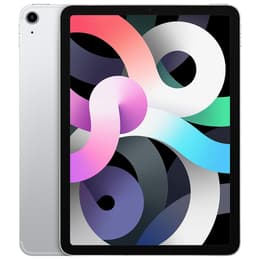
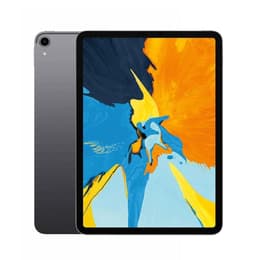
iPad Air 4 (2020, A14 series) vs iPad Pro (2018, A12 series)

iPad Air 4 (2020, A14 series)
Starting at

Refurbished price:$235.95

Versus $729.00 new

See options
iPad Pro (2018, A12 series)
Starting at

Refurbished price:$269.00

Versus $949.00 new

See options

Ratings

The iPad Air 2020 (4th generation) and the iPad Pro 2018 (3rd generation) are both tablets from Apple, released in 2020 and 2018, respectively. While both devices offer a premium tablet experience running on iPadOS, they present distinct features that cater to different user priorities. Key differentiators include their display technology, biometric authentication methods, and internal processing capabilities, despite both running on Apple's iPadOS.

Scores

Durability

When considering the practical lifespan of these tablets, several factors come into play, including their release timeline, software support, and overall build quality.

  • Release Timeline: The iPad Air 2020 was released two years after the iPad Pro 2018. This difference in launch date typically translates to a longer period of official software updates and security patches for the newer device.
  • OS Support: Apple generally provides iPadOS updates for approximately 5-7 years for its devices. The iPad Air 2020, with its A14 Bionic chip, is expected to receive major iPadOS updates for a slightly longer duration than the iPad Pro 2018, which features the A12X Bionic chip. Users of the iPad Pro 2018 have reported it still performs well in 2025 and supports iPadOS 26, but future major OS updates are less certain.
  • Durability and Repairability: Both models feature an aluminum back and glass front, offering a similar level of physical durability. Repairability scores for iPads are generally moderate, meaning components can be replaced, but often require specialized tools and expertise.

Release Year

2020

2018

Last OS Compatibility

Yes

Yes

OS

iPadOS

iPadOS

Maximum Operating System supported

iPadOS 18

iPadOS 18

Performance

The performance of a tablet is crucial for handling demanding applications, multitasking, and gaming. Both the iPad Air 2020 and iPad Pro 2018 deliver robust performance, though with different underlying architectures.

  • Processor Capabilities: The iPad Air 2020 is equipped with a newer generation processor, while the iPad Pro 2018 features a powerful chip from its release year. In real-world usage, both processors handle demanding apps and multitasking smoothly. While the newer chip in the Air 2020 may offer slightly better single-core performance, the Pro 2018's chip, designed for professional tasks, can sometimes show an edge in multi-core performance or sustained workloads due to its architecture.
  • Multitasking and Responsiveness: Both tablets offer a highly responsive user experience, with quick app loading and fluid navigation within iPadOS. The iPad Pro 2018, particularly the 1TB storage variant, came with 6GB of RAM, while other configurations and the iPad Air 2020 typically feature 4GB of RAM. For users who frequently engage in heavy multitasking with many applications open simultaneously, the additional RAM in some iPad Pro 2018 models could offer a marginal advantage.
  • Storage Options: The iPad Air 2020 is available with 64GB or 256GB of internal storage. The iPad Pro 2018 offers a wider range of storage capacities, including 64GB, 256GB, 512GB, and 1TB, providing more flexibility for users with extensive storage needs.

Memory (GB)

4 GB

4 GB

Processor

Apple A14 Bionic

Apple A12X Bionic

Screen quality

The display is a primary interface for any tablet, and both devices offer high-quality viewing experiences with some notable distinctions.

  • Display Technology and Resolution: Both the iPad Air 2020 and iPad Pro 2018 feature Liquid Retina IPS LCD displays, known for their accurate color reproduction and wide viewing angles. The iPad Air 2020 has a 10.9-inch display with a resolution of 2360 x 1640 pixels, while the 11-inch iPad Pro 2018 offers a slightly larger screen at 2388 x 1668 pixels. Both displays support True Tone technology, which adjusts the white balance to match ambient light, and P3 wide color for vibrant visuals.
  • Refresh Rate and Brightness: A significant difference lies in the refresh rate. The iPad Air 2020 features a standard 60Hz refresh rate. In contrast, the iPad Pro 2018 includes ProMotion technology, which allows for an adaptive refresh rate up to 120Hz. This results in smoother scrolling, more fluid motion, and a more responsive feel, particularly noticeable during fast-paced content or when using the Apple Pencil. The iPad Pro 2018 also boasts a higher peak brightness of 600 nits compared to the iPad Air 2020's 500 nits, which can improve visibility in bright environments.
  • Viewing Experience: While the iPad Air 2020's display is clear and bright, the ProMotion display of the iPad Pro 2018 offers a perceptibly smoother visual experience, especially for tasks involving rapid movement or drawing.

Resolution

2360 x 1640

2388 x 1668

True Tone

Yes

Yes

Pro-Motion

No

Yes

Screen type

Liquid Retina display

Liquid Retina display

Pixel density

264ppp

264ppp

Brightness

500 nits brightness

600 nits brightness

Sound quality

Speakers

Stereo speakers

Four speaker audio

Audiovisual

While tablets are not typically primary photography devices, their camera systems are important for video calls, document scanning, and casual photography. Both models offer capable camera setups.

  • Rear Camera System: Both the iPad Air 2020 and the iPad Pro 2018 feature a 12-megapixel wide-angle rear camera with an f/1.8 aperture. This camera is capable of recording 4K video at various frame rates, providing good quality for everyday photos and videos.
  • Front Camera System: The iPad Air 2020 has a 7-megapixel front-facing FaceTime HD camera. The iPad Pro 2018 also features a 7-megapixel front-facing TrueDepth camera, which supports Portrait Mode, Portrait Lighting, and Smart HDR, and is designed for Face ID authentication. This means the iPad Pro 2018 offers more advanced front-camera features, including the ability to take Portrait mode selfies.
  • Audio Quality: The iPad Air 2020 features stereo speakers, providing a decent audio experience for media consumption. The iPad Pro 2018, however, is equipped with a quad-speaker audio system, offering a richer, more immersive sound experience with better bass and overall clarity. Both devices include good microphones for clear audio during video calls.

Miscellaneous

Beyond core performance and display, several other features contribute to the overall user experience and utility of these tablets.

  • Connectivity: The iPad Air 2020 supports Wi-Fi 6 (802.11ax), offering faster wireless speeds and improved performance in congested networks compared to the iPad Pro 2018's Wi-Fi 5 (802.11ac). Both models include Bluetooth 5.0 for connecting accessories. Cellular models for both offer Gigabit-class LTE.
  • Ports and Biometrics: Both devices have a versatile USB-C port for charging, data transfer, and connecting external accessories. A key difference lies in biometric authentication: the iPad Air 2020 integrates Touch ID into the top button, offering a convenient and secure way to unlock the device and authorize purchases. The iPad Pro 2018 utilizes Face ID for facial recognition, providing a hands-free unlocking experience.
  • Design and Accessories: Both tablets feature a modern, flat-edge design. The 10.9-inch iPad Air 2020 measures 247.6 x 178.5 x 6.1 mm and weighs approximately 458 grams. The 11-inch iPad Pro 2018 is slightly thinner at 247.6 x 178.5 x 5.9 mm and weighs around 468 grams. Both devices support the second-generation Apple Pencil and the Smart Keyboard Folio, enhancing their utility for creative and productivity tasks.

Weight

16 oz

16 oz

Width

7 in

7 in

Height

9.7 in

9.7 in

Depth

0.2 in

0.2 in

Screen size (inches)

10.9

11

Network

Wi-Fi + 4G

Wi-Fi

Carrier compatibility

Unlocked

Without SIM Port

Wi-Fi technology

Wi-Fi 6 802.11ax

Wi-Fi 6 802.11a/b/g/n/ac

Bluetooth Version

Bluetooth 5.0

Bluetooth 5.0

Face ID

No

Yes

Touch ID

Yes

No

Connector

USB Type-C

USB Type-C

The iPad Air 2020 and iPad Pro 2018 each offer compelling features, making the choice dependent on individual user needs and priorities. Users frequently praise the iPad Air 2020 for its modern design, the convenience of Touch ID integrated into the power button, and its capable performance for a wide range of tasks. Some common feedback notes its lack of a ProMotion display as a point of differentiation from the Pro models.

On the other hand, the iPad Pro 2018 is often lauded for its ProMotion 120Hz display, which provides a noticeably smoother visual experience, its Face ID authentication, and its superior quad-speaker audio system. Criticisms sometimes revolve around its older release date compared to newer models, which can impact long-term software support expectations.

Users prioritizing a newer device with slightly longer expected software support, the convenience of Touch ID, and Wi-Fi 6 connectivity for modern networks may find the iPad Air 2020 well-suited to their needs. It offers a strong balance of features for general productivity, media consumption, and creative work. Conversely, users who value the fluid visual experience of a 120Hz ProMotion display, the hands-free security of Face ID, richer audio, and potentially higher maximum storage options might lean towards the iPad Pro 2018, even with its earlier release. Both models remain highly capable tablets, and considering a quality-assured refurbished option for either can be an eco-friendly alternative to purchasing new.


See all articles

Our recent comparisons