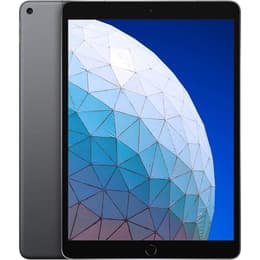

Galaxy Tab A7 Lite (8.7", 2021) vs iPad Air 3 (2019, A12 series)

Galaxy Tab A7 Lite (8.7", 2021)
Starting at

Refurbished price:$71.00

Versus $219.00 new

See options
iPad Air 3 (2019, A12 series)
Starting at

Refurbished price:$134.00

Versus $499.00 new

See options

Ratings

The Samsung Galaxy Tab A7 Lite, released in mid-2021, and the Apple iPad Air (3rd Generation), launched in early 2019, represent two distinct approaches to tablet computing. While both devices offer portable digital experiences, they cater to different user needs through their respective operating systems, Android and iPadOS, and their core hardware capabilities. The primary differentiators lie in their screen size, overall performance, and ecosystem integration.

Scores

Durability

When considering the long-term usability of a tablet, software support and physical construction are key factors. The Galaxy Tab A7 Lite and the iPad Air (2019) offer different trajectories in these areas.

  • Software Longevity: The Galaxy Tab A7 Lite, launched with Android 11, received major OS upgrades up to Android 14 (One UI 6.1), with software support concluding around June 2025. The iPad Air (2019), initially running iOS 12.2, has received updates to iPadOS 17 and is expected to continue receiving software support for a longer duration, typical of Apple devices.
  • Build Quality: The Galaxy Tab A7 Lite features a glass front with an aluminum back and frame, providing a sturdy feel for its category. The iPad Air (2019) boasts an aluminum unibody construction, which contributes to its rigid and premium feel.
  • Practical Lifespan: Users prioritizing the latest software features and security updates will find the iPad Air (2019) offers a longer runway for official support. The Galaxy Tab A7 Lite, while newer in release, has reached the end of its major software update cycle, meaning future compatibility with new applications or features might be limited sooner.

Release Year

2021

2019

Last OS Compatibility

Yes

Yes

OS

Android

iPadOS

Performance

The performance of a tablet directly impacts its responsiveness and ability to handle various applications, from casual browsing to more demanding tasks. The Galaxy Tab A7 Lite and the iPad Air (2019) exhibit notable differences in this aspect.

  • Processing Power: The Galaxy Tab A7 Lite is equipped with a MediaTek Helio P22T processor and comes with 3GB or 4GB of RAM. This configuration is designed for basic tasks such as web browsing, video streaming, and light applications. Users may experience some slowdown when running multiple applications simultaneously or playing graphically intensive games. In contrast, the iPad Air (2019) features the Apple A12 Bionic chip paired with 3GB of RAM, delivering significantly more processing power. This allows for smoother multitasking, faster app loading, and a more fluid experience with demanding applications, including advanced games and creative software.
  • Storage Options: The Galaxy Tab A7 Lite offers internal storage options of 32GB or 64GB, with the flexibility to expand storage up to 1TB using a microSD card. The iPad Air (2019) is available with 64GB or 256GB of internal storage, but it does not offer expandable storage.
  • Real-world Responsiveness: User experiences indicate that the Galaxy Tab A7 Lite is suitable for casual use, but can show sluggishness with heavy multitasking. The iPad Air (2019) is generally praised for its consistent and strong performance, making it well-suited for users who require a device that can handle more intensive workloads and provide a consistently responsive interface.

Memory (GB)

3 GB

3 GB

Screen quality

The display is a central component of any tablet, influencing everything from media consumption to productivity. The screen technologies and specifications of these two tablets present clear distinctions.

  • Display Technology and Resolution: The Galaxy Tab A7 Lite features an 8.7-inch TFT LCD with a resolution of 1340 x 800 pixels, resulting in a pixel density of approximately 179 pixels per inch (ppi). This resolution is adequate for general viewing but may show less sharpness for small text or detailed images. The iPad Air (2019) comes with a larger 10.5-inch Retina IPS LCD, offering a higher resolution of 2224 x 1668 pixels and a pixel density of 264 ppi. This higher pixel density provides a clearer and more detailed visual experience.
  • Brightness and Clarity: The Galaxy Tab A7 Lite's display reaches a maximum brightness of around 315 to 332 nits, which can be sufficient for indoor use but may struggle with visibility in bright outdoor conditions. The iPad Air (2019) offers a brighter display, typically ranging from 425 to 500 nits, along with a fully laminated screen, True Tone technology for adaptive white balance, and a wide color (P3) gamut, enhancing color accuracy and outdoor readability.
  • Viewing Experience: While the Galaxy Tab A7 Lite provides a compact screen suitable for portable media consumption, some users have noted blurring in dark or fast-moving scenes due to its lower pixel density. The iPad Air (2019) delivers a more vibrant and immersive viewing experience with its higher resolution, better color reproduction, and superior brightness, making it well-suited for detailed content creation and high-quality media playback.

Resolution

800 x 1340

2224 x 1668

Screen type

TFT LCD

Retina display

Pixel density

180ppp

264ppp

Audiovisual

Tablet cameras are often used for video calls, document scanning, and occasional photography. The camera systems and audio capabilities of the Galaxy Tab A7 Lite and the iPad Air (2019) reflect their intended uses.

  • Camera Performance: The Galaxy Tab A7 Lite includes an 8-megapixel autofocus rear camera and a 2-megapixel front camera. User feedback suggests these cameras are functional for video calls and basic photo capture, but images can appear washed out, muted, or noisy, particularly in less-than-ideal lighting conditions. Both front and rear cameras support 1080p video recording at 30 frames per second. The iPad Air (2019) also features an 8-megapixel autofocus rear camera, which provides reliably decent images, though some users note noise. Its 7-megapixel front camera offers a significant upgrade for video conferencing and selfies, delivering clearer images. Video recording on the iPad Air (2019) is also 1080p at 30 frames per second.
  • Audio Experience: The Galaxy Tab A7 Lite is equipped with dual stereo speakers that support Dolby Atmos, offering an enhanced audio experience for media consumption. The iPad Air (2019) also features dual speakers, which are generally considered decent for media playback, providing clear sound. Both tablets retain a 3.5mm headphone jack, allowing for wired audio connections.
  • Practical Use: For casual video calls and basic scanning, both tablets are capable. However, for users who frequently engage in video conferencing or require higher quality front-facing camera performance, the iPad Air (2019) offers a more refined experience. Neither tablet is designed to replace a dedicated smartphone camera for high-quality photography.

Miscellaneous

Beyond core specifications, several practical elements contribute to the overall user experience, including connectivity, physical design, and additional features.

  • Connectivity and Ports: Both the Galaxy Tab A7 Lite and the iPad Air (2019) support Wi-Fi 5 (802.11ac) and Bluetooth 5.0, with optional LTE models available for mobile data connectivity. A key difference lies in their charging and data transfer ports: the Galaxy Tab A7 Lite uses a USB-C port, offering broad compatibility with modern accessories. The iPad Air (2019) utilizes Apple's proprietary Lightning port.
  • Physical Design and Handling: The Galaxy Tab A7 Lite is a more compact and lighter device, with an 8.7-inch display, weighing approximately 366g to 371g, and measuring 8.0mm thick. This makes it highly portable and comfortable for one-handed use. The iPad Air (2019) is larger and slightly heavier, featuring a 10.5-inch display, weighing around 456g to 464g, and measuring 6.1mm thick. Its larger screen offers more viewing area, while its thinner profile contributes to a sleek design.
  • Unique Features: The iPad Air (2019) includes Touch ID for secure authentication and supports the first-generation Apple Pencil and Apple Smart Keyboard, enhancing its utility for note-taking, drawing, and light productivity tasks. The Galaxy Tab A7 Lite includes standard sensors like an accelerometer, compass, and light sensor.

Weight

12 oz

16 oz

Width

4,91 in

7 in

Height

8,37 in

9.7 in

Depth

0,31 in

0.2 in

Screen size (inches)

8.7

10.5

Network

Wi-Fi + 4G

Wi-Fi

Carrier compatibility

Unlocked

Without SIM Port

The Samsung Galaxy Tab A7 Lite (2021) and the Apple iPad Air (2019) cater to different segments of the tablet market, each with its own set of strengths and limitations as observed by users. The Galaxy Tab A7 Lite is frequently praised for its compact size, making it highly portable and easy to handle for media consumption on the go. Users appreciate its dual speakers and the inclusion of a headphone jack. However, common criticisms revolve around its modest performance, which can lead to slowdowns with demanding applications, and its camera quality, which is generally considered basic.

The iPad Air (2019), on the other hand, receives consistent acclaim for its robust performance, vibrant display, and longer software support. Users often highlight its capability for more intensive tasks, its compatibility with the Apple Pencil and Smart Keyboard for productivity, and its overall polished user experience within the Apple ecosystem. Criticisms sometimes point to its Lightning port instead of USB-C, and its camera performance, while better than the Tab A7 Lite, is not considered a standout feature compared to modern smartphones.

Users prioritizing extreme portability, a smaller form factor, and basic media consumption will find the Galaxy Tab A7 Lite well-suited to their needs. It serves as a capable device for casual browsing, video watching, and light gaming. Conversely, users who require a tablet for more demanding applications, creative work, or a more integrated ecosystem experience, along with a superior display, will likely lean towards the iPad Air (2019). Its support for accessories like the Apple Pencil also makes it a strong contender for students or professionals who engage in note-taking or digital art.

Both tablets offer reliable functionality within their respective design philosophies. For those seeking a quality-assured refurbished option, both models are available, providing an eco-friendly alternative to purchasing new devices.


See all articles

Our recent comparisons