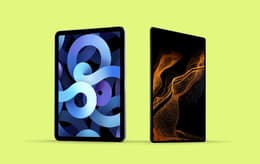
Galaxy Tab S8 (11.0", 2022) vs iPad 11 (2025, A16 series)

Galaxy Tab S8 (11.0", 2022)
Starting at

Refurbished price:$309.00

Versus $655.00 new

See options
iPad 11 (2025, A16 series)
Starting at

Refurbished price:$309.00

Versus $349.00 new

See options

Ratings

The Samsung Galaxy Tab S8, released in 2022, and the Apple iPad (A16) from 2025, represent distinct approaches to the tablet experience, operating on Android and iPadOS respectively. While both offer robust platforms for productivity and entertainment, they cater to different user preferences through their hardware and software ecosystems. The primary distinctions lie in their display technology, included accessories, and the longevity of their software support, influencing how users interact with their devices daily.

Scores

Durability

When considering the long-term usability of a tablet, software support and physical durability are key factors. The Galaxy Tab S8, launched in 2022, and the iPad (A16), released in 2025, offer different timelines for updates and expected practical lifespans.

  • Software Longevity: The Galaxy Tab S8 was promised up to four major Android OS updates and five years of security updates, meaning OS updates are expected until 2026 and security patches until 2027. [9, 14, 16, 28, 32] The iPad (A16), being a 2025 model, benefits from Apple's typically longer software support, often extending to 5-7 years for major iPadOS updates and even longer for security patches, potentially offering a longer period of up-to-date functionality. [19, 24, 25, 26, 33, 35]
  • Repairability and Build: Both tablets feature aluminum bodies, contributing to a solid feel and a degree of durability. The practical lifespan for both devices can extend beyond official software support, especially for users who do not require the latest features or who utilize quality-assured refurbished options as a sustainable choice.
  • Release Timeline: The iPad (A16) has a significant advantage in its release year, being three years newer than the Galaxy Tab S8. This directly translates to a longer period before it reaches its end-of-life for software updates and potentially a longer period of optimal performance with current applications.

Release Year

2022

2025

Last OS Compatibility

Yes

Yes

OS

Android

iPadOS

Performance

The performance of a tablet is central to its user experience, affecting everything from app responsiveness to demanding creative tasks. The Galaxy Tab S8 and the iPad (A16) utilize different internal architectures that influence their capabilities.

  • Processing Power: The Galaxy Tab S8 is equipped with a powerful processor from its release year, capable of handling a wide range of applications and multitasking with ease. It provides smooth operation for everyday tasks, gaming, and creative work, even with multiple applications running simultaneously. [1, 3, 22] The iPad (A16), featuring a more recent generation of Apple's custom silicon, offers enhanced performance, particularly noticeable in graphic-intensive applications, complex video editing, and advanced multitasking scenarios. [5, 13, 30, 36]
  • Multitasking and Responsiveness: The Galaxy Tab S8 typically comes with 8GB or 12GB of RAM, allowing for efficient multitasking and quick switching between applications. [2, 10, 18] The iPad (A16) generally includes 6GB of RAM, which, combined with iPadOS's optimization, ensures a fluid and responsive user experience, even when managing several demanding apps concurrently. [6, 15, 19, 21]
  • Storage Options: The Galaxy Tab S8 offers 128GB or 256GB of internal storage, with the added flexibility of expanding storage via a microSD card up to 1TB. [2, 8, 10, 18] The iPad (A16) provides storage configurations starting at 128GB, with options extending to 256GB and 512GB, but without expandable storage. [4, 5, 13, 15, 19, 21, 29, 30]

Memory (GB)

8 GB

6 GB

Screen quality

The display is a primary interface for any tablet, and both the Galaxy Tab S8 and the iPad (A16) offer vibrant viewing experiences, though with differing technologies and specifications.

  • Display Technology and Resolution: The Galaxy Tab S8 features an 11-inch LTPS TFT LCD display with a resolution of 2560x1600 pixels, resulting in a pixel density of 276 ppi. [1, 2, 7, 8, 10, 18, 23] The iPad (A16) comes with a 10.9-inch Liquid Retina IPS LCD display, offering a resolution of 2360x1640 pixels at 264 ppi. [4, 5, 6, 13, 15, 19, 29, 30, 36, 40] Both displays provide clear and detailed visuals for reading, browsing, and media consumption.
  • Refresh Rate and Brightness: A notable difference is the refresh rate; the Galaxy Tab S8 boasts a 120Hz adaptive refresh rate, which contributes to smoother scrolling and more fluid animations. [1, 7, 8, 10, 18, 23] The iPad (A16) maintains a standard 60Hz refresh rate. [6, 30, 36] For brightness, the iPad (A16) offers up to 500 nits, ensuring good visibility in various lighting conditions, including outdoor use. [4, 13, 29, 36, 40] The Galaxy Tab S8 also provides a bright and vivid display, suitable for diverse environments. [1, 8]
  • Viewing Experience: While the Galaxy Tab S8's higher refresh rate offers a perceptibly smoother visual experience, the iPad (A16)'s Liquid Retina display with True Tone technology adjusts color temperature to ambient light, aiming for a more natural viewing experience. [4, 13, 29, 36, 40]

Resolution

1600 x 2560

2360 x 1640

Screen type

TFT LCD

Liquid Retina display

Pixel density

280ppp

264ppp

Audiovisual

Tablet cameras are increasingly important for video calls, document scanning, and casual photography. Both the Galaxy Tab S8 and the iPad (A16) are equipped with capable camera systems tailored for these uses.

  • Rear Camera System: The Galaxy Tab S8 features a dual-camera setup on the rear, consisting of a 13MP wide-angle lens and a 6MP ultra-wide-angle lens, capable of recording 4K video. [1, 2, 10, 11, 12, 17, 18] This configuration allows for more versatile photography, including wider landscape shots. The iPad (A16) has a single 12MP wide-angle rear camera with an f/1.8 aperture, also supporting 4K video recording. [4, 5, 13, 15, 19, 31]
  • Front Camera and Video Conferencing: For front-facing interactions, both tablets excel. The Galaxy Tab S8 includes a 12MP ultra-wide front camera, which is well-suited for video conferencing and selfies, and can record 4K video. [1, 2, 3, 10, 11, 12, 17] The iPad (A16) also features a 12MP ultra-wide front camera with an f/2.4 aperture and supports Center Stage, which automatically keeps the user in frame during video calls, recording 1080p video. [4, 5, 13, 15, 19, 27, 31, 39]
  • Audio Quality: Both devices offer stereo speakers for media consumption. The Galaxy Tab S8 includes quad speakers with Dolby Atmos support, providing a rich audio experience. [12] The iPad (A16) also delivers good stereo sound, suitable for video playback and calls. [15, 36, 39]

Miscellaneous

Beyond core specifications, several practical elements contribute to the overall user experience, including connectivity, physical design, and unique features.

  • Connectivity and Ports: The Galaxy Tab S8 supports Wi-Fi 6E and Bluetooth 5.2, offering fast wireless connections. It features a USB-C 3.2 port for data transfer and charging. [3, 7, 10, 18] The iPad (A16) supports Wi-Fi 6 (802.11ax) with 2x2 MIMO and Bluetooth 5.3, providing reliable wireless performance. It also includes a USB-C port. [4, 13, 15, 19, 29] Both offer optional 5G connectivity for mobile data. [3, 13, 15, 19, 29]
  • Stylus and Accessories: A significant differentiator is the included S Pen with the Galaxy Tab S8, offering a natural writing and drawing experience right out of the box. [1, 3, 8, 10, 22] The iPad (A16) supports the Apple Pencil (USB-C) and the 1st generation Apple Pencil, which are sold separately. [4, 13, 15, 19, 36]
  • Design and Biometrics: The Galaxy Tab S8 weighs approximately 503 grams and measures 6.3mm thick, featuring a fingerprint scanner on the power key. [2, 3, 7, 18, 23] The iPad (A16) weighs around 477 grams and is 7mm thick, also incorporating Touch ID into its top button for secure authentication. [4, 15, 19, 29, 36]

Weight

18 oz

1 oz

Screen size (inches)

11.0

11

Network

Wi-Fi

Wi-Fi

Carrier compatibility

Without SIM Port

Without SIM Port

The Samsung Galaxy Tab S8 and the Apple iPad (A16) each present compelling options for tablet users, with distinct strengths that appeal to different priorities. Users often praise the Galaxy Tab S8 for its vibrant 120Hz display and the inclusion of the S Pen, making it a strong contender for those who value a smooth visual experience and out-of-the-box stylus functionality. [1, 8, 22] Its expandable storage is also a frequent highlight for users who need ample space for media and files. [2, 18]

Conversely, the iPad (A16) is often lauded for its robust performance, particularly for demanding applications, and the extensive ecosystem of apps optimized for iPadOS. [5, 13, 30, 36] Its longer software update cycle is a common point of appreciation, suggesting a longer period of receiving the latest features and security enhancements. [19, 24, 26]

For users prioritizing a high refresh rate display and an included stylus for creative or note-taking tasks, the Galaxy Tab S8 may be a more suitable choice. Its Android operating system also offers greater customization and file management flexibility. On the other hand, individuals who value a longer software support timeline, a highly optimized app ecosystem, and consistent performance for intensive tasks may find the iPad (A16) better aligns with their needs. Both devices are available as quality-assured refurbished options, providing an eco-friendly alternative for consumers.


See all articles

Our recent comparisons