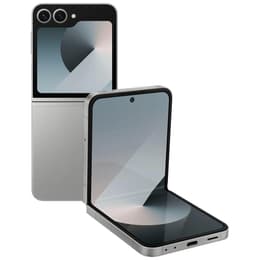


Galaxy Z Flip6 • Unlocked vs Google Pixel 9 • Unlocked

Galaxy Z Flip6 • Unlocked
Starting at

Refurbished price:$339.99

Versus $1,099.00 new

See options
Google Pixel 9 • Unlocked
Starting at

Refurbished price:$379.00

Versus $799.00 new

See options

Ratings

The Samsung Galaxy Z Flip6, released in July 2024, and the Google Pixel 9, launched in August 2024, represent distinct approaches to the modern smartphone experience. While the Galaxy Z Flip6 offers a unique foldable clamshell design, the Google Pixel 9 maintains a traditional slab form factor. These devices cater to different user preferences, primarily differentiating themselves through their physical design, software philosophies, and core processing capabilities.

Scores

Durability

When considering the long-term usability of a smartphone, software support and physical resilience are key factors. Both the Galaxy Z Flip6 and the Google Pixel 9 offer substantial commitments to software longevity, aiming to provide users with extended device lifespans.

  • Software Updates: Both the Galaxy Z Flip6 and the Google Pixel 9 are designed for extended use, with both manufacturers committing to seven years of operating system and security updates from their respective release dates. This ensures that users of either device will receive the latest features and security patches for a considerable period.
  • Physical Durability: The Galaxy Z Flip6 features an enhanced armored aluminum frame and an IP48 rating, indicating resistance to water and dust particles up to 1mm. Its inner foldable screen, while protected by a plastic layer, shows scratches at level 2 on the Mohs hardness scale, while the outer cover screen, protected by Gorilla Glass Victus 2, resists scratches up to level 6. The device has demonstrated resilience in bend and sand tests. The Google Pixel 9, a traditional smartphone, boasts an IP68 rating for comprehensive dust and water resistance and utilizes Gorilla Glass Victus 2 on both its front and back. It typically shows scratches at level 6 on the Mohs scale, with deeper grooves at level 7, and has also proven robust in bend tests.
  • Practical Lifespan: The commitment to extensive software updates for both models means that their practical lifespan will largely depend on the physical condition of the hardware. The unique foldable mechanism of the Z Flip6 introduces specific considerations for hinge longevity and screen care, while the Pixel 9's traditional design offers a more conventional durability profile.

Release Year

2024

2024

Last OS Compatibility

Yes

Yes

OS

Android

Android

Foldable

Yes

No

Performance

The performance of a smartphone is central to its daily operation, influencing everything from app responsiveness to gaming fluidity. The Galaxy Z Flip6 and Google Pixel 9 approach performance with different underlying architectures, leading to distinct user experiences.

  • Processing Power: The Galaxy Z Flip6 is equipped with a current-generation processor designed for high-end performance, ensuring smooth operation across demanding applications and multitasking scenarios. The Google Pixel 9 features a custom-designed processor that emphasizes artificial intelligence and machine learning capabilities, providing responsive performance for everyday tasks and AI-driven features.
  • System Responsiveness and Multitasking: With 12 GB of RAM, the Galaxy Z Flip6 handles multiple applications simultaneously with ease, maintaining fluidity even during intensive use. The Pixel 9 also includes 12 GB of RAM, contributing to its responsive performance and efficient handling of complex applications and AI features. While the Galaxy Z Flip6 generally shows stronger raw benchmark scores, the Pixel 9's processor is optimized for its integrated AI functionalities.
  • Storage and Battery Behavior: The Galaxy Z Flip6 offers storage options of 256 GB or 512 GB, utilizing UFS 4.0 for faster data access. Its 4000 mAh battery can provide up to 48 hours of moderate usage, with some users reporting 6-8 hours of screen-on time. The Pixel 9 comes with 128 GB or 256 GB of storage, using UFS 3.1. It features a larger 4700 mAh battery, designed to last 24 hours or more on a single charge.

Memory (GB)

12 GB

12 GB

Screen quality

The display is a primary interface for smartphone interaction, and both devices offer high-quality visual experiences, albeit with different form factors and display technologies.

  • Display Technology and Clarity: The Galaxy Z Flip6 features a 6.7-inch foldable Dynamic AMOLED 2X main display with a resolution of 2640 x 1080 pixels, offering vibrant colors and deep blacks. Its cover display is a 3.4-inch Super AMOLED screen with a resolution of 748 x 720 pixels. The Google Pixel 9 utilizes a 6.3-inch Actua OLED display with a resolution of 2424 x 1080 pixels, providing clear and sharp visuals.
  • Brightness and Refresh Rate: The main display of the Galaxy Z Flip6 supports an adaptive refresh rate from 1 to 120 Hz, ensuring smooth scrolling and responsive visuals. The Pixel 9's display offers a refresh rate ranging from 60 Hz to 120 Hz for fluid content display. It can reach 1800 nits of HDR brightness, with peak brightness up to 2700 nits in outdoor conditions.
  • Viewing Experience: The Galaxy Z Flip6's foldable design allows for a compact form factor when closed, expanding to a full-sized screen when open, with a significantly less visible crease compared to its predecessor. The Pixel 9 provides a consistent, high-quality viewing experience on its flat display, enhanced by features like Adaptive Touch for improved responsiveness in various conditions.

Resolution

1080 x 2640

1080 x 2424

Screen type

Foldable Dynamic LTPO AMOLED 2X

OLED

Audiovisual

Both the Galaxy Z Flip6 and the Google Pixel 9 offer advanced camera systems, each with strengths tailored to different photography preferences and capabilities.

  • Rear Camera System: The Galaxy Z Flip6 features a dual-camera setup with a 50 MP wide-angle main sensor with optical image stabilization (OIS) and dual pixel PDAF, alongside a 12 MP ultrawide lens. This main sensor is noted for improved low-light performance and dynamic range. The Google Pixel 9 also has a dual-camera system, comprising a 50 MP main sensor with OIS and a 48 MP ultrawide lens that includes macro focus capabilities.
  • Photography Features and Quality: The Galaxy Z Flip6 integrates Galaxy AI features to enhance photography, including improved digital zoom and noise reduction, and offers a FlexCam mode for unique shooting angles using the cover screen. The Pixel 9 is renowned for its computational photography, offering features like Super Res Zoom (up to 8x), Night Sight for low-light, Astrophotography, Portrait Mode, and AI-powered editing tools such as Face Unblur and Macro Focus.
  • Video Recording and Audio: Both devices are capable of recording 4K video at 60 frames per second. The Pixel 9 also includes features like Audio Magic Eraser and various video stabilization modes. While specific microphone and speaker quality details vary, both aim to provide clear audio for calls and media consumption.

Main camera

50 megapixels

50 megapixels

Front camera

10 megapixels

10.5 megapixels

Miscellaneous

Beyond core performance and display, several practical elements contribute to the overall user experience, including connectivity, physical design, and security features.

  • Connectivity and Ports: Both the Galaxy Z Flip6 and the Google Pixel 9 support 5G connectivity for fast mobile data. The Pixel 9 also supports Wi-Fi 6E/7 for advanced wireless networking. Both devices utilize a USB-C port for charging and data transfer, reflecting a modern standard.
  • Physical Design and Handling: The Galaxy Z Flip6's clamshell design allows it to fold into a compact form, making it highly portable and easy to store in smaller pockets. Its dimensions when unfolded are approximately 71.90 x 165.10 x 6.90 mm, and it weighs 187g. The Google Pixel 9, with its traditional slab design, measures around 152.8 x 72.0 x 8.5 mm and weighs 198g, offering a familiar and comfortable grip.
  • Security and Materials: The Galaxy Z Flip6 features an armored aluminum frame and Gorilla Glass Victus 2 on its cover screen, contributing to its robust build. The Pixel 9 incorporates a recycled aluminum frame and Gorilla Glass Victus 2 on both front and back, along with an IP68 rating for enhanced protection. Both devices offer fingerprint recognition for secure unlocking.

Weight

7 oz

7 oz

Screen size (inches)

6.7

6.3

Network

5G

5G

SIM card

Physical SIM + eSIM

Physical SIM + eSIM

Carrier compatibility

Unlocked

Unlocked

Connector

USB-C

USB-C

The Samsung Galaxy Z Flip6 and the Google Pixel 9 cater to distinct user preferences, each excelling in different areas. User feedback for the Galaxy Z Flip6 often praises its innovative foldable design, which offers a large screen experience in a compact form factor, and its improved battery life compared to previous generations. The enhanced main camera and the unique FlexCam features are also frequently highlighted as positive aspects. However, some users note that while durability has improved, the foldable screen still requires a degree of careful handling compared to traditional smartphones. The absence of a telephoto lens is also a common point of discussion.

For the Google Pixel 9, users consistently commend its exceptional camera capabilities, particularly its computational photography features that deliver high-quality images in various conditions, and its unique AI-driven functionalities. The clean Android experience and the commitment to seven years of software updates are also significant advantages for many. Criticisms sometimes revolve around its processor performance, which, while optimized for AI, may not match the raw benchmark scores of some competitors. The base model's storage options are also sometimes mentioned as a limitation.

Users prioritizing a compact and innovative form factor, along with a unique interactive experience, may find the Galaxy Z Flip6 well-suited to their needs. Its ability to fold makes it highly portable, and its improved camera system offers a versatile photography tool. Conversely, individuals who value a traditional smartphone design with a strong emphasis on computational photography, a pure Android experience, and advanced AI features will likely lean towards the Google Pixel 9. Both devices offer a quality-assured refurbished option, providing an eco-friendly alternative for consumers seeking to make informed and sustainable choices.
See all articles

Our recent comparisons