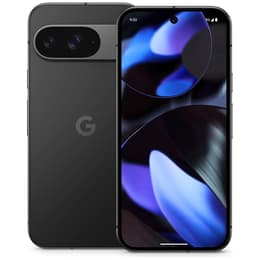

Galaxy Z Fold4 • Unlocked vs Google Pixel 9 • Unlocked

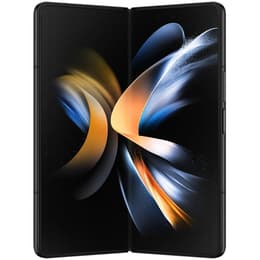
Galaxy Z Fold4 • Unlocked
Starting at

Refurbished price:$431.00

Versus $1,100.00 new

See options
Google Pixel 9 • Unlocked
Starting at

Refurbished price:$379.00

Versus $799.00 new

See options

Ratings

The Samsung Galaxy Z Fold4, released in August 2022, is a foldable smartphone that transforms from a traditional phone form factor into a larger tablet-like display. In contrast, the Google Pixel 9, launched in August 2024, offers a conventional smartphone design. The primary distinctions between these two Android devices lie in their unique form factors and their respective release timelines, which influence their internal components and software support.

Scores

Durability

The expected practical lifespan of a smartphone is significantly influenced by its release date and the manufacturer's commitment to software updates.

  • Release Timeline: The Galaxy Z Fold4 was released in August 2022, making it an older device compared to the Pixel 9, which launched in August 2024. This two-year difference in release impacts the remaining support period for each device.
  • OS Support Duration: The Galaxy Z Fold4 was promised four major Android OS updates and five years of security updates from its release. This means it is expected to receive OS updates until Android 16 (anticipated in 2026) and security patches until August 2027. The Google Pixel 9, however, comes with a commitment of seven years of OS, security, and Pixel Drop updates, extending its support until August 2031.
  • Repairability: The Pixel 9 has received a provisional repairability score of 5 out of 10 from iFixit, noting that while some components are accessible, the battery's strong adhesive can make removal challenging. It also scored 8.7 in France's Repairability Index. Foldable devices like the Z Fold4 generally present more complex repair challenges due to their intricate hinge mechanisms and dual-display design.

Release Year

2022

2024

Last OS Compatibility

Yes

Yes

OS

Android

Android

Foldable

Yes

No

Performance

The performance of these devices is largely determined by their internal processing power and how efficiently they manage tasks.

  • Processor Capabilities: The Galaxy Z Fold4 is equipped with a processor that was a top-tier performer at its 2022 release, capable of handling demanding applications and multitasking smoothly. The Pixel 9 features a newer generation processor, which provides enhanced speed and efficiency for everyday tasks, app loading, and more intensive operations like gaming or advanced on-device AI features.
  • Multitasking and Responsiveness: Both devices offer ample RAM, with the Galaxy Z Fold4 having 12GB and the Pixel 9 also featuring 12GB. The Z Fold4's large internal display is designed for extensive multitasking, allowing users to run multiple applications simultaneously. The Pixel 9's newer processor and optimized software contribute to a highly responsive user experience, ensuring smooth transitions and efficient handling of various applications.
  • Storage Options: The Galaxy Z Fold4 offers a wider range of storage configurations, including 256GB, 512GB, and 1TB options. The Pixel 9 is available with 128GB or 256GB of internal storage.

Memory (GB)

12 GB

12 GB

Screen quality

The visual experience on these smartphones differs significantly due to their distinct display technologies and form factors.

  • Display Technology and Size: The Galaxy Z Fold4 features two Dynamic AMOLED 2X displays: a 7.6-inch foldable inner screen with a resolution of 2176 x 1812 pixels and a 6.2-inch cover screen with a resolution of 2316 x 904 pixels. The Pixel 9 has a single 6.3-inch Actua OLED display with a resolution of 1080 x 2424 pixels. The Z Fold4's larger internal display offers an expansive canvas for productivity and media consumption.
  • Refresh Rate and Brightness: Both devices feature adaptive refresh rates up to 120Hz, providing smooth scrolling and fluid visuals. The Pixel 9's display can reach a peak brightness of up to 2700 nits, offering excellent visibility in bright outdoor conditions. The Z Fold4's displays also offer high brightness levels suitable for various environments.
  • Durability: The Pixel 9's display is protected by Corning Gorilla Glass Victus 2, offering enhanced scratch and drop resistance. The Z Fold4's foldable screen has a different protective layer designed for flexibility, while its cover screen also features durable glass.

Resolution

1812 x 2176

1080 x 2424

Screen type

Foldable Dynamic AMOLED 2X

OLED

Audiovisual

Both smartphones offer capable camera systems, though they approach photography with different hardware configurations and software philosophies.

  • Rear Camera Systems: The Galaxy Z Fold4 features a versatile triple-camera setup on the rear, including a 50MP wide-angle lens with optical image stabilization (OIS), a 12MP ultrawide lens, and a 10MP telephoto lens with 3x optical zoom and OIS. The Pixel 9 comes with a dual-camera system, comprising a 50MP wide-angle lens with OIS and a 48MP ultrawide lens with autofocus and macro capabilities. The Pixel 9 does not include a dedicated telephoto lens.
  • Photography Performance: The Z Fold4's camera system, shared with other flagship devices from its release year, delivers detailed and vibrant images in various lighting conditions, with its telephoto lens providing optical zoom capabilities. The Pixel 9 leverages its advanced computational photography and AI features to produce high-quality images, particularly excelling in low-light scenarios and offering strong overall point-and-shoot performance.
  • Front and Video Capabilities: The Z Fold4 has a 10MP camera on its cover screen and a 4MP under-display camera on its main screen, with video recording up to 8K at 24fps. The Pixel 9 features a 10.5MP front-facing camera with autofocus and supports 4K video recording at up to 60fps.

Main camera

50 megapixels

50 megapixels

Front camera

4 megapixels

10.5 megapixels

Miscellaneous

Beyond core specifications, several practical elements contribute to the overall user experience of these devices.

  • Connectivity: The Galaxy Z Fold4 supports Wi-Fi 6E and Bluetooth v5.2. The Pixel 9 features newer Wi-Fi 7 and Bluetooth v5.3 standards, offering potentially faster and more stable wireless connections. Both devices support 5G connectivity and NFC.
  • Physical Design and Handling: The Galaxy Z Fold4, being a foldable, has a unique design that allows it to be compact when folded (155.1 x 67.1 x 14.2-15.8 mm) and expansive when unfolded. It weighs 263g. The Pixel 9 is a more traditional slab phone, measuring 152.8 x 72 x 8.5 mm and weighing 198g, making it lighter and thinner. The Z Fold4 offers IPX8 water resistance, meaning it can withstand submersion in water, but lacks official dust resistance. The Pixel 9 provides IP68 dust and water resistance, offering more comprehensive protection against environmental elements.
  • Biometrics and Ports: Both devices include fingerprint sensors for secure unlocking. The Z Fold4 uses a side-mounted sensor, while the Pixel 9 features an under-display fingerprint sensor. Both utilize a USB-C port for charging and data transfer.

Weight

9 oz

7 oz

Screen size (inches)

7.6

6.3

Network

5G

5G

SIM card

Physical SIM + eSIM

Physical SIM + eSIM

Carrier compatibility

Unlocked

Unlocked

The Samsung Galaxy Z Fold4 and the Google Pixel 9 cater to different user preferences, primarily due to their distinct form factors and release timelines. Users often praise the Z Fold4 for its innovative foldable design, which offers a large screen for productivity and media consumption in a portable package. Its robust multitasking capabilities and capable camera system are frequently highlighted. Some common considerations for the Z Fold4 include its thickness when folded and the inherent complexities of a foldable display.

The Google Pixel 9 is generally lauded for its refined traditional smartphone experience, excellent camera performance driven by computational photography, and a commitment to long-term software support. Users appreciate its balanced performance and the integration of AI features. While the Pixel 9 offers a strong overall package, some users might note the absence of a dedicated telephoto lens on the base model.

Users prioritizing a versatile device that can transform from a compact phone to a larger screen for enhanced productivity and immersive media will find the Galaxy Z Fold4 well-suited to their needs. Conversely, individuals seeking a premium, traditional smartphone experience with a focus on exceptional photography, extended software longevity, and a streamlined design may lean towards the Google Pixel 9. When considering either device, exploring quality-assured refurbished options can provide an eco-friendly alternative for acquiring these advanced smartphones.

See all articles

Our recent comparisons